
膜厚測定法
コーティングの厚さ測定は、コーティングの厚さを測定するプロセスである。 コンフォーマル・コーティング のPCBに適用される。 PCBアセンブリ そして SMTアセンブリ. .電気的性能や部品の機能を妨げることなく、効果的に保護するためには、適切な厚さが重要です。.
厚さ測定が重要な理由
の厚さである。 コンフォーマル・コーティング その性能に直接影響する。.
薄すぎる場合:
- 湿気や汚染物質に対する保護が不十分
- 断熱性能の低下
厚すぎる場合:
- 亀裂や層間剥離のリスク
- コネクタや可動部品に干渉する可能性
正確な測定により、最適なコーティング品質が保証されます。 PCBアセンブリ.
一般的な膜厚測定方法
湿潤膜厚測定
この方法は 塗布直後 硬化前に.
どのように機能するのか:
- ウェットフィルムゲージを塗布面に当てる。
- 厚さは接点に基づいて決定される
メリット
- 迅速かつシンプル
- プロセスパラメーターをリアルタイムで調整
制限:
- 硬化前のみ適用
- ドライ測定より精度が劣る
乾燥膜厚測定
出演 コーティングが硬化した後, しかし、この方法が最も広く使われている。 SMTアセンブリ.
方法は以下の通り:
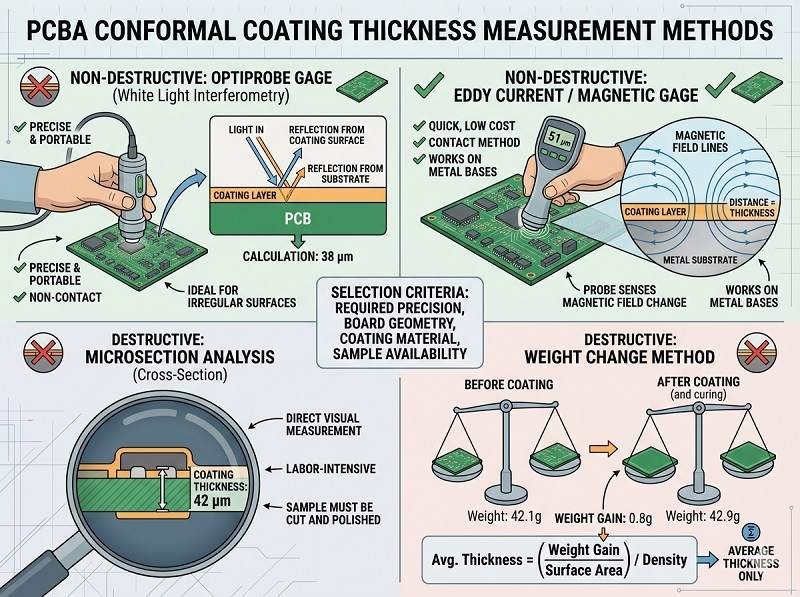
マイクロメーター測定
- コーティング前後の総厚を測定
- 差によるコーティングの厚さの計算
超音波厚み測定
- 音波を使って塗膜の厚さを測定
- 非破壊で正確
渦電流法
- 導電性基板に使用
- 電磁応答に基づいて厚さを測定
断面測定
どのように機能するのか:
- PCBを切断して断面を露出させる
- 厚さは顕微鏡で測定
メリット
- 非常に正確
- プロセス・バリデーションに有用
デメリット
- 破壊的方法
- 日常点検には適さない
光学測定法
上級 PCBアセンブリ プロセスは光学システムを使用することができる:
- レーザー計測
- デジタル顕微鏡
- 自動検査システム
これらは高精度を提供し、自動化に適している。 SMTアセンブリ 線。.
一般的なコーティング厚さの範囲
コーティングの種類によって異なる:
- アクリル:25~75ミクロン
- シリコーン:50~200ミクロン
- ポリウレタン:25~100ミクロン
- エポキシ:25~100ミクロン
適切なレンジを維持することで、信頼性を確保 コンフォーマル・コーティング パフォーマンスだ。.
厚さに影響する要因
- コーティング方法(スプレー、浸漬、ブラシ、選択式)
- コーティング剤の粘度
- 塗布速度と圧力
- 環境条件
これらは SMTアセンブリ プロセスがある。.
最終結論
塗膜の厚さ測定は、品質管理の重要なステップです。 PCBアセンブリ そして SMTアセンブリ. .ウェットフィルムゲージ、超音波試験、断面分析などの適切な方法を使用することにより、メーカーは、以下のことを確認することができます。 コンフォーマル・コーティング 性能と信頼性の要件を満たしている。.
コンフォーマルコーティングのお見積もり
特別なコーティングの要件がありますか?評価のためにPCBファイルをお送りください。.
お客様のご要望をお送りいただければ、当社のエンジニアリングチームが迅速に対応いたします。.
24時間対応 ✔ エンジニアリングサポート ✔ 少量生産と大量生産
深セン天心傑電子有限公司.
 日本語
日本語  English
  Deutsch
  Français
  Português do Brasil
  Español
  Nederlands
  Italiano
  Русский
  한국어
한국어  العربية
  Svenska
  Polski
  Türkçe
  繁體中文
繁體中文