What is coating removal process?

What is coating removal process?

Coating removal process

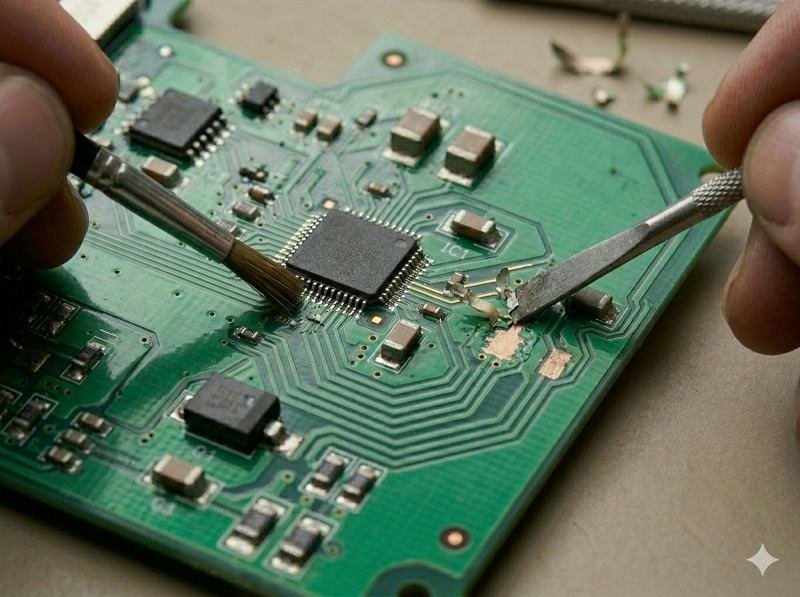
The coating removal process refers to the controlled stripping of 保形塗層 from a PCB to allow inspection, repair, modification, or rework. It is a critical operation in PCB 組裝SMT 組裝, especially when defects must be corrected or components need replacement.

What is coating removal process

Why coating removal is necessary

交鑰匙 PCB 組裝, coating removal is typically required for:

  • Repairing or replacing faulty components
  • Fixing coating defects (bubbles, cracks, delamination)
  • Removing contamination trapped under the coating
  • Implementing design or engineering changes
  • Performing detailed inspection or testing

Without proper removal, accessing the PCB circuitry would be difficult and risky.

Types of conformal coatings and removal difficulty

Different coatings require different removal methods:

  • 丙烯酸塗料 → easiest to remove
  • 矽膠塗層 → flexible, moderate difficulty
  • Urethane coatings → more chemical-resistant
  • 環氧塗料 → very hard, difficult to remove
  • Parylene coatings → require specialized techniques

Understanding the coating type is essential in PCB 組裝 before starting removal.

Common coating removal methods

Solvent removal

  • Uses chemical solvents to dissolve the coating
  • Most effective for acrylic coatings
  • Simple and widely used in SMT 組裝 rework

Mechanical removal

  • Involves scraping, brushing, or micro-abrasion
  • Suitable for localized removal
  • Requires precision to avoid PCB damage

Chemical stripping

  • Uses stronger chemicals for tough coatings (urethane, epoxy)
  • Effective but must be carefully controlled
  • Requires proper safety measures

Thermal removal

  • Applies heat to soften the coating
  • Makes mechanical removal easier
  • Must avoid overheating sensitive components

Plasma or laser removal (advanced)

  • Used for high-precision or complex boards
  • Ideal for selective removal in high-end 交鑰匙 PCB 組裝

Steps in coating removal process

  1. Identify coating type
  2. Select appropriate removal method
  3. Protect surrounding components (masking if needed)
  4. Remove coating from targeted area
  5. Clean residues thoroughly
  6. Inspect PCB for damage or remaining coating

Each step must be carefully controlled to maintain board integrity.

Challenges in coating removal

  • Risk of damaging components or PCB traces
  • Residue left behind affecting re-coating
  • Time-consuming for hard coatings
  • Safety concerns when using chemicals

These challenges highlight the importance of proper process control in PCB 組裝.

Best practices

  • Use coatings that allow easier rework when possible
  • Limit removal to only necessary areas
  • Use proper tools and trained technicians
  • Follow safety and environmental guidelines
  • Ensure complete cleaning before recoating

總結

The coating removal process is an essential part of rework in PCB 組裝, SMT 組裝, 以及 交鑰匙 PCB 組裝. By selecting the correct method and following controlled procedures, manufacturers can safely remove 保形塗層, perform repairs, and restore PCB functionality without compromising reliability.

取得保形塗層報價

在汽車、工業或戶外電子領域工作?我們可以提供保形塗層服務。.
將您的需求傳送給我們,並獲得我們工程團隊的快速回應。.

24 小時回應 ✔ 工程支援 ✔ 小型與大量生產

首選材料
拖放檔案、, 選擇要上傳的檔案 您最多可以上傳 8 檔案。.
請將所有 Gerber 檔案、Drill 檔案和 BOM 壓縮為單一的 .ZIP 或 .RAR 檔案,以加快處理速度。.
"Please list components or areas that must NOT be coated (e.g., connectors, test points)." If you have specific coating material requirements (e.g., HumiSeal), Please indicate this in the comment box.

深圳市騰欣杰電子有限公司

分享:

目錄

PCB 組裝製造商

更多職位
取得 PCBA 報價
拖放檔案、, 選擇要上傳的檔案 您最多可以上傳 8 檔案。.
將您的 Gerber 檔案和 BOM 傳送給我們,以獲得快速準確的報價。.

Pierre Dubois

發表評論

發佈留言必須填寫的電子郵件地址不會公開。 必填欄位標示為 *

zh_TW繁體中文
滾動到頂端