Lead-Free PCB Assembly
Lead-free PCB assembly refers to the process of manufacturing and assembling printed circuit boards without using lead (Pb) in the solder materials. Instead of traditional tin-lead alloys, this method uses environmentally friendly solder alloys—typically composed of tin, silver, and copper (commonly known as SAC alloys).
Lead-free processes are now standard in modern PCB 組裝 due to global environmental regulations such as RoHS (Restriction of Hazardous Substances), which limit the use of hazardous materials in electronic products.

Why Lead-Free PCB Assembly is Important
The primary reason for adopting lead-free PCB Assembly is environmental and health protection. Lead is a toxic substance that can cause serious health issues and environmental damage if not properly managed.
Regulations like RoHS have made lead-free manufacturing mandatory in many regions, especially for consumer electronics. As a result, most PCB 製造 和 SMT 組裝 processes today are designed to comply with these standards.
Lead-Free vs Leaded PCB Assembly
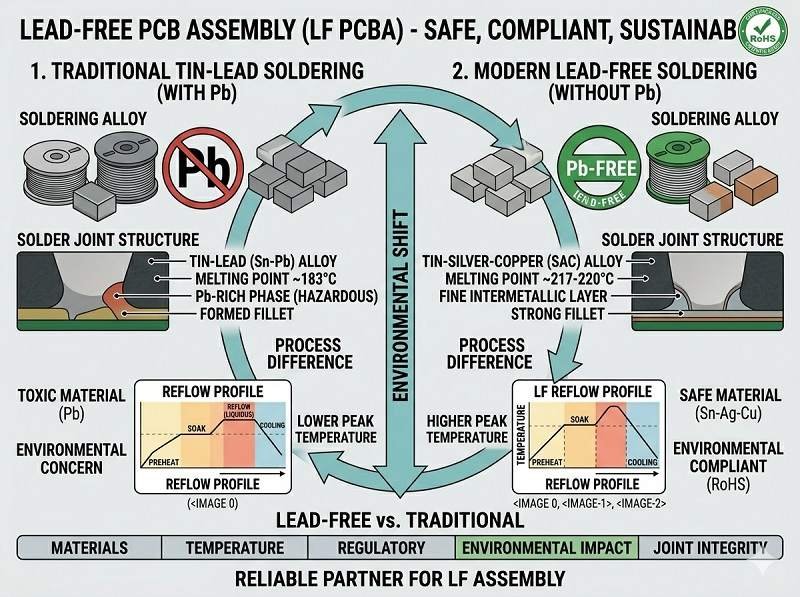
The main difference between lead-free and traditional leaded PCB Assembly lies in the solder composition.
Leaded solder typically uses a tin-lead (Sn-Pb) alloy, which has a lower melting point and is easier to work with. Lead-free solder, on the other hand, uses alloys such as SAC305 (tin-silver-copper), which have higher melting temperatures and require more precise process control.
Lead-free soldering generally requires higher reflow temperatures, which can impact component selection and thermal management.
Lead-Free SMT Assembly Process
Lead-free SMT 組裝 follows similar steps to traditional assembly but with adjusted parameters.
First, lead-free solder paste is applied to the PCB using a stencil. The paste contains SAC alloy particles and flux.
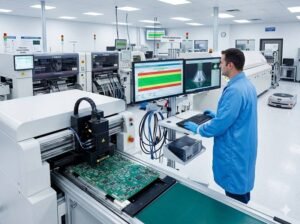
Next, components are placed onto the board using pick-and-place machines.
The board then goes through a reflow soldering process, where temperatures are higher than in leaded assembly to melt the lead-free solder.
After cooling, the solder solidifies to form strong and reliable joints.
This process is carefully controlled to ensure compatibility with components and to prevent defects caused by higher temperatures.
Materials Used in Lead-Free PCB Assembly
Common lead-free solder alloys include SAC305 (96.5% tin, 3% silver, 0.5% copper), which is widely used in the electronics industry.
Other materials, such as PCB finishes and component terminations, must also be compatible with lead-free processes. This ensures proper wetting and reliable solder joints.
Flux formulations are also optimized for lead-free soldering to handle higher temperatures and maintain performance.
Challenges of Lead-Free PCB Assembly
Lead-free PCB Assembly presents several challenges.
Higher reflow temperatures can increase thermal stress on components and PCBs, potentially affecting reliability.
Lead-free solder can be more prone to certain defects, such as voiding or brittle joints, if not properly controlled.
Process optimization is critical, including stencil design, solder paste selection, and temperature profiling.
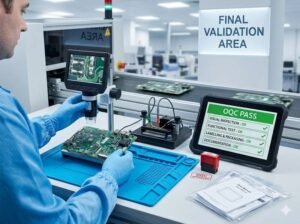
Additionally, inspection and testing must ensure that lead-free joints meet quality standards.
Lead-Free PCB Assembly in Turnkey PCB Assembly
在 交鑰匙 PCB 組裝, the manufacturer ensures that all materials and processes comply with lead-free standards. This includes PCB Manufacturing, component sourcing, SMT Assembly, and final testing.
A turnkey approach simplifies compliance and ensures consistency across the entire production process.
Advantages of Lead-Free PCB Assembly
Lead-free PCB Assembly offers several benefits.
It complies with international environmental regulations and supports sustainable manufacturing.
It reduces health risks associated with lead exposure.
It aligns with global market requirements, allowing products to be sold in regulated regions.
Applications of Lead-Free PCB Assembly
Lead-free PCB Assembly is used in almost all modern electronic products.
Applications include consumer electronics, automotive systems, medical devices, industrial equipment, and telecommunications.
It is especially important for products intended for global markets where regulatory compliance is mandatory.
Best Practices for Lead-Free PCB Assembly
To ensure success, manufacturers should follow best practices.
Use high-quality lead-free solder paste and compatible materials.
Optimize reflow temperature profiles to prevent thermal damage.
Design PCBs with lead-free processes in mind, including proper pad design and surface finishes.
Implement strict quality control and inspection procedures.
Work with experienced PCB Assembly providers who specialize in lead-free SMT Assembly.
總結
Lead-free PCB assembly is now the industry standard for modern electronics manufacturing. By replacing traditional lead-based solder with environmentally friendly alternatives, it supports regulatory compliance and sustainable production.
When combined with advanced SMT Assembly, PCB Manufacturing, and Turnkey PCB Assembly services, lead-free processes ensure high-quality, reliable, and globally compliant electronic products.
Have a PCB project in mind? Request a quote and get expert support today.
我們提供專業的 PCB 裝配服務,包括 SMT、DIP 及完整的統包解決方案。.
✔ 提供 NDA ✔ 24 小時內快速報價 ✔ ISO 認證工廠 ✔ 一站式 PCB & PCBA 服務