Coating process control
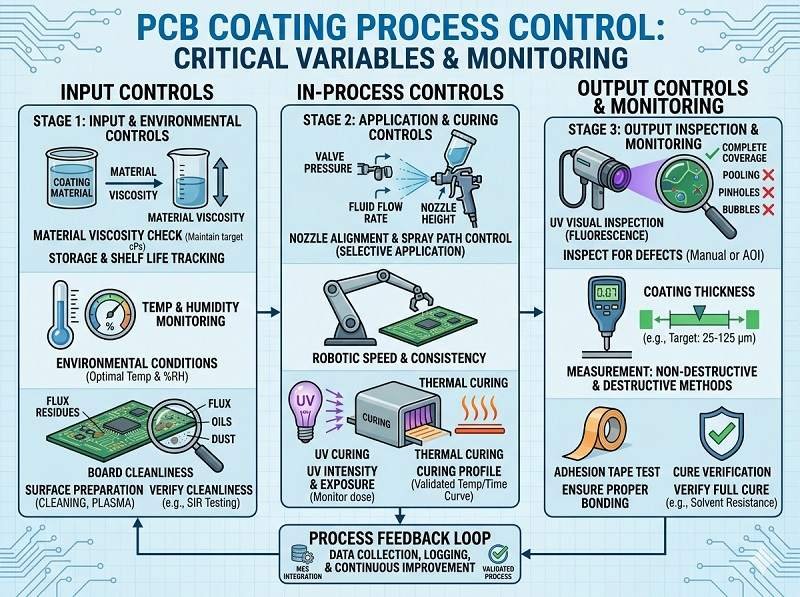
Coating process control 於 保形塗層 refers to the systematic management of all variables that affect coating quality, consistency, and performance. In PCB 組裝, 原型 PCB 組裝, 以及 SMT 組裝, it ensures that every PCB receives a uniform, defect-free coating that meets reliability and industry standards.
Without proper control, variations in materials, environment, or application methods can lead to defects such as bubbles, uneven thickness, poor adhesion, or incomplete coverage.

Key elements of coating process control
Material control
The properties of the 保形塗層 material—such as viscosity, shelf life, and mixing ratio—must be strictly monitored. Incorrect viscosity can lead to uneven coating thickness, while expired materials may cause adhesion failure in PCB 組裝.
Surface preparation control
Proper cleaning and drying of PCBs are essential. Residues like flux or moisture can interfere with coating adhesion and cause defects. In SMT 組裝, controlled cleaning processes are critical before coating.
Application parameter control
Coating methods (spray, dip, selective coating) must be precisely controlled. Key parameters include:
- Spray pressure and flow rate
- Nozzle distance and speed
- Coating thickness
Automation in SMT 組裝 helps maintain consistency across large production volumes.
Environmental control
Temperature, humidity, and air cleanliness directly affect coating performance. High humidity may cause defects such as blushing, while dust can contaminate the coating surface during PCB 組裝.
Curing process control
Curing conditions—time, temperature, or UV exposure—must match the coating specifications. Improper curing can result in soft coatings, cracking, or incomplete protection.
Masking and coverage control
Critical areas such as connectors and test points must be properly masked. Ensuring correct coverage while protecting keep-out zones is a key part of process control in Prototype PCB Assembly.
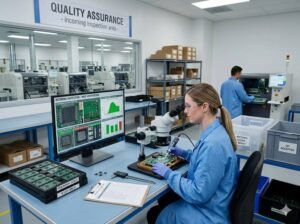
Inspection and quality control
Post-coating inspection verifies that the process is working correctly. Common methods include:
- UV inspection for coverage
- Thickness measurement
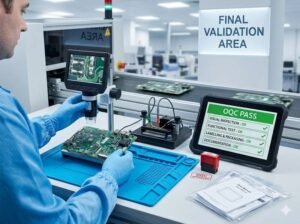
- Visual inspection for defects
在 PCB 組裝, inspection feedback is used to continuously improve the process.
Why coating process control is important
- Ensures consistent coating thickness and coverage
- Reduces defects and rework
- Improves product reliability and lifespan
- Supports compliance with industry standards (e.g., IPC)
- Enhances efficiency in high-volume SMT 組裝
Process control in different production stages
原型 PCB 組裝
Focuses on parameter optimization, testing, and validation of coating processes.
Mass PCB Assembly / SMT Assembly
Emphasizes automation, repeatability, and strict quality monitoring to maintain consistency at scale.
Best practices for effective process control
- Define standard operating procedures (SOPs)
- Use automated coating and curing systems
- Monitor key parameters in real time
- Maintain controlled production environments
- Continuously analyze defects and improve processes
總之、, coating process control is the foundation of high-quality 保形塗層 於 PCB 組裝, SMT 組裝, 以及 原型 PCB 組裝. By managing materials, equipment, environment, and inspection, manufacturers can achieve reliable, repeatable coating performance and minimize production risks.
取得保形塗層報價
需要保形塗層的專業支援?提交您的需求,並在 12 小時內獲得回應。.
將您的需求傳送給我們,並獲得我們工程團隊的快速回應。.
24 小時回應 ✔ 工程支援 ✔ 小型與大量生產
深圳市騰欣杰電子有限公司