
コーティング工程管理
コーティング工程管理 で コンフォーマル・コーティング とは、コーティングの品質、一貫性、性能に影響を与えるすべての変数を体系的に管理することを指す。その中で PCBアセンブリ, プロトタイプPCBアセンブリ, そして SMTアセンブリ, また、すべてのPCBに信頼性と業界標準を満たす均一で欠陥のないコーティングが施されることを保証します。.
適切な管理を行わないと、材料、環境、塗布方法のばらつきによって、気泡、不均一な厚み、接着不良、不完全な被覆などの欠陥が生じる可能性がある。.
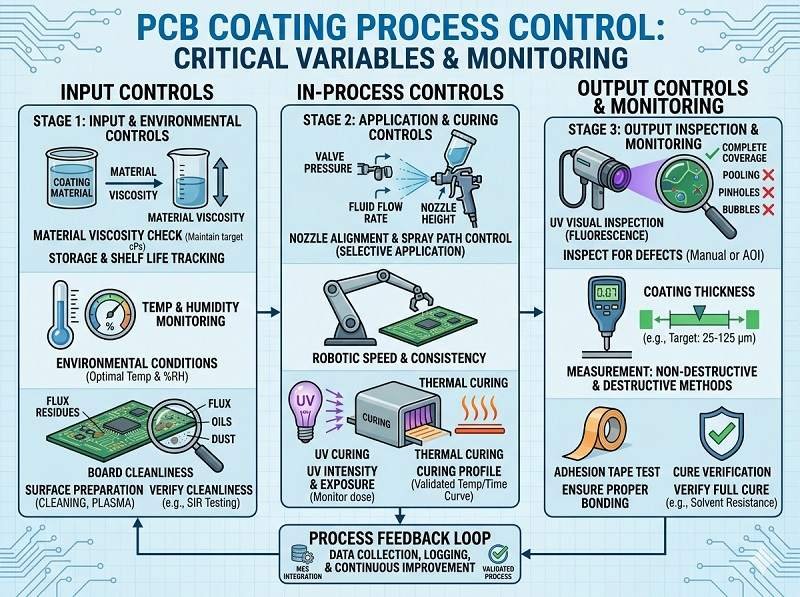
塗装工程管理の主要要素
材料管理
の特性 コンフォーマル・コーティング 材料の粘度、保存可能期間、混合比を厳密に監視する必要がある。粘度が適切でないと、塗膜の厚みにムラが生じたり、賞味期限切れの材料は、接着不良の原因となったりする。 PCBアセンブリ.
表面処理コントロール
PCBの適切な洗浄と乾燥は不可欠です。フラックスや水分のような残留物は、コーティングの接着を妨げ、欠陥の原因となります。洗浄 SMTアセンブリ, コーティングの前には、制御された洗浄工程が重要である。.
アプリケーション・パラメータ制御
コーティング方法(スプレー、浸漬、選択コーティング)は正確に制御されなければならない。主なパラメータは以下の通り:
- スプレー圧力と流量
- ノズルの距離と速度
- コーティングの厚さ
オートメーション SMTアセンブリ 大量生産における一貫性の維持に役立ちます。.
環境制御
温度、湿度、空気の清浄度はコーティングの性能に直接影響します。高湿度では白化現象などの欠陥が発生する可能性があり、ホコリでは塗膜表面が汚染される可能性がある。 PCBアセンブリ.
硬化プロセス制御
硬化条件(時間、温度、紫外線照射)は、コーティングの仕様に適合していなければなりません。不適切な硬化は、塗膜の軟化、ひび割れ、不完全な保護につながります。.
マスキングとカバレッジコントロール
コネクターやテストポイントなどの重要なエリアは、適切にマスキングされなければならない。キープアウトゾーンを保護しながら、正しいカバー範囲を確保することは、次のような工程管理の重要な部分です。 PロトタイプPCBアセンブリ.
検査と品質管理
コーティング後の検査では、工程が正しく機能していることを確認する。一般的な方法は以下の通り:
- 紫外線によるカバレッジ検査
- 厚さ測定
- 欠陥の目視検査
で PCBアセンブリ, 検査のフィードバックは、プロセスを継続的に改善するために使用される。.
塗装工程管理が重要な理由
- 安定した塗膜厚と塗布範囲を確保
- 不良品と再加工の削減
- 製品の信頼性と寿命を向上
- 業界標準(IPCなど)への準拠をサポート
- 大量生産における効率を高める SMTアセンブリ
さまざまな生産段階における工程管理
プロトタイプPCBアセンブリ
コーティングプロセスのパラメータ最適化、テスト、検証に重点を置く。.
大量PCBアセンブリ/ SMTアセンブリ
自動化、再現性、厳格な品質監視を重視し、規模に応じて一貫性を保つ。.
効果的なプロセス制御のためのベストプラクティス
- 標準作業手順書(SOP)の定義
- 自動塗装・硬化システムの使用
- 主要パラメータをリアルタイムで監視
- 管理された生産環境を維持する
- 不具合を継続的に分析し、プロセスを改善する
結論として, コーティング工程管理 は高品質の基盤である。 コンフォーマル・コーティング で PCBアセンブリ, SMTアセンブリ, そして プロトタイプPCBアセンブリ. .材料、設備、環境、検査を管理することで、メーカーは信頼性と再現性の高いコーティング性能を達成し、生産リスクを最小限に抑えることができます。.
コンフォーマルコーティングのお見積もり
コンフォーマルコーティングのプロフェッショナルサポートが必要ですか?要件を送信し、12時間以内に応答を取得します。.
お客様のご要望をお送りいただければ、当社のエンジニアリングチームが迅速に対応いたします。.
24時間対応 ✔ エンジニアリングサポート ✔ 少量生産と大量生産
深セン天心傑電子有限公司.
 日本語
日本語  English
  Deutsch
  Français
  Português do Brasil
  Español
  Nederlands
  Italiano
  Русский
  한국어
한국어  العربية
  Svenska
  Polski
  Türkçe
  繁體中文
繁體中文