
アクリル系とシリコン系ヒュミシールコーティングの違い
アクリル そして シリコンフミシールコーティング の2つがよく使われる。 コンフォーマル・コーティング タイプ PCBアセンブリ, プロトタイプPCBアセンブリ, そして SMTアセンブリ. .どちらも湿気、ほこり、汚染物質からの保護を提供しますが、両者には大きな違いがあります。 性能、柔軟性、コスト、アプリケーションシナリオ.
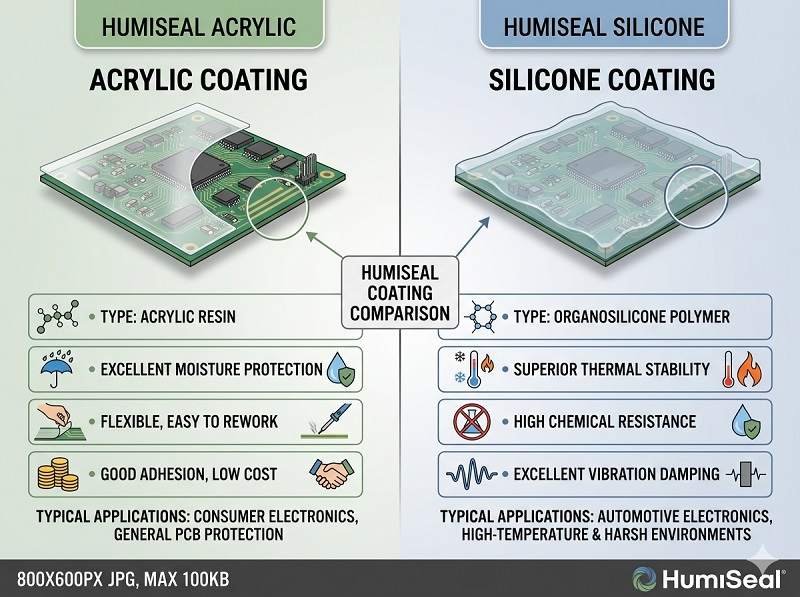
主な違い:素材特性
主な違いは化学的性質にある:
- アクリルコーティング(AR) → 硬質、透明、速乾性ポリマー
- シリコーンコーティング (SR) → 柔らかく、ゴムのような、柔軟性の高い素材
アクリル塗料は硬化して 硬質保護層, 一方、シリコーン・コーティングは 弾力性と柔軟性.
乾燥速度とプロセス効率
アクリル・コーティングはその優れた特性で知られている。 乾燥が速く、加工が容易, 高速走行に最適 SMTアセンブリ 生産ライン。数分で乾き、塗るのも簡単だ。.
シリコーン・コーティングには通常 硬化時間が長い, 特に湿気硬化を伴う場合は、生産能力が低下する可能性がある。.
柔軟性と耐振動性
これは最も重要な違いのひとつである:
- アクリル → 比較的硬く、振動や熱サイクルで割れる可能性がある
- シリコーン→柔軟性が高く、応力を吸収し、ひび割れに強い。
シリコーンコーティングは、以下のような環境に適している。 機械的ストレス、振動、熱膨張.
温度抵抗
アクリル・コーティングは、以下のような環境下で優れた性能を発揮する。 適度な温度範囲 (通常、~120℃まで)。.
シリコーンコーティングは 優れた高温・低温耐性, を拠点に活動することが多い。 -55℃~200℃以上, 過酷な環境に最適である。.
耐薬品性および耐環境性
- アクリル→防湿性は高いが 過酷な化学薬品への耐性が低い
- シリコーン 化学薬品、湿度、過酷な環境に強い耐性
シリコーン・コーティングは次のような用途に適している。 自動車、航空宇宙、アウトドア・エレクトロニクス 長期的な耐久性が重要な場合。.
リワークと修理
で PCBアセンブリ, リワーク能力は非常に重要である:
- アクリル 取り外しと修理が簡単 一般的な溶剤の使用
- シリコーン 除去がより困難に, 特別なプロセスが必要
このため、アクリルコーティングは次のような用途に適している。 プロトタイプPCBアセンブリ, 頻繁に修正が必要な場合.
コストと生産への配慮
- アクリル 低コスト+高速処理
- シリコーン 高コスト+高性能
大量生産用 SMTアセンブリ, アクリルはコスト効率で選ばれることが多く、シリコーンは性能要件が高いコストを正当化する場合に使われる。.
代表的なアプリケーション
アクリル系HumiSealコーティング(例:1B31):
- 家電製品
- LEDドライバと電源
- 汎用 PCBアセンブリ
- プロトタイプPCBアセンブリ (簡単な手直し)
シリコーンフミシールコーティング:
- カーエレクトロニクス
- 航空宇宙システム
- 屋外および高湿度環境
- 高温アプリケーション
概要比較
| 特徴 | アクリルコーティング | シリコーン・コーティング |
|---|---|---|
| 乾燥速度 | 非常に速い | 遅い |
| 柔軟性 | 低~中程度 | 非常に高い |
| 温度抵抗 | 中程度 | 素晴らしい |
| 耐薬品性 | 中程度 | 高い |
| リワーク性 | 簡単 | 難しい |
| コスト | より低い | より高い |
| ベストユース | 標準エレクトロニクス | 過酷な環境 |
最終的な洞察
アクリルとシリコーンのHumiSealコーティングには、“一長一短 ”の選択肢はありません。.
- 選ぶ アクリルコーティング にとって 費用対効果が高く、迅速で、再加工が容易 ソリューション PCBアセンブリ そして SMTアセンブリ
- 選ぶ シリコーンコーティング にとって 過酷な環境、高い信頼性、長期耐久性
実際には、多くのメーカーが両方のオプションを検証している。 プロトタイプPCBアセンブリ 大量生産に最適なコーティングを選択する前に。.
コンフォーマルコーティングのお見積もり
どのコンフォーマルコーティングがお客様の製品に適しているかわからないですか?今すぐ当社の専門家にお問い合わせください。.
お客様のご要望をお送りいただければ、当社のエンジニアリングチームが迅速に対応いたします。.
24時間対応 ✔ エンジニアリングサポート ✔ 少量生産と大量生産
深セン天心傑電子有限公司.
 日本語
日本語  English
  Deutsch
  Français
  Português do Brasil
  Español
  Nederlands
  Italiano
  Русский
  한국어
한국어  العربية
  Svenska
  Polski
  Türkçe
  繁體中文
繁體中文