
Kaplama kalınlığı ölçüm yöntemi
Kaplama kalınlığı ölçümü, kaplama kalınlığının belirlenmesi işlemidir. Konformal Kaplama bir PCB üzerinde uygulanan PCB Montajı ve SMT Montajı. Uygun kalınlık, elektrik performansına veya bileşen işlevselliğine müdahale etmeden etkili koruma sağlamak için kritik öneme sahiptir.
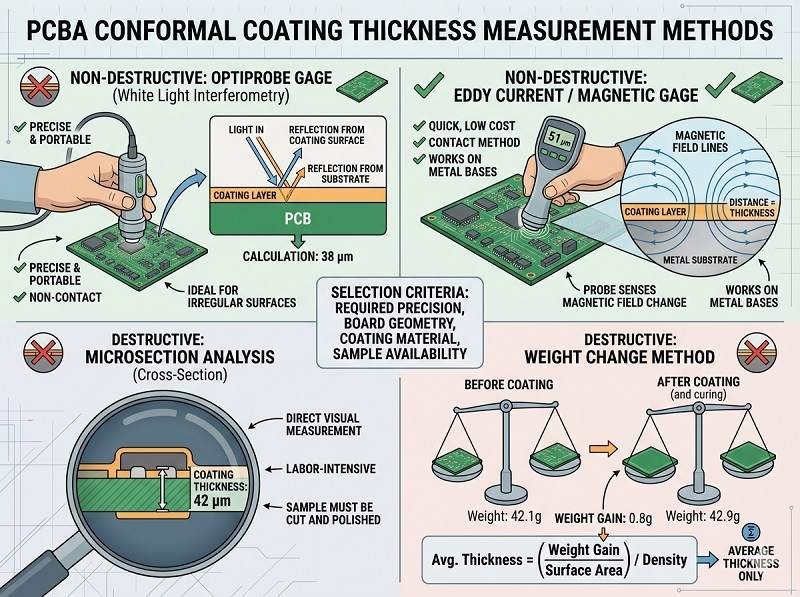
Kalınlık ölçümü neden önemlidir?
Kalınlığı Konformal Kaplama performansını doğrudan etkiler.
Eğer çok inceyse:
- Nem ve kirleticilere karşı yetersiz koruma
- Azaltılmış yalıtım performansı
Eğer çok kalınsa:
- Çatlama veya delaminasyon riski
- Konektörler veya hareketli parçalarla potansiyel parazit
Doğru ölçüm, optimum kaplama kalitesi sağlar PCB Montajı.
Yaygın kaplama kalınlığı ölçüm yöntemleri
Islak film kalınlığı ölçümü
Bu yöntem kullanılır kaplama uygulamasından hemen sonra kürlemeden önce.
Nasıl çalışıyor?
- Kaplanmış yüzeye bir ıslak film ölçer yerleştirilir
- Kalınlık temas noktalarına göre belirlenir
Avantajlar:
- Hızlı ve basit
- Proses parametrelerinin gerçek zamanlı olarak ayarlanmasına yardımcı olur
Sınırlamalar:
- Sadece kürlemeden önce uygulanabilir
- Kuru ölçüme göre daha az hassas
Kuru film kalınlığı ölçümü
Gerçekleştirildi kaplama sertleştikten sonra, 'de en yaygın kullanılan yöntemdir. SMT Montajı.
Yöntemler şunları içerir:
Mikrometre ölçümü
- Kaplama öncesi ve sonrası toplam kalınlığı ölçer
- Kaplama kalınlığını farka göre hesaplar
Ultrasonik kalınlık ölçümü
- Kaplama kalınlığını ölçmek için ses dalgalarını kullanır
- Tahribatsız ve doğru
Girdap akımı yöntemi
- İletken yüzeyler için kullanılır
- Elektromanyetik tepkiye dayalı kalınlık ölçümleri
Kesit ölçümü
Nasıl çalışıyor?
- PCB bir kesiti ortaya çıkarmak için kesilir
- Kalınlık mikroskop altında ölçülür
Avantajlar:
- Çok doğru
- Süreç doğrulaması için kullanışlıdır
Dezavantajlar:
- Yıkıcı yöntem
- Rutin denetim için uygun değildir
Optik ölçüm yöntemleri
Gelişmiş PCB Montajı süreçleri optik sistemler kullanabilir:
- Lazer ölçümü
- Dijital mikroskopi
- Otomatik denetim sistemleri
Bunlar yüksek hassasiyet sağlar ve otomatikleştirilmiş SMT Montajı Çizgiler.
Tipik kaplama kalınlığı aralıkları
Kaplama türüne bağlı olarak:
- Akrilik: 25-75 mikron
- Silikon: 50-200 mikron
- Poliüretan: 25-100 mikron
- Epoksi: 25-100 mikron
Doğru aralığın korunması güvenilirlik sağlar Konformal Kaplama performans.
Kalınlığı etkileyen faktörler
- Kaplama yöntemi (sprey, daldırma, fırça, seçici)
- Kaplama malzemesinin viskozitesi
- Uygulama hızı ve basıncı
- Çevresel koşullar
Bunlar kontrol edilmelidir SMT Montajı süreçler.
Nihai Sonuç
Kaplama kalınlığı ölçümü, aşağıdakilerde hayati bir kalite kontrol adımıdır PCB Montajı ve SMT Montajı. Islak film ölçerler, ultrasonik testler ve kesit analizi gibi uygun yöntemleri kullanarak üreticiler aşağıdakileri sağlayabilir Konformal Kaplama performans ve güvenilirlik gereksinimlerini karşılar.
Konformal Kaplama Teklifi Alın
Özel kaplama gereksinimleriniz mi var? PCB dosyalarınızı değerlendirme için bize gönderin.
İhtiyaçlarınızı bize gönderin ve mühendislik ekibimizden hızlı bir yanıt alın.
✔ 24 saat yanıt ✔ Mühendislik desteği ✔ Küçük ve Seri Üretim
Shenzhen Tengxinjie Electronics Co, Ltd.




 Türkçe
  English
  Deutsch
  Français
  Português do Brasil
  Español
  日本語
日本語  Nederlands
  Italiano
  Русский
  한국어
한국어  العربية
  Svenska
  Polski
  繁體中文
繁體中文