
코팅 두께 측정 방법
코팅 두께 측정은 다음과 같은 제품의 두께를 결정하는 프로세스입니다. 컨포멀 코팅 의 PCB에 적용 PCB 어셈블리 그리고 SMT 어셈블리. 전기적 성능이나 부품 기능을 방해하지 않으면서 효과적으로 보호하려면 적절한 두께가 중요합니다.
두께 측정이 중요한 이유
두께는 컨포멀 코팅 성능에 직접적인 영향을 미칩니다.
너무 얇은 경우:
- 습기 및 오염 물질에 대한 보호 기능 부족
- 단열 성능 저하
너무 두꺼운 경우:
- 균열 또는 박리 위험
- 커넥터 또는 움직이는 부품과의 간섭 가능성
정확한 측정으로 다음 분야에서 최적의 코팅 품질을 보장합니다. PCB 어셈블리.
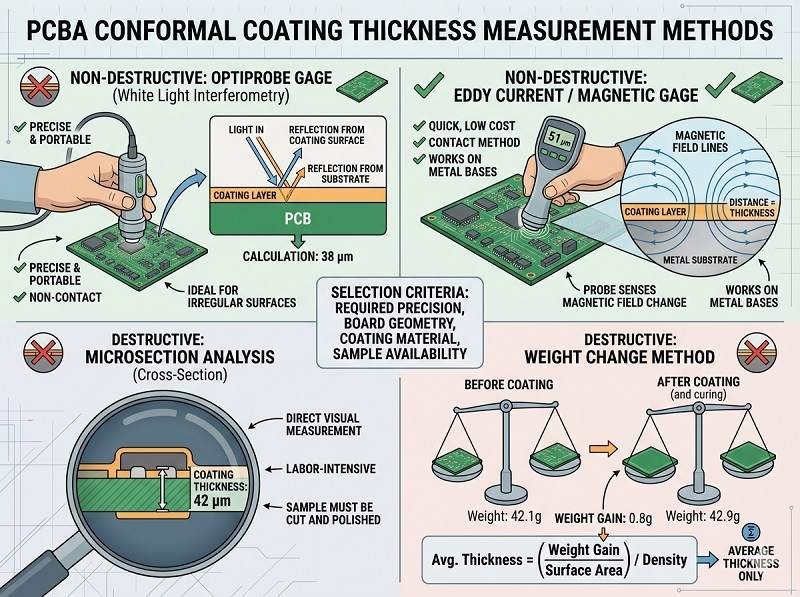
일반적인 코팅 두께 측정 방법
습식 필름 두께 측정
이 방법은 다음과 같이 사용됩니다. 코팅 도포 직후 경화하기 전에.
작동 방식:
- 습식 필름 게이지가 코팅된 표면에 배치됩니다.
- 두께는 접점을 기준으로 결정됩니다.
장점:
- 빠르고 간편한
- 실시간으로 프로세스 매개변수 조정 지원
제한 사항:
- 경화 전에만 적용 가능
- 건식 측정보다 정확도가 떨어짐
건식 필름 두께 측정
수행됨 코팅이 경화된 후, 에서 가장 널리 사용되는 방법입니다. SMT 어셈블리.
방법은 다음과 같습니다:
마이크로미터 측정
- 코팅 전과 후의 총 두께 측정
- 차이에 따른 코팅 두께 계산
초음파 두께 측정
- 음파를 사용하여 코팅 두께 측정
- 비파괴적이고 정확한
와전류 방식
- 전도성 기판에 사용
- 전자기 반응을 기반으로 두께 측정
단면 측정
작동 방식:
- 단면이 노출되도록 절단된 PCB
- 두께는 현미경으로 측정합니다.
장점:
- 매우 정확함
- 프로세스 유효성 검사에 유용
단점:
- 파괴 방법
- 일상적인 검사에는 적합하지 않음
광학 측정 방법
고급 PCB 어셈블리 프로세스는 광학 시스템을 사용할 수 있습니다:
- 레이저 측정
- 디지털 현미경
- 자동화된 검사 시스템
이 제품은 높은 정밀도를 제공하며 자동화된 SMT 어셈블리 라인.
일반적인 코팅 두께 범위
코팅 유형에 따라 다릅니다:
- 아크릴: 25-75미크론
- 실리콘: 50-200 미크론
- 폴리우레탄: 25-100미크론
- 에폭시: 25-100미크론
정확한 범위를 유지하면 안정적인 컨포멀 코팅 성능.
두께에 영향을 미치는 요인
- 코팅 방법(스프레이, 딥, 브러시, 선택적)
- 코팅 재료의 점도
- 애플리케이션 속도 및 압력
- 환경 조건
다음에서 제어해야 합니다. SMT 어셈블리 프로세스.
최종 결론
코팅 두께 측정은 다음과 같은 중요한 품질 관리 단계입니다. PCB 어셈블리 그리고 SMT 어셈블리. 제조업체는 습식 필름 게이지, 초음파 테스트 및 단면 분석과 같은 적절한 방법을 사용하여 다음을 보장할 수 있습니다. 컨포멀 코팅 성능 및 안정성 요구 사항을 충족합니다.
컨포멀 코팅 견적 받기
특별한 코팅 요구 사항이 있으신가요? 평가를 위해 PCB 파일을 보내주세요.
요구 사항을 보내주시면 엔지니어링 팀으로부터 빠른 답변을 받으실 수 있습니다.
24시간 대응 ✔ 엔지니어링 지원 ✔ 소규모 및 대량 생산
심천 텅신지에 전자 유한 공사.
 한국어
한국어  English
  Deutsch
  Français
  Português do Brasil
  Español
  日本語
日本語  Nederlands
  Italiano
  Русский
  العربية
  Svenska
  Polski
  Türkçe
  繁體中文
繁體中文