
PCB Packaging Standard
A PCB packaging standard refers to the industry guidelines and protective methods used to package printed circuit boards and assembled electronic products during storage, handling, and transportation. In the PCBアセンブリ そして SMTアセンブリ industry, proper packaging standards are extremely important because electronic products are sensitive to moisture, electrostatic discharge (ESD), contamination, vibration, and mechanical impact.
Professional PCB packaging standards help ensure that products arrive safely, maintain reliability, and comply with international electronics manufacturing requirements.
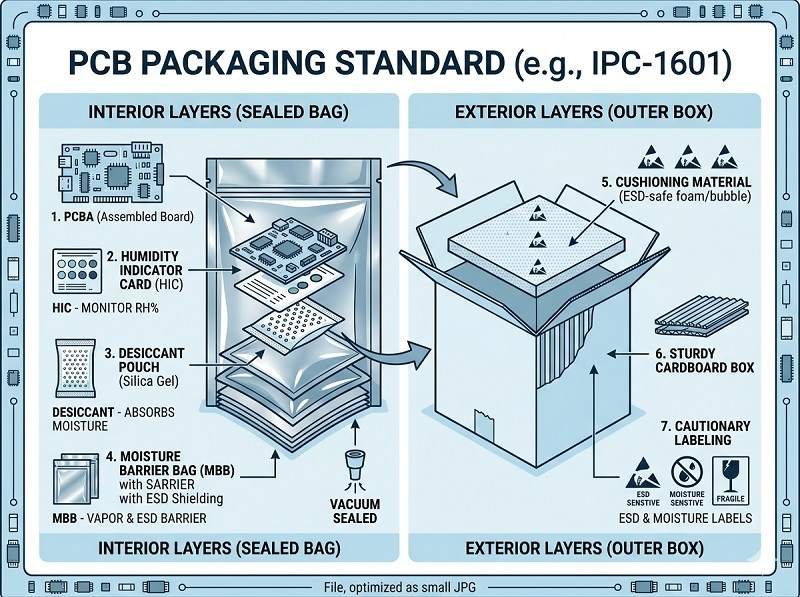
Why PCB Packaging Standards Are Important
PCB and PCBA products can easily be damaged by:
- Static electricity (ESD)
- Moisture absorption
- Physical shock
- 埃と汚染
- Temperature and humidity changes
Without proper packaging standards, these risks may lead to:
- Component failure
- 腐食
- Cracked solder joints
- Oxidation
- Functional defects
👉 Proper packaging is a critical part of high-quality PCBアセンブリ delivery.
Main Goals of PCB Packaging Standards
PCB packaging standards are designed to:
- Protect electronic components during shipping
- Prevent ESD damage
- Control moisture exposure
- Reduce vibration and impact damage
- Ensure safe storage conditions
- Improve international logistics reliability
Common PCB Packaging Standards
ESD Protection Standards
Electrostatic discharge is one of the biggest threats to electronic assemblies.
Standard ESD packaging methods include:
- Anti-static bags
- Conductive shielding bags
- ESD-safe trays
- Grounded packaging materials
Many PCB Assembly manufacturers follow ANSI/ESD protection guidelines to reduce static-related damage.
Moisture Sensitivity Standards (MSL)
Moisture-sensitive SMTアセンブリ components require controlled packaging.
Typical standards include:
- Moisture Barrier Bags (MBB)
- Desiccant packs
- Humidity Indicator Cards (HIC)
- Vacuum sealing
These methods help prevent moisture absorption that could damage components during reflow soldering.
IPC Packaging Standards
The IPC organization provides packaging recommendations for electronics manufacturing.
Common IPC-related areas include:
- PCB cleanliness
- Moisture-sensitive device handling
- Packaging protection
- Transportation safety
Professional PCB Assembly suppliers often follow IPC handling practices.
JEDEC Moisture Handling Standards
JEDEC standards are widely used for moisture-sensitive devices in SMT Assembly.
These standards define:
- Moisture sensitivity levels (MSL)
- Storage conditions
- Dry packing requirements
- Floor life management
👉 This is especially important for BGA and fine-pitch components.
Common PCB Packaging Methods
Vacuum Packaging
Used for moisture-sensitive PCB Assembly products.
メリット
- Prevents humidity exposure
- Extends storage life
- Protects sensitive SMT components
Anti-Static Packaging
Includes:
- ESD bags
- Conductive foam
- Shielding materials
Prevents electrostatic damage during handling and transportation.
Bubble Wrap and Foam Protection
Provides:
- Shock absorption
- Vibration protection
- Mechanical cushioning
Blister Tray Packaging
Common for mass production SMT Assembly.
メリット
- Prevents PCB movement
- Supports automated handling
- Improves organization
Carton and Pallet Packaging
Used for international logistics.
Includes:
- Reinforced cartons
- Stretch wrapping
- Palletized shipping
Packaging Standards for Different PCB Types
Bare PCB Packaging
Usually includes:
- Vacuum sealing
- Dry packaging
- Flat stacking protection
PCB Assembly Packaging
Requires additional protection for:
- Mounted components
- Connectors
- Sensitive ICs
High-Reliability Electronics
Industries like aerospace and medical often require stricter packaging standards.
Packaging Labels and Traceability
Professional PCB packaging may include:
- Part numbers
- Lot numbers
- Serial numbers
- Moisture sensitivity labels
- ESD warning labels
- Barcode tracking
This improves inventory control and traceability.
Environmental and Storage Requirements
PCB packaging standards may also define:
- Storage temperature
- Humidity limits
- Shelf life requirements
- Handling procedures
Improper storage can reduce PCB reliability even before installation.
Packaging Standards for International Shipping
For global PCB Assembly shipping, packaging must withstand:
- Long-distance transportation
- Customs inspections
- Air and sea freight handling
- Warehouse stacking pressure
Strong export packaging reduces shipping damage risk.
How Professional PCB Assembly Suppliers Maintain Packaging Quality
Experienced SMT Assembly manufacturers typically:
- Use automated packaging systems
- Follow ESD control procedures
- Monitor humidity levels
- Use certified packaging materials
- Perform packaging inspections before shipment
Benefits of Following PCB Packaging Standards
Proper packaging standards help:
- Improve product reliability
- Reduce shipping damage
- Prevent ESD failures
- Protect moisture-sensitive devices
- Enhance customer satisfaction
- Reduce return and repair costs
結論
PCB packaging standards are essential in modern PCBアセンブリ そして SMTアセンブリ manufacturing. They ensure electronic products are protected from electrostatic discharge, moisture, vibration, contamination, and transportation damage during storage and international shipping.
By following professional ESD, IPC, and moisture protection standards, PCB Assembly manufacturers can deliver reliable, high-quality electronic products safely to customers worldwide.
デザインレビューから納品まで、すべてのステップをサポートします。PCBアセンブリのお見積もりをご依頼ください。.
SMT、DIP、フルターンキーソリューションを含むプロフェッショナルなPCBアセンブリサービスを提供します。.
利用できる NDA ✔ 24 時間以内の速い引用語句 ✔ ISO によって証明される工場 ✔ ワンストップ PCB 及び PCBA サービス



 日本語
日本語  English
  Deutsch
  Français
  Português do Brasil
  Español
  Nederlands
  Italiano
  Русский
  한국어
한국어  العربية
  Svenska
  Polski
  Türkçe
  繁體中文
繁體中文