
オーブン養生と室内養生
で コンフォーマル・コーティング, 硬化とは、液体の塗膜を固体の保護膜に変化させるプロセスである。最も一般的な方法として PCBアセンブリ, プロトタイプPCBアセンブリ, そして SMTアセンブリ は オーブンキュアリング そして ルームキュアリング(空気乾燥). .それぞれの方法には異なる特徴、利点、理想的な使用例がある。.
オーブンキュアリングとは?
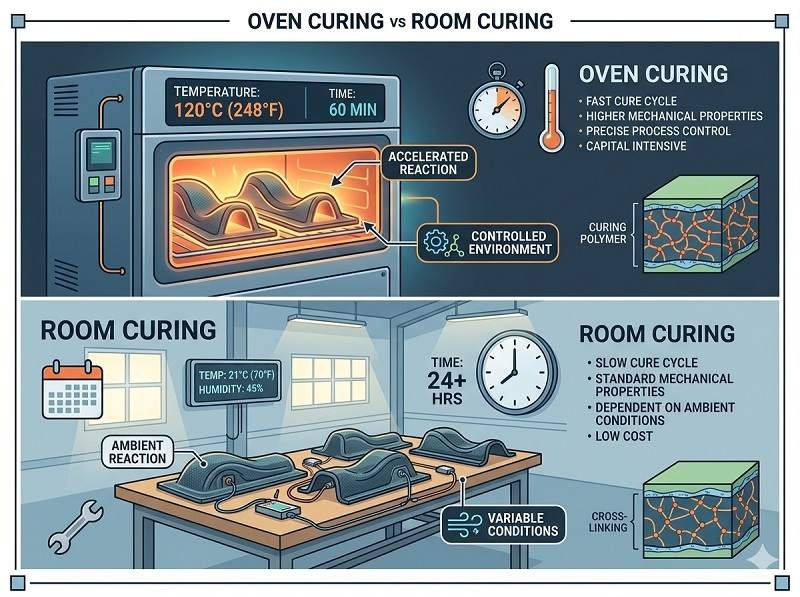
オーブン硬化(熱硬化)は、制御された熱を使用して硬化プロセスを促進する。塗布後 コンフォーマル・コーティング, PCBは、指定された温度で指定された時間、オーブンに入れられる。.
オーブン硬化の主な特徴
- 典型的な温度: 60-150°C, コーティングの種類による
- 硬化時間の短縮(数分から数時間)
- より一貫した再現性のある結果
- 接着性と機械的強度の向上
大量生産の場合 SMTアセンブリ, オーブンキュアリングは、生産効率を大幅に向上させ、バッチ間で均一なコーティング品質を保証するため、広く使用されている。.
ルーム・キュアリング(空気硬化)とは何ですか?
室内での硬化は、常温での自然な溶媒の蒸発や水分反応に依存する(通常 20-25°C)でコーティングを硬化させる。.
ルーム・キュアリングの主な特徴
- 加熱装置不要
- 硬化時間が長い(12~48時間)
- エネルギーコストの低減
- 熱に敏感な部品に最適
この方法は、一般的に プロトタイプPCBアセンブリ または小規模 PCBアセンブリ, 柔軟性とセットアップコストの低さがスピードよりも重要視される。.
オーブンキュアリングとルームキュアリングの主な違い
硬化速度
オーブンでの硬化ははるかに速く、大量生産に最適です。 SMTアセンブリ. .部屋での硬化はより遅く、スループットを遅らせる可能性がある。.
プロセス制御
オーブンキュアは温度と時間を正確にコントロールできるため、安定した品質が得られます。ルームキュアは、湿度や気流などの環境条件に大きく左右されます。.
機材要件
オーブンキュアには、サーマルオーブンとプロセスモニタリングシステムが必要です。ルームキュアは、クリーンで制御された環境さえあればよい。.
部品への影響
室温硬化は、温度に敏感な部品にとってより安全である。オーブンでの硬化は、硬化中の熱損傷を避けるために注意深く制御する必要があります。 PCBアセンブリ.
コーティング性能
多くの場合、オーブンによる硬化は、耐薬品性と機械的耐久性に優れた、より強靭で耐久性のあるコーティングを生み出す。.
それぞれの方法を選択するタイミング
オーブンキュアリングが最適である:
- 大容量 SMTアセンブリ
- タイトな生産スケジュール
- 高い信頼性を必要とするアプリケーション
部屋での養生が最適:
- プロトタイプPCBアセンブリ と小ロット
- 熱に弱いデザイン
- コスト重視のプロジェクト
結論として、オーブンキュアリングとルームキュアリングの両方が広く使われている。 コンフォーマル・コーティング の工程で使用される。その選択は、生産量、コーティング材料、製品要件によって異なる。硬化方法の最適化 PCBアセンブリ, SMTアセンブリ, そして プロトタイプPCBアセンブリ は、効率、コスト、コーティング性能のベストバランスを保証します。.
コンフォーマルコーティングのお見積もり
コンフォーマルコーティングサービスのアウトソーシングをお探しですか?私たちのチームにご連絡ください。.
お客様のご要望をお送りいただければ、当社のエンジニアリングチームが迅速に対応いたします。.
24時間対応 ✔ エンジニアリングサポート ✔ 少量生産と大量生産
深セン天心傑電子有限公司.
 日本語
日本語  English
  Deutsch
  Français
  Português do Brasil
  Español
  Nederlands
  Italiano
  Русский
  한국어
한국어  العربية
  Svenska
  Polski
  Türkçe
  繁體中文
繁體中文