
عملية إزالة الطلاء
تشير عملية إزالة الطلاء إلى التجريد المضبوط لـ الطلاء المطابق من ثنائي الفينيل متعدد الكلور للسماح بالفحص أو الإصلاح أو التعديل أو إعادة العمل. إنها عملية حاسمة في تجميع ثنائي الفينيل متعدد الكلور و تجميع SMT, ، خاصة عندما يجب تصحيح العيوب أو عند الحاجة إلى استبدال المكونات.
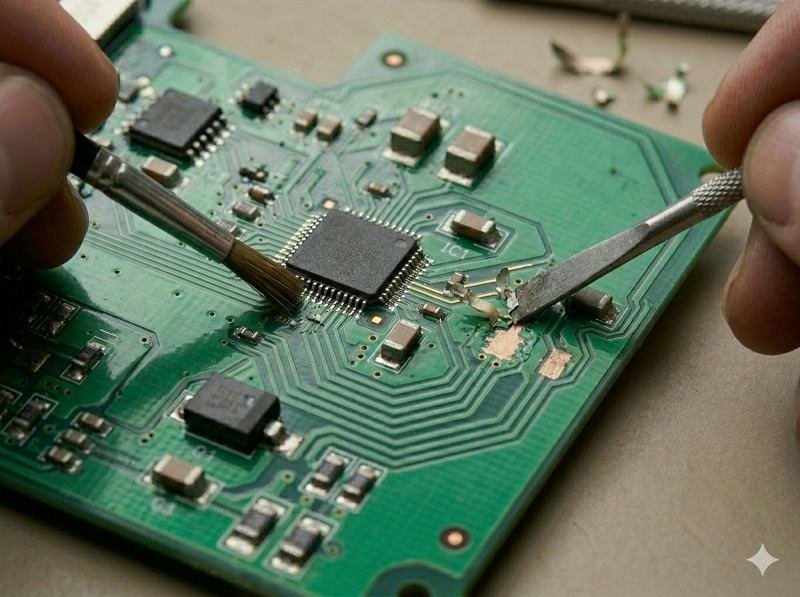
لماذا تعتبر إزالة الطلاء ضرورية
في تجميع ثنائي الفينيل متعدد الكلور, ، تكون إزالة الطلاء مطلوبة عادةً من أجل:
- إصلاح المكونات المعيبة أو استبدالها
- إصلاح عيوب الطلاء (الفقاعات، والشقوق، والتفريغ)
- إزالة التلوث العالق تحت الطلاء
- تنفيذ تغييرات التصميم أو التغييرات الهندسية
- إجراء فحص أو اختبار تفصيلي أو اختبار مفصل
بدون الإزالة المناسبة، سيكون الوصول إلى دارات ثنائي الفينيل متعدد الكلور صعباً ومحفوفاً بالمخاطر.
أنواع الطلاءات المطابقة وصعوبة إزالتها
تتطلب الطلاءات المختلفة طرق إزالة مختلفة:
- طلاءات الأكريليك → أسهل في الإزالة
- طلاءات السيليكون → مرن، متوسط الصعوبة
- طلاءات اليوريثان → أكثر مقاومة للمواد الكيميائية
- طلاءات الإيبوكسي → صعب للغاية ويصعب إزالته
- طلاءات الباريلين → تتطلب تقنيات متخصصة
يعد فهم نوع الطلاء أمرًا ضروريًا في تجميع ثنائي الفينيل متعدد الكلور قبل البدء في الإزالة.
طرق إزالة الطلاء الشائعة
إزالة المذيبات
- يستخدم مذيبات كيميائية لإذابة الطلاء
- الأكثر فعالية لطلاءات الأكريليك
- بسيطة وتستخدم على نطاق واسع في تجميع SMT إعادة العمل
الإزالة الميكانيكية
- يتضمن الكشط أو التنظيف بالفرشاة أو الكشط الدقيق
- مناسب للإزالة الموضعية
- يتطلب الدقة لتجنب تلف ثنائي الفينيل متعدد الكلور
التجريد الكيميائي
- يستخدم مواد كيميائية أقوى للطلاء القوي (يوريثان، إيبوكسي)
- فعالة ولكن يجب التحكم فيها بعناية
- يتطلب تدابير السلامة المناسبة
الإزالة الحرارية
- يطبق الحرارة لتنعيم الطلاء
- يجعل الإزالة الميكانيكية أسهل
- يجب تجنب السخونة الزائدة للمكونات الحساسة
إزالة البلازما أو الليزر (متقدم)
- تُستخدم للألواح عالية الدقة أو المعقدة
- مثالي للإزالة الانتقائية في الأماكن الراقية تجميع ثنائي الفينيل متعدد الكلور
خطوات عملية إزالة الطلاء
- تحديد نوع الطلاء
- حدد طريقة الإزالة المناسبة
- حماية المكونات المحيطة (إخفاء إذا لزم الأمر)
- إزالة الطلاء من المنطقة المستهدفة
- تنظيف البقايا جيدًا
- افحص ثنائي الفينيل متعدد الكلور بحثًا عن وجود تلف أو طلاء متبقٍ
يجب التحكم في كل خطوة بعناية للحفاظ على سلامة اللوحة.
التحديات في إزالة الطلاء
- خطر إتلاف المكونات أو آثار ثنائي الفينيل متعدد الكلور
- البقايا المتبقية التي تؤثر على إعادة الطلاء
- تستغرق وقتاً طويلاً للطلاءات الصلبة
- مخاوف تتعلق بالسلامة عند استخدام المواد الكيميائية
تسلط هذه التحديات الضوء على أهمية التحكم السليم في العملية في تجميع ثنائي الفينيل متعدد الكلور.
أفضل الممارسات
- استخدام الطلاءات التي تسمح بإعادة العمل بشكل أسهل عندما يكون ذلك ممكناً
- قصر الإزالة على المناطق الضرورية فقط
- استخدام الأدوات المناسبة والفنيين المدربين
- اتبع إرشادات السلامة والبيئة
- تأكد من التنظيف الكامل قبل إعادة الطلاء
الخاتمة
تُعد عملية إزالة الطلاء جزءًا أساسيًا من عملية إعادة العمل في تجميع ثنائي الفينيل متعدد الكلور, تجميع SMT, و تجميع ثنائي الفينيل متعدد الكلور. من خلال اختيار الطريقة الصحيحة واتباع الإجراءات الخاضعة للرقابة، يمكن للمصنعين إزالة الطلاء المطابق, وإجراء الإصلاحات واستعادة وظائف ثنائي الفينيل متعدد الكلور دون المساس بالموثوقية.
احصل على عرض أسعار الطلاء المطابق
هل تعمل في مجال السيارات أو الصناعة أو الإلكترونيات الخارجية؟ يمكننا المساعدة في الطلاء المطابق.
أرسل لنا متطلباتك واحصل على استجابة سريعة من فريقنا الهندسي.
✔ استجابة على مدار 24 ساعة ✔ دعم هندسي ✔ دعم هندسي ✔ إنتاج صغير وضخم
شركة Shenzhen Tengxinjie Electronics Co., Ltd.
 العربية
  English
  Deutsch
  Français
  Português do Brasil
  Español
  日本語
日本語  Nederlands
  Italiano
  Русский
  한국어
한국어  Svenska
  Polski
  Türkçe
  繁體中文
繁體中文