
Metoda pomiaru grubości powłoki
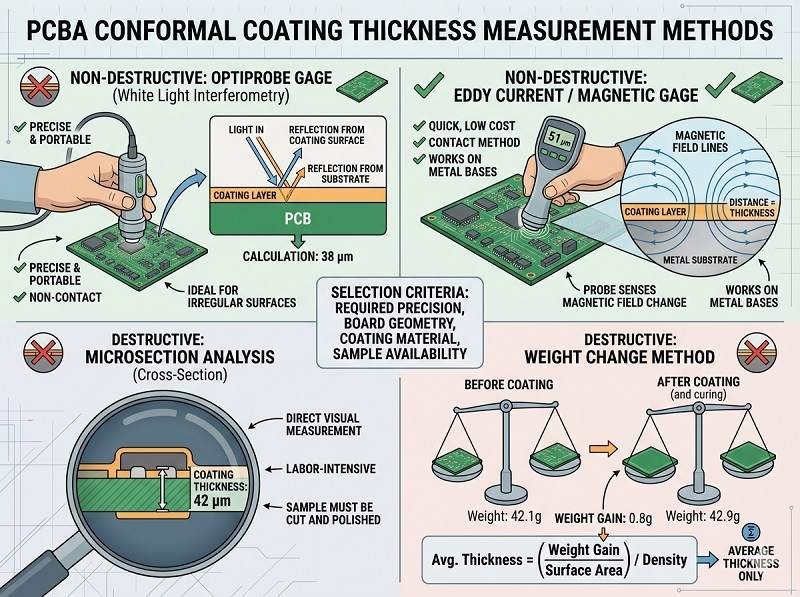
Pomiar grubości powłoki jest procesem określania grubości powłoki. Powłoka konformalna zastosowany na płytce drukowanej w Montaż PCB oraz Montaż SMT. Odpowiednia grubość ma kluczowe znaczenie dla zapewnienia skutecznej ochrony bez zakłócania wydajności elektrycznej lub funkcjonalności komponentów.
Dlaczego pomiar grubości jest ważny
Grubość Powłoka konformalna bezpośrednio wpływa na jego wydajność.
Jeśli jest zbyt cienki:
- Niewystarczająca ochrona przed wilgocią i zanieczyszczeniami
- Zmniejszona wydajność izolacji
Jeśli jest zbyt gruby:
- Ryzyko pęknięcia lub rozwarstwienia
- Potencjalna ingerencja w złącza lub ruchome części
Dokładny pomiar zapewnia optymalną jakość powłoki w Montaż PCB.
Typowe metody pomiaru grubości powłoki
Pomiar grubości mokrej warstwy
Ta metoda jest używana natychmiast po nałożeniu powłoki przed utwardzeniem.
Jak to działa?
- Miernik mokrej powłoki jest umieszczany na powlekanej powierzchni
- Grubość jest określana na podstawie punktów styku
Zalety:
- Szybko i prosto
- Pomaga dostosować parametry procesu w czasie rzeczywistym
Ograniczenia:
- Ma zastosowanie tylko przed utwardzeniem
- Mniej precyzyjny niż pomiar na sucho
Pomiar grubości suchej powłoki
Wykonano po utwardzeniu powłoki, Jest to najczęściej stosowana metoda w Montaż SMT.
Metody obejmują:
Pomiar mikrometryczny
- Mierzy całkowitą grubość przed i po nałożeniu powłoki
- Oblicza grubość powłoki na podstawie różnicy
Ultradźwiękowy pomiar grubości
- Wykorzystuje fale dźwiękowe do pomiaru grubości powłoki
- Nieniszczące i dokładne
Metoda prądów wirowych
- Używany do podłoży przewodzących
- Mierzy grubość na podstawie odpowiedzi elektromagnetycznej
Pomiar przekroju poprzecznego
Jak to działa?
- Płytka PCB jest cięta w celu odsłonięcia przekroju
- Grubość jest mierzona pod mikroskopem
Zalety:
- Bardzo dokładny
- Przydatne do walidacji procesu
Wady:
- Metoda destrukcyjna
- Nie nadaje się do rutynowej kontroli
Optyczne metody pomiarowe
Zaawansowany Montaż PCB procesy mogą wykorzystywać systemy optyczne:
- Pomiar laserowy
- Mikroskopia cyfrowa
- Zautomatyzowane systemy kontroli
Zapewniają one wysoką precyzję i nadają się do zautomatyzowanych zastosowań. Montaż SMT linie.
Typowe zakresy grubości powłok
W zależności od rodzaju powłoki:
- Akryl: 25-75 mikronów
- Silikon: 50-200 mikronów
- Poliuretan: 25-100 mikronów
- Epoksyd: 25-100 mikronów
Utrzymanie prawidłowego zakresu zapewnia niezawodność Powłoka konformalna wydajność.
Czynniki wpływające na grubość
- Metoda powlekania (natryskowa, zanurzeniowa, pędzlem, selektywna)
- Lepkość materiału powłoki
- Prędkość i ciśnienie aplikacji
- Warunki środowiskowe
Muszą one być kontrolowane w Montaż SMT procesy.
Wniosek końcowy
Pomiar grubości powłoki jest istotnym etapem kontroli jakości w Montaż PCB oraz Montaż SMT. Dzięki zastosowaniu odpowiednich metod, takich jak pomiary mokrej powłoki, badania ultradźwiękowe i analiza przekroju, producenci mogą zapewnić, że Powłoka konformalna spełnia wymagania dotyczące wydajności i niezawodności.
Uzyskaj wycenę powłoki konformalnej
Masz specjalne wymagania dotyczące powłoki? Prześlij nam swoje pliki PCB do oceny.
Prześlij nam swoje wymagania i uzyskaj szybką odpowiedź od naszego zespołu inżynierów.
24-godzinna reakcja ✔ Wsparcie inżynieryjne ✔ Mała i masowa produkcja
Shenzhen Tengxinjie Electronics Co., Ltd.
 Polski
  English
  Deutsch
  Français
  Português do Brasil
  Español
  日本語
日本語  Nederlands
  Italiano
  Русский
  한국어
한국어  العربية
  Svenska
  Türkçe
  繁體中文
繁體中文