
혼합 PCB 어셈블리
혼합 PCB 어셈블리는 두 가지를 결합한 제조 방식입니다. SMT 어셈블리 (표면 실장 기술) 와 스루홀 기술(THT)을 동일한 인쇄 회로 기판에 적용합니다. 현대의 PCB 어셈블리, 이 하이브리드 방식은 컴팩트한 디자인, 생산 효율성 및 기계적 강도 간의 최상의 균형을 이루기 위해 널리 사용됩니다.
혼합 PCB 어셈블리는 단일 조립 방식에 의존하는 대신 고속 자동화 및 소형화와 같은 SMT 조립의 장점과 스루홀 부품의 내구성 및 신뢰성을 통합합니다.
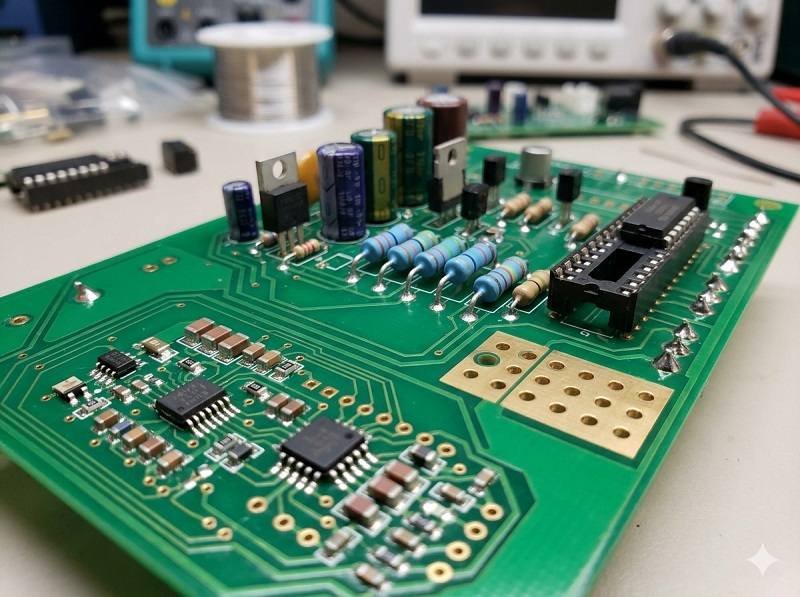
혼합 PCB 어셈블리를 사용하는 이유는?
실제 전자 설계에서 모든 부품이 SMT 조립에 적합한 것은 아닙니다. 작고 가벼운 부품은 표면 실장에 적합하지만, 더 크거나 고전력 부품은 더 강력한 기계적 지원이 필요한 경우가 많습니다.
혼합 PCB 어셈블리는 다음과 같은 경우에 사용됩니다:
- 설계에는 SMD(표면 실장 장치)와 스루홀 구성 요소가 모두 포함됩니다.
- 높은 기계적 강도가 요구되는 경우(예: 커넥터, 변압기)
- 진동이나 열악한 환경을 견딜 수 있는 제품이어야 합니다.
- 전기적 성능과 구조적 안정성이 모두 중요합니다.
따라서 혼합 PCB 어셈블리는 복잡한 고성능 전자 제품을 위한 실용적인 솔루션입니다.
혼합 PCB 조립 공정
혼합 PCB 조립 공정은 일반적으로 품질과 효율성을 보장하기 위해 신중하게 계획된 순서를 따릅니다:
SMT 조립 우선
대부분의 경우 SMT 조립이 먼저 수행됩니다. 솔더 페이스트를 도포하고 픽 앤 플레이스 기계를 사용하여 부품을 배치한 다음 리플로우 납땜을 통해 기판을 조립합니다.
스루홀 컴포넌트 삽입
SMT 조립 후 스루홀 부품은 미리 드릴링된 구멍에 삽입됩니다. 이 작업은 수동 또는 자동 삽입 장비를 사용하여 수행할 수 있습니다.
웨이브 납땜 또는 선택적 납땜
스루홀 구성 요소는 설계 및 생산 요구 사항에 따라 웨이브 솔더링 또는 선택적 솔더링 기술을 사용하여 납땜합니다.
검사 및 테스트
최종 PCB 어셈블리는 모든 구성 요소가 올바르게 설치되고 보드가 의도한 대로 작동하는지 확인하기 위해 AOI, X-레이 검사 및 기능 테스트와 같은 검사 프로세스를 거칩니다.
혼합 PCB 어셈블리의 장점
혼합 PCB 어셈블리는 몇 가지 중요한 이점을 제공합니다:
디자인 유연성
엔지니어는 각 구성 요소에 가장 적합한 마운팅 방법을 선택하여 성능과 안정성을 모두 최적화할 수 있습니다.
향상된 기계적 강도
스루홀 구성품은 특히 커넥터와 무거운 부품에 강력한 고정력을 제공합니다.
높은 효율성
SMT 조립은 소형 부품의 빠르고 자동화된 배치를 보장하여 전반적인 생산 효율성을 향상시킵니다.
향상된 안정성
두 기술을 결합하면 특히 까다로운 환경에서 더욱 견고하고 내구성 있는 제품을 만들 수 있습니다.
혼합 PCB 조립의 과제
혼합 PCB 어셈블리는 매우 효과적이지만 몇 가지 복잡성을 야기하기도 합니다:
- 순수 SMT 어셈블리에 비해 더 복잡한 제조 공정
- 신중한 프로세스 계획과 순서가 필요합니다.
- 여러 조립 단계로 인한 생산 비용 증가
- 검사 요구 사항 증가
제조업체는 혼합 기술 프로젝트를 성공적으로 관리하기 위해 PCB 조립과 SMT 조립 모두에 대한 강력한 전문성을 갖추어야 합니다.
혼합 PCB 어셈블리 대 순수 SMT 어셈블리
혼합 PCB 어셈블리:
- SMT 조립과 스루홀 조립 결합
- 더 나은 기계적 강도 제공
- 복잡하고 신뢰성이 높은 설계에 적합
- 약간 더 높은 비용과 복잡성
SMT 조립 전용:
- 표면 실장형 구성 요소만 사용
- 대용량에 더 빠르고 비용 효율적
- 소형 가전제품에 이상적
- 대형 부품의 기계적 강도 제한
혼합 PCB 어셈블리의 응용 분야
혼합 PCB 어셈블리는 성능과 내구성이 모두 중요한 산업에서 일반적으로 사용됩니다:
- 자동차 전자 장치 및 제어 시스템
- 산업 자동화 장비
- 전원 공급 장치 및 에너지 시스템
- 의료 기기
- 항공우주 및 방위 전자 제품
이러한 애플리케이션에는 종종 컴팩트한 회로와 견고한 물리적 연결의 조합이 필요합니다.
최신 PCB 어셈블리에서의 역할
전자 제품이 더욱 발전함에 따라 혼합 PCB 어셈블리의 중요성이 점점 더 커지고 있습니다. 이를 통해 제조업체는 스루홀 부품의 강도를 유지하면서 SMT 조립의 속도를 활용할 수 있습니다.
많은 최신 PCB 어셈블리 프로젝트는 더 이상 순수하게 SMT 기반이 아니라 까다로운 기술 요구 사항을 충족하기 위해 혼합 기술에 의존합니다.
결론
혼합 PCB 조립은 SMT 조립과 스루홀 기술을 결합하여 고성능, 신뢰성 및 내구성이 뛰어난 전자 제품을 만드는 하이브리드 접근 방식입니다. 두 가지 방법의 장점을 통합하여 복잡한 설계와 까다로운 애플리케이션에 필요한 유연성을 제공합니다.
최적화된 성능과 신뢰성을 원하는 기업에게 혼합 PCB 어셈블리는 최신 PCB 어셈블리 공정에서 최고의 솔루션인 경우가 많습니다.
PCB 어셈블리 가격 및 리드 타임에 대한 도움이 필요하신가요? 지금 바로 견적을 요청하세요.
당사는 SMT, DIP 및 전체 턴키 솔루션을 포함한 전문 PCB 조립 서비스를 제공합니다.
NDA 가능 ✔ 24시간 이내 빠른 견적 ✔ ISO 인증 공장 ✔ 원스톱 PCB 및 PCBA 서비스
 한국어
한국어  English
  Deutsch
  Français
  Português do Brasil
  Español
  日本語
日本語  Nederlands
  Italiano
  Русский
  العربية
  Svenska
  Polski
  Türkçe
  繁體中文
繁體中文