
Proces usuwania powłoki
Proces usuwania powłoki odnosi się do kontrolowanego usuwania Powłoka konformalna z płytki PCB, aby umożliwić kontrolę, naprawę, modyfikację lub przeróbkę. Jest to krytyczna operacja w Montaż PCB oraz Montaż SMT, zwłaszcza w przypadku konieczności usunięcia usterek lub wymiany podzespołów.
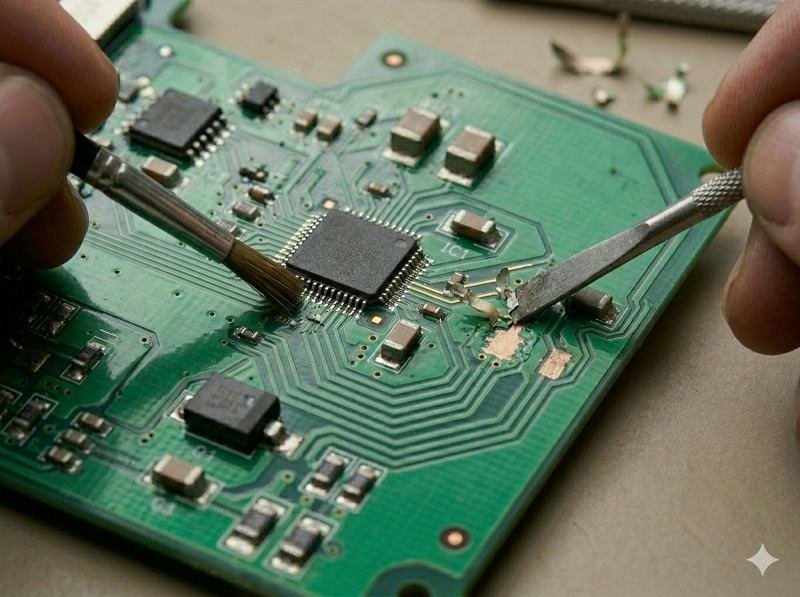
Dlaczego usuwanie powłok jest konieczne
W Montaż płytek drukowanych pod klucz, Usunięcie powłoki jest zazwyczaj wymagane dla
- Naprawa lub wymiana wadliwych komponentów
- Usuwanie defektów powłoki (pęcherzyki, pęknięcia, rozwarstwienia)
- Usuwanie zanieczyszczeń uwięzionych pod powłoką
- Wdrażanie zmian projektowych lub inżynieryjnych
- Przeprowadzanie szczegółowych inspekcji lub testów
Bez odpowiedniego demontażu dostęp do obwodów PCB byłby trudny i ryzykowny.
Rodzaje powłok konforemnych i trudności w ich usuwaniu
Różne powłoki wymagają różnych metod usuwania:
- Powłoki akrylowe → najłatwiejszy do usunięcia
- Powłoki silikonowe → elastyczny, umiarkowany poziom trudności
- Powłoki uretanowe → większa odporność chemiczna
- Powłoki epoksydowe → bardzo twardy, trudny do usunięcia
- Powłoki parylenowe → wymagają specjalistycznych technik
Zrozumienie typu powłoki jest niezbędne w Montaż PCB przed rozpoczęciem demontażu.
Popularne metody usuwania powłok
Usuwanie rozpuszczalników
- Wykorzystuje rozpuszczalniki chemiczne do rozpuszczenia powłoki.
- Najbardziej skuteczny w przypadku powłok akrylowych
- Prosty i szeroko stosowany w Montaż SMT przeróbka
Usuwanie mechaniczne
- Obejmuje skrobanie, szczotkowanie lub mikrodermabrazję.
- Nadaje się do usuwania miejscowego
- Wymaga precyzji, aby uniknąć uszkodzenia PCB
Usuwanie powłok chemicznych
- Używa silniejszych chemikaliów do twardych powłok (uretan, żywica epoksydowa)
- Skuteczny, ale musi być dokładnie kontrolowany
- Wymaga odpowiednich środków bezpieczeństwa
Usuwanie termiczne
- Stosuje ciepło w celu zmiękczenia powłoki
- Ułatwia usuwanie mechaniczne
- Należy unikać przegrzania wrażliwych komponentów
Usuwanie plazmą lub laserem (zaawansowane)
- Używany do precyzyjnych lub złożonych płyt
- Idealny do selektywnego usuwania w wysokiej jakości Montaż płytek drukowanych pod klucz
Etapy procesu usuwania powłoki
- Identyfikacja typu powłoki
- Wybierz odpowiednią metodę usuwania
- Ochrona otaczających elementów (w razie potrzeby maskowanie)
- Usunąć powłokę z obszaru docelowego
- Dokładnie wyczyść pozostałości
- Sprawdzić płytkę drukowaną pod kątem uszkodzeń lub pozostałości powłoki
Każdy krok musi być dokładnie kontrolowany, aby zachować integralność płyty.
Wyzwania związane z usuwaniem powłok
- Ryzyko uszkodzenia komponentów lub ścieżek PCB
- Pozostałości wpływające na ponowne powlekanie
- Czasochłonne w przypadku twardych powłok
- Kwestie bezpieczeństwa podczas korzystania z chemikaliów
Wyzwania te podkreślają znaczenie właściwej kontroli procesu w Montaż PCB.
Najlepsze praktyki
- W miarę możliwości należy stosować powłoki umożliwiające łatwiejszą przeróbkę.
- Ograniczenie usuwania tylko do niezbędnych obszarów
- Używaj odpowiednich narzędzi i przeszkolonych techników
- Przestrzeganie wytycznych dotyczących bezpieczeństwa i ochrony środowiska
- Zapewnienie całkowitego oczyszczenia przed ponownym malowaniem
Wnioski
Proces usuwania powłoki jest istotną częścią przeróbki w Montaż PCB, Montaż SMT, oraz Montaż płytek drukowanych pod klucz. Wybierając właściwą metodę i postępując zgodnie z kontrolowanymi procedurami, producenci mogą bezpiecznie usunąć Powłoka konformalna, wykonywać naprawy i przywracać funkcjonalność PCB bez uszczerbku dla niezawodności.
Uzyskaj wycenę powłoki konformalnej
Pracujesz nad elektroniką samochodową, przemysłową lub zewnętrzną? Możemy pomóc z powłoką konforemną.
Prześlij nam swoje wymagania i uzyskaj szybką odpowiedź od naszego zespołu inżynierów.
24-godzinna reakcja ✔ Wsparcie inżynieryjne ✔ Mała i masowa produkcja
Shenzhen Tengxinjie Electronics Co., Ltd.
 Polski
  English
  Deutsch
  Français
  Português do Brasil
  Español
  日本語
日本語  Nederlands
  Italiano
  Русский
  한국어
한국어  العربية
  Svenska
  Türkçe
  繁體中文
繁體中文