
Różnica między akrylowymi i silikonowymi powłokami HumiSeal
Akryl oraz silikonowe powłoki HumiSeal to dwa najczęściej używane Powłoka konformalna typy w Montaż PCB, Montaż prototypów PCB, oraz Montaż SMT. Chociaż oba zapewniają ochronę przed wilgocią, kurzem i zanieczyszczeniami, różnią się znacznie pod względem wydajność, elastyczność, koszty i scenariusze zastosowań.
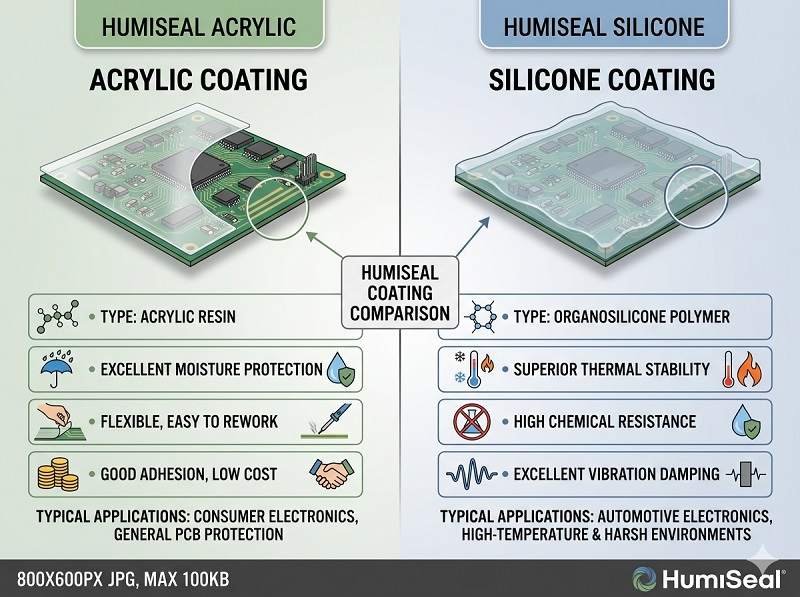
Kluczowa różnica: właściwości materiału
Główne rozróżnienie polega na ich naturze chemicznej:
- Powłoki akrylowe (AR) → twarde, przezroczyste, szybkoschnące polimery
- Powłoki silikonowe (SR) → miękkie, gumopodobne, wysoce elastyczne materiały
Powłoki akrylowe utwardzają się do sztywna warstwa ochronna, podczas gdy powłoki silikonowe pozostają elastyczny i giętki.
Szybkość suszenia i wydajność procesu
Powłoki akrylowe są znane ze swoich szybkie suszenie i łatwe przetwarzanie, dzięki czemu idealnie nadają się do dużych prędkości Montaż SMT linie produkcyjne. Mogą wyschnąć w ciągu kilku minut i są łatwe w aplikacji.
Powłoki silikonowe zazwyczaj wymagają dłuższy czas utwardzania, Szczególnie w przypadku utwardzania wilgocią, które może spowolnić wydajność produkcji.
Elastyczność i odporność na wibracje
Jest to jedna z najważniejszych różnic:
- Akryl → stosunkowo sztywny, może pękać pod wpływem wibracji lub cykli termicznych
- Silikon → wysoce elastyczny, absorbuje naprężenia i jest odporny na pękanie
Powłoki silikonowe lepiej nadają się do środowisk z naprężenia mechaniczne, wibracje lub rozszerzalność cieplna.
Odporność na temperaturę
Powłoki akrylowe dobrze sprawdzają się w umiarkowane zakresy temperatur (zazwyczaj do ~120°C).
Powłoki silikonowe oferują doskonała odporność na wysokie i niskie temperatury, często działający z -55°C do 200°C lub więcej, dzięki czemu idealnie nadają się do pracy w ekstremalnych warunkach.
Odporność chemiczna i środowiskowa
- Akryl → dobra ochrona przed wilgocią, ale ograniczona odporność na agresywne chemikalia
- Silikon → wysoka odporność na chemikalia, wilgoć i trudne warunki środowiskowe
Powłoki silikonowe są preferowane dla motoryzacja, lotnictwo i elektronika zewnętrzna gdzie długoterminowa trwałość ma kluczowe znaczenie.
Przeróbki i naprawy
W Montaż PCB, Zdolność do przeróbek jest bardzo ważna:
- Akryl → Łatwy do usunięcia i naprawy przy użyciu popularnych rozpuszczalników
- Silikon → trudniejsze do usunięcia, wymaga specjalnych procesów
Dzięki temu powłoki akrylowe doskonale nadają się do Montaż prototypów PCB, gdzie konieczne są częste modyfikacje.
Kwestie kosztów i produkcji
- Akryl → Niższy koszt + szybsze przetwarzanie
- Silikon → Wyższy koszt + lepsza wydajność
Dla dużych ilości Montaż SMT, Akryl jest często wybierany ze względu na efektywność kosztową, podczas gdy silikon jest używany, gdy wymagania dotyczące wydajności uzasadniają wyższy koszt.
Typowe zastosowania
Akrylowe powłoki HumiSeal (np. 1B31):
- Elektronika użytkowa
- Sterowniki LED i zasilacze
- Ogólnego przeznaczenia Montaż PCB
- Montaż prototypów PCB (łatwa przeróbka)
Silikonowe powłoki HumiSeal:
- Elektronika samochodowa
- Systemy lotnicze i kosmiczne
- Środowisko zewnętrzne i wysoka wilgotność
- Zastosowania wysokotemperaturowe
Podsumowanie porównania
| Cecha | Powłoka akrylowa | Powłoka silikonowa |
|---|---|---|
| Prędkość suszenia | Bardzo szybko | Wolniej |
| Elastyczność | Niski do umiarkowanego | Bardzo wysoki |
| Odporność na temperaturę | Umiarkowany | Doskonały |
| Odporność chemiczna | Umiarkowany | Wysoki |
| Możliwość przebudowy | Łatwy | Trudne |
| Koszt | Niższy | Wyższy |
| Najlepsze zastosowanie | Standardowa elektronika | Trudne warunki pracy |
Ostateczne spostrzeżenia
Nie ma uniwersalnego wyboru pomiędzy akrylowymi i silikonowymi powłokami HumiSeal.
- Wybierz powłoki akrylowe dla Ekonomiczne, szybkie i przyjazne dla przeróbek rozwiązania w Montaż PCB oraz Montaż SMT
- Wybierz powłoki silikonowe dla ekstremalne warunki pracy, wysoka niezawodność i długoterminowa trwałość
W praktyce wielu producentów weryfikuje obie opcje podczas Montaż prototypów PCB przed wyborem najbardziej odpowiedniej powłoki do masowej produkcji.
Uzyskaj wycenę powłoki konformalnej
Nie masz pewności, która powłoka ochronna jest odpowiednia dla Twojego produktu? Skontaktuj się z naszymi ekspertami już dziś.
Prześlij nam swoje wymagania i uzyskaj szybką odpowiedź od naszego zespołu inżynierów.
24-godzinna reakcja ✔ Wsparcie inżynieryjne ✔ Mała i masowa produkcja
Shenzhen Tengxinjie Electronics Co., Ltd.
 Polski
  English
  Deutsch
  Français
  Português do Brasil
  Español
  日本語
日本語  Nederlands
  Italiano
  Русский
  한국어
한국어  العربية
  Svenska
  Türkçe
  繁體中文
繁體中文