
IPC-norm in PCB-assemblage
IPC-normen voor PCB-assemblage zijn een reeks wereldwijd erkende richtlijnen en specificaties ontwikkeld door de IPC om kwaliteit, betrouwbaarheid en consistentie in de productie van elektronica te garanderen. Deze standaarden definiëren best practices voor PCB-assemblage, SMT-assemblage, inspectie, testen en algemene PCB Productie processen.
Eenvoudig gezegd fungeren IPC-standaarden als een gemeenschappelijke taal tussen fabrikanten, technici en klanten, om ervoor te zorgen dat printplaten worden geproduceerd en geassembleerd met consistente en betrouwbare kwaliteitsniveaus.
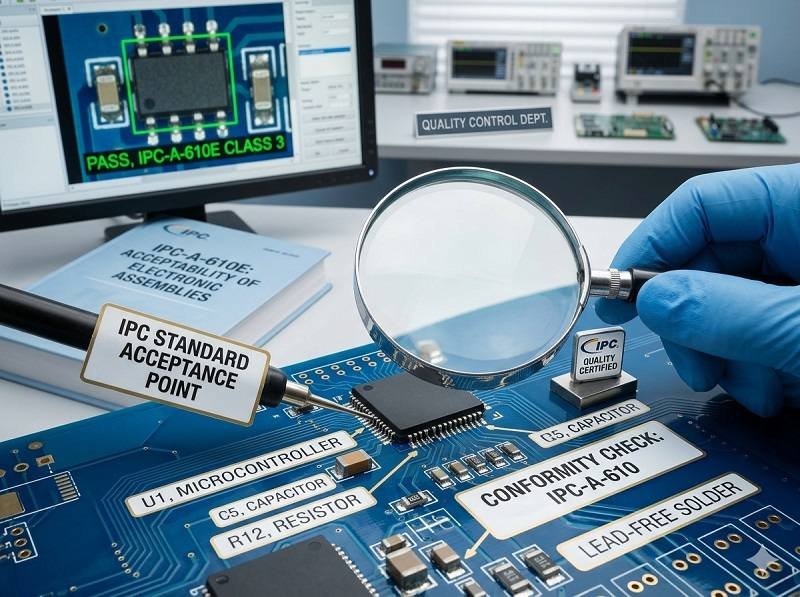
Waarom IPC-normen belangrijk zijn
IPC-normen zijn essentieel omdat ze duidelijke criteria geven voor productie en inspectie.
Ze helpen de betrouwbaarheid van producten te garanderen, vooral in kritieke toepassingen zoals medische apparatuur, auto-elektronica en lucht- en ruimtevaartsystemen. Door de IPC-normen te volgen, kunnen fabrikanten defecten verminderen, de opbrengst verbeteren en voldoen aan de verwachtingen van de klant.
In Turnkey PCB-assemblage, IPC-standaarden helpen ook om de communicatie binnen de toeleveringsketen te stroomlijnen, zodat ontwerp-, fabricage- en assemblageprocessen op elkaar zijn afgestemd.
Belangrijkste IPC-normen voor PCB-assemblage
Verschillende IPC-standaarden worden veel gebruikt bij PCB-assemblage en SMT-assemblage.
IPC-A-610 is de meest gebruikte standaard voor de aanvaardbaarheid van elektronische assemblages. Het definieert visuele inspectiecriteria voor soldeerverbindingen, plaatsing van componenten en algemeen vakmanschap.
IPC-J-STD-001 specificeert de vereisten voor gesoldeerde elektrische en elektronische assemblages. Het richt zich op materialen, processen en vakmanschap voor betrouwbaar solderen.
IPC-2221 geeft algemene ontwerpnormen voor PCB's, inclusief lay-out, spatiëring en structurele overwegingen.
IPC-6012 Omvat kwalificatie- en prestatiespecificaties voor stijve PCB's, waardoor de kwaliteit bij de productie van PCB's wordt gewaarborgd.
Deze standaarden werken samen om de hele levenscyclus van ontwerp tot eindassemblage te dekken.
IPC-klassen in PCB-assemblage
De IPC-normen delen producten in drie verschillende klassen in op basis van betrouwbaarheidseisen.
Klasse 1 is van toepassing op algemene elektronische producten waarbij de functie de belangrijkste vereiste is, zoals consumentenelektronica.
Klasse 2 is voor elektronicaproducten voor speciale toepassingen, waarbij betrouwbaarheid en een langere levensduur belangrijk zijn, zoals industriële apparatuur.
Klasse 3 is voor elektronische producten met een hoge betrouwbaarheid, waaronder medische, luchtvaart- en militaire toepassingen, waarbij de prestaties kritisch zijn en storingen niet acceptabel zijn.
Het kiezen van de juiste klasse is essentieel bij PCB-assemblage en SMT-assemblageprocessen.
Rol van IPC-standaarden in SMT-assemblage
In SMT-assemblage, IPC-normen definiëren aanvaardbare soldeerverbindingen, uitlijning van componenten en defectcriteria.
Ze begeleiden processen zoals het aanbrengen van soldeerpasta, reflow solderen en inspectie. Door deze standaarden te volgen, kunnen fabrikanten een consistente kwaliteit garanderen, zelfs bij assemblages met een hoge dichtheid en een kleine steek.
IPC-richtlijnen helpen ook bij het verminderen van veelvoorkomende defecten zoals soldeerbruggen, onvoldoende soldeer en verkeerde uitlijning.
IPC-normen in kant-en-klare PCB-assemblage
Bij turnkey PCB-assemblage worden de IPC-normen in alle stadia toegepast, inclusief PCB Productie, Componentsourcing, SMT-assemblage en testen.
Dit zorgt ervoor dat het eindproduct voldoet aan de vereiste kwaliteitsniveaus en aan de specificaties van de klant. Documentatie en traceerbaarheid worden ook bijgehouden volgens de IPC-richtlijnen.
Werken met een IPC-gecertificeerde fabrikant geeft vertrouwen in productkwaliteit en procescontrole.
Voordelen van het volgen van IPC-standaarden
Het volgen van IPC-standaarden biedt verschillende voordelen.
Het verbetert de betrouwbaarheid van producten en vermindert het aantal storingen.
Het garandeert een consistente kwaliteit voor verschillende productiebatches.
Het vergemakkelijkt wereldwijde samenwerking door gestandaardiseerde richtlijnen te bieden.
Het vergroot het vertrouwen van de klant en voldoet aan de eisen van de industrie.
Uitdagingen bij het implementeren van IPC-standaarden
Het implementeren van IPC-normen kan investeringen in training, certificering en procescontrole vereisen.
Fabrikanten moeten ervoor zorgen dat het personeel wordt opgeleid en gecertificeerd volgens de IPC-vereisten. Apparatuur en inspectieprocessen moeten ook worden afgestemd op deze normen.
Deze uitdagingen wegen echter niet op tegen de langetermijnvoordelen van verbeterde kwaliteit en minder defecten.
Beste praktijken voor naleving van IPC
Om IPC-conformiteit te bereiken, moeten fabrikanten best practices volgen.
Personeel opleiden en IPC-certificaten behalen.
Strikte kwaliteitscontrole en inspectieprocessen implementeren.
Gebruik materialen van hoge kwaliteit en zorg voor een consistent proces.
Ontwerp-, productie- en assemblageprocessen voor PCB's afstemmen op de IPC-richtlijnen.
Samenwerken met ervaren leveranciers die IPC-gecertificeerd zijn SMT-assemblage en kant-en-klare PCB-assemblagediensten.
Conclusie
IPC-normen zijn een hoeksteen van kwaliteit in PCB-assemblage en elektronicaproductie. Door duidelijke richtlijnen te bieden voor ontwerp, productie en inspectie zorgen ze voor betrouwbare en consistente resultaten in de hele industrie.
Wanneer ze worden toegepast in SMT-assemblage, PCB-productie en kant-en-klare PCB-assemblage, helpen IPC-standaarden fabrikanten om producten van hoge kwaliteit te leveren die voldoen aan de wereldwijde verwachtingen en prestatievereisten.
Wilt u de kosten van uw PCB assemblage weten? Vraag dan nu een gedetailleerde offerte aan.
We bieden professionele assemblagediensten voor printplaten, waaronder SMT, DIP en kant-en-klare oplossingen.
✔ NDA beschikbaar ✔ Snel offerte binnen 24 uur ✔ ISO-gecertificeerde fabriek ✔ One-stop PCB & PCBA Service
 Nederlands
  English
  Deutsch
  Français
  Português do Brasil
  Español
  日本語
日本語  Italiano
  Русский
  한국어
한국어  العربية
  Svenska
  Polski
  Türkçe
  繁體中文
繁體中文