
De kosten van PCB-assemblage beïnvloeden
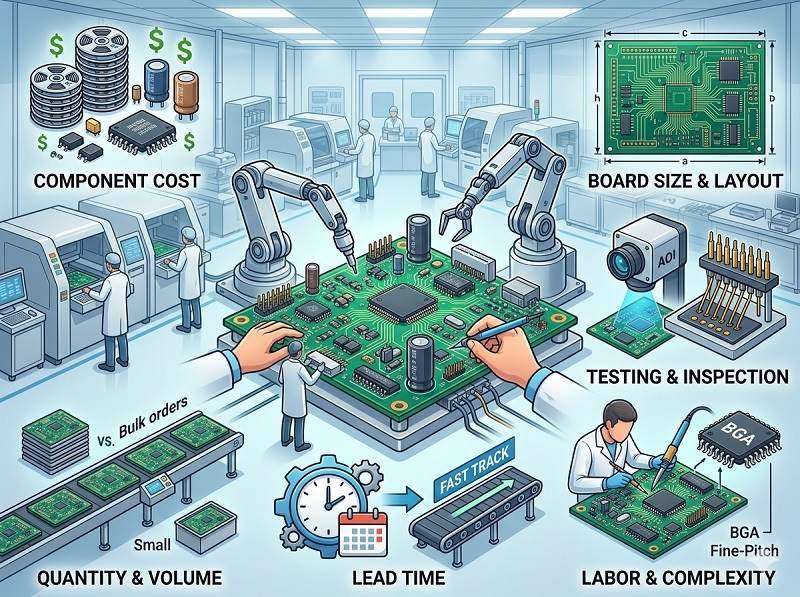
De kosten van PCB-assemblage worden beïnvloed door een groot aantal technische, materiële en operationele factoren. Als u deze variabelen begrijpt, kunt u de prijzen beter beheersen en uw productie optimaliseren. PCB-assemblage projecten.
Complex ontwerp
Een van de meest kritieke factoren is de complexiteit van het PCB-ontwerp. Borden met een hoge componentendichtheid, componenten met een fijne steek of geavanceerde pakketten zoals BGA en QFN vereisen meer precisie. SMT-assemblage processen. Meerlagige printplaten, HDI-structuren en impedantiegeregelde ontwerpen verhogen ook de PCB Productie en assemblagekosten.
Type componenten en herkomst
Het type, de hoeveelheid en de beschikbaarheid van componenten hebben een grote invloed op de kosten. Gespecialiseerde of moeilijk verkrijgbare componenten kunnen de prijzen opdrijven door leveringstekorten of lange levertijden. Bovendien verhoogt het gebruik van veel unieke componenten de plaatsingstijd en de complexiteit van de inkoop bij PCB-assemblage.
Productievolume
De bestelhoeveelheid heeft een grote invloed op de prijs. Prototype PCB-assemblage heeft meestal een hogere kostprijs per eenheid omdat de setupkosten, zoals het maken van een sjabloon en het programmeren van de machine, gespreid worden over een klein aantal printplaten. Daarentegen verlaagt volumeproductie de kosten per eenheid door schaalvoordelen.
Specificaties PCB-productie
De specificaties van de kale printplaat hebben een directe invloed op de kosten. Factoren zijn onder andere het aantal lagen, de grootte van de printplaat, het materiaaltype (FR4, Rogers, enz.), de oppervlakteafwerking (HASL, ENIG, OSP), de koperdikte en de boorvereisten. Meer geavanceerde specificaties verhogen PCB Productie kosten en beïnvloeden indirect de assemblageprijzen.
Assemblagetechnologie en -proces
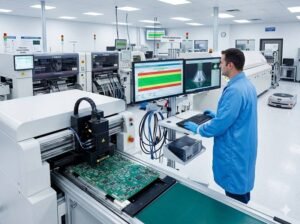
Verschillende assemblagemethoden beïnvloeden de kosten. Geautomatiseerd SMT-assemblage is kosteneffectief voor grote volumes, terwijl de through-hole of gemengde technologie extra handarbeid of golfsoldeerprocessen vereist. Selectief solderen, herbewerking en speciale behandeling dragen ook bij aan de totale kosten.
Arbeids- en setupkosten
De setupkosten omvatten stencilproductie, pick-and-place programmering en procesengineering. Dit zijn vaste kosten die vooral belangrijk zijn bij Prototype PCB-assemblage. De arbeidskosten variëren ook afhankelijk van de regio, het vaardigheidsniveau en de complexiteit van de productie.
Testen en kwaliteitseisen
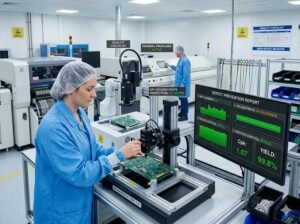
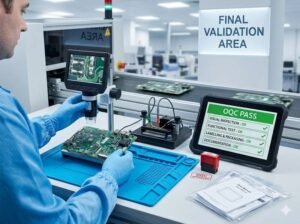
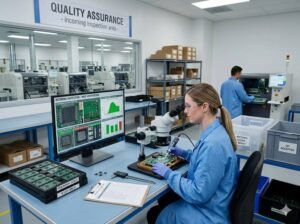
Kwaliteitsborgingsprocessen zoals AOI (Automated Optical Inspection), röntgeninspectie, ICT (In-Circuit Testing) en functionele testen verhogen de totale kosten, maar garanderen de betrouwbaarheid van het product. Industrieën met een hoge betrouwbaarheid (medisch, auto-industrie, luchtvaart) vereisen vaak strengere testnormen.
Doorlooptijd
Dringende of spoedbestellingen brengen meestal hogere kosten met zich mee. Een snelle doorlooptijd kan een prioriteitsplanning, overuren of een snellere inkoop van onderdelen vereisen. PCB-assemblage prijzen.
Verpakking en logistiek
De uiteindelijke kosten omvatten ook verpakking, verwerking en verzending. Internationale verzending, speciale verpakkingsvereisten (ESD-bescherming, vacuümverpakking) en douanerechten kunnen allemaal van invloed zijn op de totale projectkosten.
Leverancierscapaciteit en servicemodel
Kiezen tussen in consignatie gegeven, gedeeltelijk turnkey of volledig turnkey PCB-assemblage diensten van invloed op de kosten. Een kant-en-klare leverancier die zowel PCB Productie en componentensourcing kan de coördinatie-inspanning en verborgen kosten verminderen, zelfs als de offerte vooraf hoger lijkt.
Conclusie
De kosten van printplaatassemblage worden bepaald door een combinatie van ontwerp, materialen, productieschaal en servicevereisten. Door ontwerpkeuzes te optimaliseren, standaardcomponenten te selecteren en productievolumes verstandig te plannen, kunnen bedrijven de kosten aanzienlijk verlagen met behoud van kwaliteit in zowel Prototype PCB-assemblage en grootschalige SMT-assemblage projecten.
Hulp nodig met PCB assemblage prijzen en doorlooptijd? Vraag vandaag nog uw offerte aan.
We bieden professionele assemblagediensten voor printplaten, waaronder SMT, DIP en kant-en-klare oplossingen.
✔ NDA beschikbaar ✔ Snel offerte binnen 24 uur ✔ ISO-gecertificeerde fabriek ✔ One-stop PCB & PCBA Service
 Nederlands
  English
  Deutsch
  Français
  Português do Brasil
  Español
  日本語
日本語  Italiano
  Русский
  한국어
한국어  العربية
  Svenska
  Polski
  Türkçe
  繁體中文
繁體中文