
Factors affect lead time
The lead time for PCB-assemblage is influenced by multiple factors across the entire production process, including PCB Productie, inkoop van onderdelen en SMT-assemblage. Understanding these factors can help you better plan your project timeline and avoid unnecessary delays.
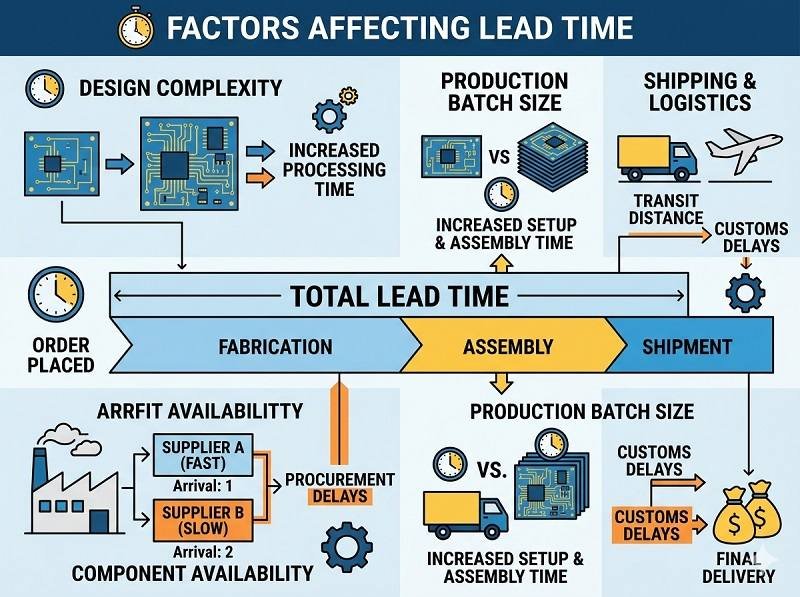
PCB manufacturing complexity
One of the primary factors affecting lead time is the complexity of the PCB itself.
Simple 2-layer boards can be completed quickly, often within a few days. However, multilayer boards, HDI designs, or special materials (such as Rogers or aluminum substrates) require more processing steps, increasing PCB Productie time.
Surface finishes like ENIG or immersion silver may also extend fabrication time compared to standard HASL.
Component availability
Component sourcing is often the biggest bottleneck in PCB-assemblage.
If all components are in stock, SMT-assemblage can begin immediately. However, shortages, long lead-time parts, or obsolete components can delay the entire process by days or even weeks.
Using common, widely available components is key to reducing delays, especially in Prototype PCB-assemblage.
Order quantity
The size of your order directly impacts production time.
Small batches and Prototype PCB-assemblage orders are usually processed faster, sometimes within a few days. In contrast, large-volume production requires more scheduling, machine time, and quality control, which increases lead time.
Assembly complexity
The complexity of the assembly process significantly affects turnaround time.
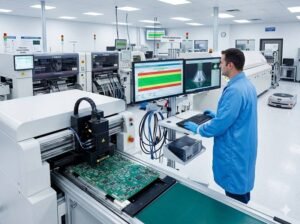
Enkelzijdig SMT-assemblage is faster, while double-sided assembly, mixed technology (SMT + through-hole), and fine-pitch components require additional steps.
Advanced packages such as BGA or QFN also need precise placement and inspection, which can extend PCB-assemblage time.
File accuracy and completeness
Incomplete or incorrect files can delay the entire project.
Missing BOM details, incorrect Gerber files, or unclear pick-and-place data will require engineering clarification before PCB-assemblage can begin.
Providing a complete and accurate documentation package helps avoid unnecessary delays.
Testen en kwaliteitseisen
Additional testing procedures can increase lead time.
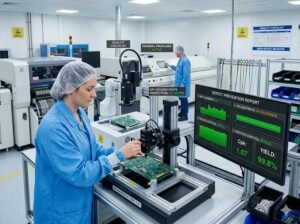
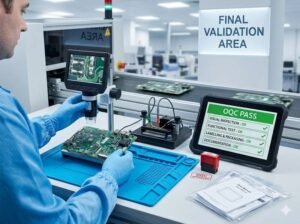
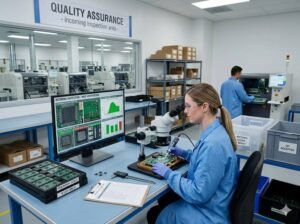
Basic visual inspection is quick, but advanced testing such as AOI, X-ray inspection, ICT, or functional testing adds extra time to the PCB-assemblage proces.
Projects requiring high reliability or certification will naturally take longer.
Turnkey vs consigned assembly
The type of service you choose also affects lead time.
Turnkey PCB-assemblage, the manufacturer handles PCB Productie and component sourcing, which simplifies the process but may take longer due to procurement.
In consigned assembly, where you supply components, production can start faster if all materials are ready.
Production scheduling
Factory workload and scheduling priorities also play a role.
During peak seasons or high demand, even standard PCB-assemblage orders may experience delays. Expedited or priority services can reduce waiting time but usually come at a higher cost.
Shipping and logistics
Lead time does not end at production.
Shipping method and destination impact delivery time. Express shipping can take 2–5 days internationally, while standard shipping takes longer.
For urgent Prototype PCB-assemblage, choosing fast logistics is essential.
Conclusie
Several factors affect PCB-assemblage lead time, including PCB Productie complexity, component availability, SMT-assemblage requirements, order quantity, and testing needs.
By optimizing your design, ensuring component readiness, and providing complete documentation, you can significantly reduce lead time and keep your project on schedule.
Klaar om uw PCB assemblage project te starten? Klik hieronder voor een snelle offerte.
We bieden professionele assemblagediensten voor printplaten, waaronder SMT, DIP en kant-en-klare oplossingen.
✔ NDA beschikbaar ✔ Snel offerte binnen 24 uur ✔ ISO-gecertificeerde fabriek ✔ One-stop PCB & PCBA Service
 Nederlands
  English
  Deutsch
  Français
  Português do Brasil
  Español
  日本語
日本語  Italiano
  Русский
  한국어
한국어  العربية
  Svenska
  Polski
  Türkçe
  繁體中文
繁體中文