
PCB 어셈블리의 IPC 표준
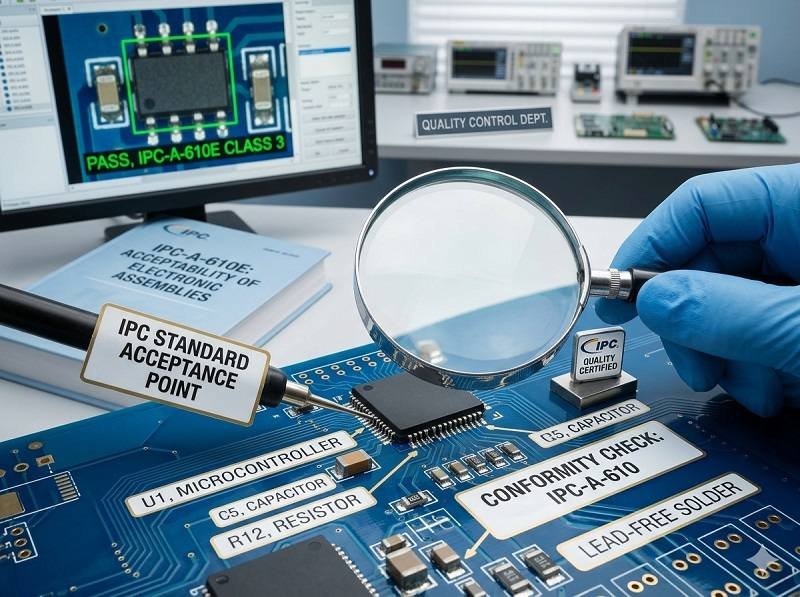
PCB 조립의 IPC 표준은 전 세계적으로 인정받는 가이드라인 및 사양으로, 국제 표준화 기구에서 개발했습니다. IPC 전자 제품 제조의 품질, 신뢰성 및 일관성을 보장하기 위한 표준입니다. 이 표준은 다음에 대한 모범 사례를 정의합니다. PCB 어셈블리, SMT 어셈블리, 검사, 테스트 및 전반적인 PCB 제조 프로세스.
간단히 말해, IPC 표준은 제조업체, 엔지니어, 고객 간의 공통 언어 역할을 하여 인쇄 회로 기판이 일관되고 신뢰할 수 있는 품질 수준으로 생산 및 조립되도록 보장합니다.
IPC 표준이 중요한 이유
IPC 표준은 제조 및 검사에 대한 명확한 기준을 제공하기 때문에 필수적입니다.
특히 의료 기기, 자동차 전자 장치, 항공 우주 시스템과 같은 중요한 애플리케이션에서 제품 신뢰성을 보장하는 데 도움이 됩니다. 제조업체는 IPC 표준을 준수함으로써 결함을 줄이고 수율을 개선하며 고객의 기대에 부응할 수 있습니다.
In 턴키 PCB 어셈블리, IPC 표준은 또한 공급망 전반의 커뮤니케이션을 간소화하여 설계, 제작 및 조립 프로세스가 일치하도록 보장합니다.
PCB 조립을 위한 주요 IPC 표준
여러 IPC 표준이 PCB 조립 및 SMT 조립에 널리 사용됩니다.
IPC-A-610 는 전자 어셈블리의 승인 가능성에 대해 가장 일반적으로 사용되는 표준입니다. 납땜 접합부, 부품 배치 및 전반적인 작업 솜씨에 대한 육안 검사 기준을 정의합니다.
IPC-J-STD-001 는 납땜된 전기 및 전자 어셈블리에 대한 요구 사항을 명시합니다. 안정적인 납땜을 위한 재료, 프로세스 및 제작 기술에 중점을 둡니다.
IPC-2221 는 레이아웃, 간격 및 구조적 고려 사항을 포함하여 PCB에 대한 일반적인 설계 표준을 제공합니다.
IPC-6012 는 리지드 PCB의 자격 및 성능 사양을 다루며 PCB 제조의 품질을 보장합니다.
이러한 표준은 설계부터 최종 조립까지 전체 수명 주기를 포괄하기 위해 함께 작동합니다.
PCB 어셈블리의 IPC 등급
IPC 표준은 신뢰성 요구 사항에 따라 제품을 세 가지 등급으로 분류합니다.
클래스 1은 가전제품과 같이 기능이 주요 요구 사항인 일반 전자 제품에 적용됩니다.
클래스 2는 산업용 장비와 같이 신뢰성과 수명 연장이 중요한 서비스 전용 전자 제품을 위한 것입니다.
클래스 3은 성능이 중요하고 고장이 허용되지 않는 의료, 항공우주 및 군사 애플리케이션을 포함한 고신뢰성 전자 제품을 위한 것입니다.
PCB 조립 및 SMT 조립 공정에서 올바른 클래스를 선택하는 것은 필수적입니다.
SMT 조립에서 IPC 표준의 역할
In SMT 어셈블리, IPC 표준은 허용 가능한 납땜 접합부 모양, 부품 정렬 및 결함 기준을 정의합니다.
솔더 페이스트 도포, 리플로 납땜 및 검사와 같은 프로세스를 안내합니다. 제조업체는 이러한 표준을 준수함으로써 고밀도 및 미세 피치 어셈블리에서도 일관된 품질을 보장할 수 있습니다.
IPC 가이드라인은 납땜 브리징, 납땜 부족, 정렬 불량과 같은 일반적인 결함을 줄이는 데도 도움이 됩니다.
턴키 PCB 어셈블리의 IPC 표준
턴키 PCB 어셈블리에서는 다음을 포함한 모든 단계에 IPC 표준이 적용됩니다. PCB 제조, 부품 소싱, SMT 조립 및 테스트.
이를 통해 최종 제품이 요구되는 품질 수준을 충족하고 고객 사양을 준수하도록 보장합니다. 문서화 및 추적 가능성도 IPC 가이드라인에 따라 유지됩니다.
IPC 인증 제조업체와 협력하면 제품 품질과 프로세스 관리에 대한 확신을 가질 수 있습니다.
IPC 표준 준수의 이점
IPC 표준을 준수하면 몇 가지 이점이 있습니다.
제품 신뢰성을 향상하고 고장률을 줄입니다.
다양한 생산 배치에서 일관된 품질을 보장합니다.
표준화된 가이드라인을 제공하여 글로벌 협업을 촉진합니다.
고객 신뢰를 높이고 업계 요구 사항을 충족합니다.
IPC 표준 구현의 과제
IPC 표준을 구현하려면 교육, 인증 및 프로세스 제어에 대한 투자가 필요할 수 있습니다.
제조업체는 직원이 IPC 요건에 따라 교육을 받고 인증을 받았는지 확인해야 합니다. 장비 및 검사 프로세스도 이러한 표준에 부합해야 합니다.
하지만 이러한 어려움은 품질 개선과 결함 감소라는 장기적인 이점을 고려하면 충분히 극복할 수 있습니다.
IPC 규정 준수를 위한 모범 사례
IPC를 준수하려면 제조업체는 모범 사례를 따라야 합니다.
직원을 교육하고 IPC 인증을 획득하세요.
엄격한 품질 관리 및 검사 프로세스를 구현합니다.
고품질 재료를 사용하고 프로세스 일관성을 유지하세요.
설계, PCB 제조 및 PCB 조립 프로세스를 IPC 가이드라인에 맞게 조정합니다.
IPC 인증을 제공하는 숙련된 제공업체와 협력하여 SMT 어셈블리 및 턴키 PCB 조립 서비스를 제공합니다.
결론
IPC 표준은 다음과 같은 분야에서 품질의 초석입니다. PCB 어셈블리 및 전자 제품 제조. 설계, 제조 및 검사에 대한 명확한 가이드라인을 제공함으로써 업계 전반에서 신뢰할 수 있고 일관된 결과를 보장합니다.
SMT 조립, PCB 제조 및 턴키 PCB 조립에 적용하면 제조업체가 글로벌 기대치와 성능 요구 사항을 충족하는 고품질 제품을 제공할 수 있도록 IPC 표준이 도움이 됩니다.
PCB 어셈블리 비용을 알고 싶으신가요? 지금 자세한 견적을 요청하세요.
당사는 SMT, DIP 및 전체 턴키 솔루션을 포함한 전문 PCB 조립 서비스를 제공합니다.
NDA 가능 ✔ 24시간 이내 빠른 견적 ✔ ISO 인증 공장 ✔ 원스톱 PCB 및 PCBA 서비스
 한국어
한국어  English
  Deutsch
  Français
  Português do Brasil
  Español
  日本語
日本語  Nederlands
  Italiano
  Русский
  العربية
  Svenska
  Polski
  Türkçe
  繁體中文
繁體中文