
아크릴과 실리콘 휴미씰 코팅의 차이점
아크릴 그리고 실리콘 휴미씰 코팅 는 가장 일반적으로 사용되는 두 가지 컨포멀 코팅 유형에 PCB 어셈블리, 프로토타입 PCB 어셈블리, 및 SMT 어셈블리. 둘 다 습기, 먼지 및 오염 물질에 대한 보호 기능을 제공하지만 다음과 같은 점에서 크게 다릅니다. 성능, 유연성, 비용 및 애플리케이션 시나리오.
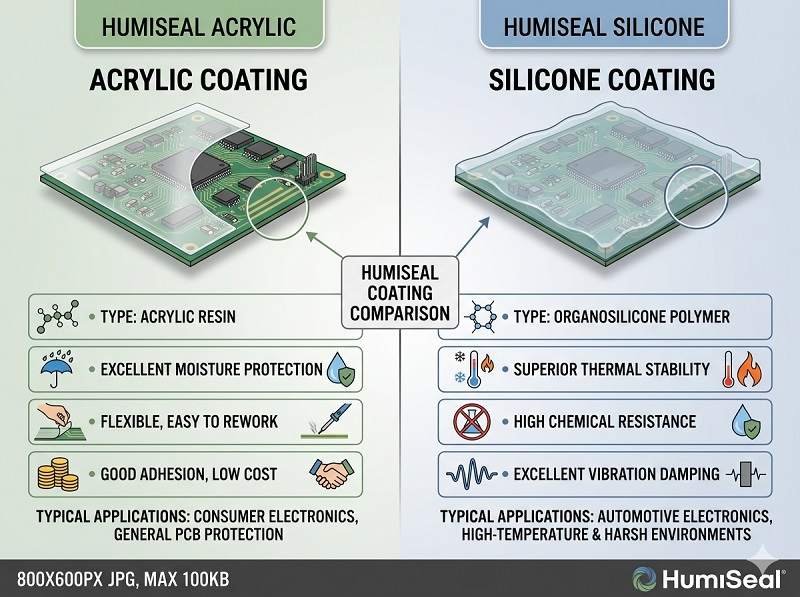
주요 차이점: 재료 속성
주요 차이점은 화학적 특성에 있습니다:
- 아크릴 코팅(AR) → 단단하고 투명하며 속건성 폴리머
- 실리콘 코팅(SR) → 부드럽고 고무처럼 유연성이 뛰어난 소재
아크릴 코팅은 견고한 보호 층, 실리콘 코팅이 남아 있는 동안 탄력적이고 유연한.
건조 속도 및 공정 효율성
아크릴 코팅은 다음과 같은 장점으로 유명합니다. 빠른 건조와 손쉬운 가공, 고속에 이상적입니다. SMT 어셈블리 생산 라인. 몇 분 안에 건조되며 적용 방법도 간단합니다.
실리콘 코팅에는 일반적으로 다음이 필요합니다. 경화 시간 연장, 특히 수분 경화가 수반되는 경우 생산 처리량이 느려질 수 있습니다.
유연성 및 내진동성
이것이 가장 중요한 차이점 중 하나입니다:
- 아크릴 → 비교적 단단하며 진동이나 열 순환 시 균열이 발생할 수 있음
- 실리콘 → 매우 유연하고 응력을 흡수하며 균열에 강합니다.
실리콘 코팅은 다음과 같은 환경에 더 적합합니다. 기계적 스트레스, 진동 또는 열팽창.
온도 저항
아크릴 코팅은 다음 분야에서 우수한 성능을 발휘합니다. 적당한 온도 범위 (일반적으로 최대 ~120°C).
실리콘 코팅은 다음과 같은 이점을 제공합니다. 뛰어난 고온 및 저온 저항성, 에서 작동하는 경우가 많습니다. -55°C ~ 200°C 이상, 를 사용하여 극한의 환경에 이상적입니다.
내화학성 및 내환경성
- 아크릴 → 습기 보호는 좋지만 독한 화학 물질에 대한 제한된 내성
- 실리콘 → 화학 물질, 습도 및 열악한 환경에 대한 강력한 내성
실리콘 코팅은 다음과 같은 경우에 선호됩니다. 자동차, 항공우주 및 아웃도어 전자 제품 장기적인 내구성이 중요한 경우.
재작업 및 수리
In PCB 어셈블리, 재작업 기능은 매우 중요합니다:
- 아크릴 → 손쉬운 제거 및 수리 일반적인 용제 사용
- 실리콘 → 제거하기 더 어려움, 특별한 프로세스가 필요합니다.
따라서 아크릴 코팅은 다음에 매우 적합합니다. 프로토타입 PCB 어셈블리, 를 자주 수정해야 하는 경우.
비용 및 생산 고려 사항
- 아크릴 → 비용 절감 + 빠른 처리
- 실리콘 → 더 높은 비용 + 더 나은 성능
대용량 SMT 어셈블리, 아크릴은 비용 효율성을 위해 선택하는 경우가 많고, 실리콘은 성능 요구 사항이 더 높은 비용을 정당화할 수 있을 때 사용합니다.
일반적인 애플리케이션
아크릴 휴미씰 코팅(예: 1B31):
- 가전 제품
- LED 드라이버 및 전원 공급 장치
- 일반용 PCB 어셈블리
- 프로토타입 PCB 어셈블리 (손쉬운 재작업)
실리콘 휴미씰 코팅:
- 자동차 전자 제품
- 항공우주 시스템
- 실외 및 습도가 높은 환경
- 고온 애플리케이션
요약 비교
| 기능 | 아크릴 코팅 | 실리콘 코팅 |
|---|---|---|
| 건조 속도 | 매우 빠름 | 느린 |
| 유연성 | 낮음에서 보통 | 매우 높음 |
| 온도 저항 | 보통 | 우수 |
| 내화학성 | 보통 | 높음 |
| 재작업성 | 쉬운 | 어려움 |
| 비용 | Lower | 더 높음 |
| 최상의 사용 | 표준 전자 제품 | 열악한 환경 |
최종 인사이트
아크릴과 실리콘 휴미씰 코팅 사이에는 “만능”이라는 것은 없습니다.
- 선택 아크릴 코팅 에 대한 비용 효율적이고 빠르며 재작업 친화적 솔루션 PCB 어셈블리 그리고 SMT 어셈블리
- 선택 실리콘 코팅 에 대한 극한의 환경, 높은 신뢰성, 장기적인 내구성
실제로 많은 제조업체는 다음과 같이 두 가지 옵션을 모두 검증합니다. 프로토타입 PCB 어셈블리 대량 생산에 가장 적합한 코팅을 선택하기 전입니다.
컨포멀 코팅 견적 받기
귀사의 제품에 어떤 컨포멀 코팅이 적합한지 잘 모르시겠습니까? 지금 바로 전문가에게 문의하세요.
요구 사항을 보내주시면 엔지니어링 팀으로부터 빠른 답변을 받으실 수 있습니다.
24시간 대응 ✔ 엔지니어링 지원 ✔ 소규모 및 대량 생산
심천 텅신지에 전자 유한 공사.
 한국어
한국어  English
  Deutsch
  Français
  Português do Brasil
  Español
  日本語
日本語  Nederlands
  Italiano
  Русский
  العربية
  Svenska
  Polski
  Türkçe
  繁體中文
繁體中文