
Processo di rilavorazione del rivestimento conformale
Il processo di rilavorazione del rivestimento conformale si riferisce alla rimozione controllata, alla riparazione e alla riapplicazione del rivestimento conformale. Rivestimento conforme su un PCB quando sono necessari difetti, modifiche al progetto o sostituzioni di componenti. È un passo importante per Assemblaggio di PCB e Assemblaggio SMT, assicurando che le schede possano essere corrette senza compromettere l'affidabilità.
Perché è necessaria una rilavorazione
Può essere necessaria una rilavorazione in Assemblaggio di PCB chiavi in mano per diversi motivi:
- Difetti del rivestimento (bolle, vuoti, spessore non uniforme)
- Contaminazione intrappolata sotto il rivestimento
- Mascheratura o sovracopertura errata dei connettori
- Riparazione o sostituzione di un componente
- Modifiche ingegneristiche o aggiornamenti del progetto
Senza un'adeguata rilavorazione, questi problemi potrebbero portare a guasti funzionali o a una riduzione della durata di vita.
Fasi di rilavorazione del rivestimento conforme
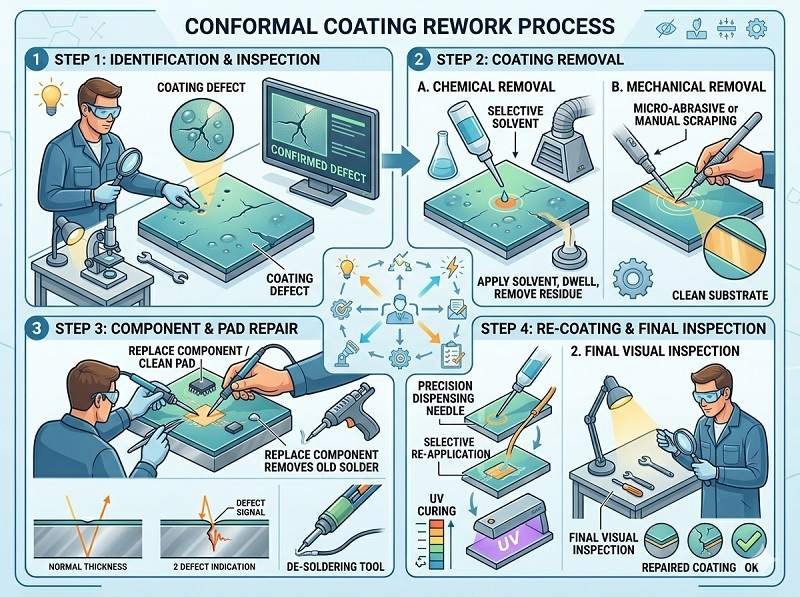
Identificazione del rivestimento
Innanzitutto, identificare il tipo di Rivestimento conforme (acrilico, silicone, uretano, epossidico o parilene), poiché ognuno di essi richiede un metodo di rimozione diverso.
Rimozione del rivestimento
Le tecniche di rimozione più comuni includono:
- Rimozione del solvente → dissolve i rivestimenti acrilici
- Rimozione meccanica → raschiamento o microabrasione
- Metodi termici → ammorbidimento del rivestimento con il calore
- Sverniciatura chimica → utilizzato per i rivestimenti più resistenti come quelli epossidici
Il metodo deve essere scelto con attenzione per evitare di danneggiare i componenti o le tracce durante la Assemblaggio di PCB riparazione.
Pulizia del PCB
Dopo la rimozione:
- Pulire i residui utilizzando solventi appropriati
- Assicurarsi che la superficie sia priva di contaminanti
- Asciugare completamente la tavola prima di procedere alla lavorazione
Una pulizia adeguata è fondamentale prima di rivestire nuovamente in Assemblaggio SMT.
Riparazione o sostituzione
Eseguire le azioni necessarie, quali:
- Sostituzione dei componenti difettosi
- Fissare i giunti a saldare
- Modifica delle aree del circuito
Questa fase segue le procedure di riparazione standard in Assemblaggio di PCB chiavi in mano.
Riapplicazione del rivestimento
Una volta completate le riparazioni:
- Riapplicare Rivestimento conforme a pennello, a spruzzo o con rivestimento selettivo
- Garantire una corretta mascheratura delle aree non rivestite
- Mantenere lo spessore e la copertura corretti
Polimerizzazione e ispezione finale
Infine:
- Polimerizzare il rivestimento (aria secca, calore o raggi UV a seconda del materiale).
- Ispezione con metodi UV o AOI
- Verificare la copertura, l'adesione e lo spessore
Sfide nella rilavorazione
- Rischio di danneggiare i componenti sensibili
- Difficoltà di rimozione di alcuni rivestimenti (ad esempio, epossidici o parilenici)
- Mantenimento di una qualità costante del rivestimento dopo la rilavorazione
- Tempo e costi di manodopera
A causa di queste sfide, la rilavorazione deve essere ridotta al minimo attraverso un adeguato controllo del processo. Assemblaggio di PCB.
Le migliori pratiche
- Utilizzare rivestimenti facili da rilavorare (ad esempio, acrilici) quando possibile
- Progettazione per l'accessibilità nel layout dei PCB
- Applicare una mascheratura adeguata durante il rivestimento iniziale
- Formare i tecnici su tecniche di rimozione sicure
Conclusione
Il processo di rilavorazione del rivestimento conforme è essenziale per correggere i difetti e consentire le riparazioni in Assemblaggio di PCB, Assemblaggio SMT, e Assemblaggio di PCB chiavi in mano. Rimuovendo, riparando e riapplicando con cura il rivestimento, i produttori possono mantenere la qualità del prodotto riducendo gli scarti e i costi.
Richiedete un preventivo per il rivestimento conforme
Riducete i rischi di guasto dei PCB con un rivestimento conformale professionale. Richiedete subito un preventivo.
Inviateci i vostri requisiti e riceverete una risposta rapida dal nostro team di ingegneri.
✔ Risposta in 24 ore ✔ Supporto ingegneristico ✔ Produzione di piccole dimensioni e di massa
Shenzhen Tengxinjie Electronics Co., Ltd.
 Italiano
  English
  Deutsch
  Français
  Português do Brasil
  Español
  日本語
日本語  Nederlands
  Русский
  한국어
한국어  العربية
  Svenska
  Polski
  Türkçe
  繁體中文
繁體中文