
Processo di rimozione del rivestimento
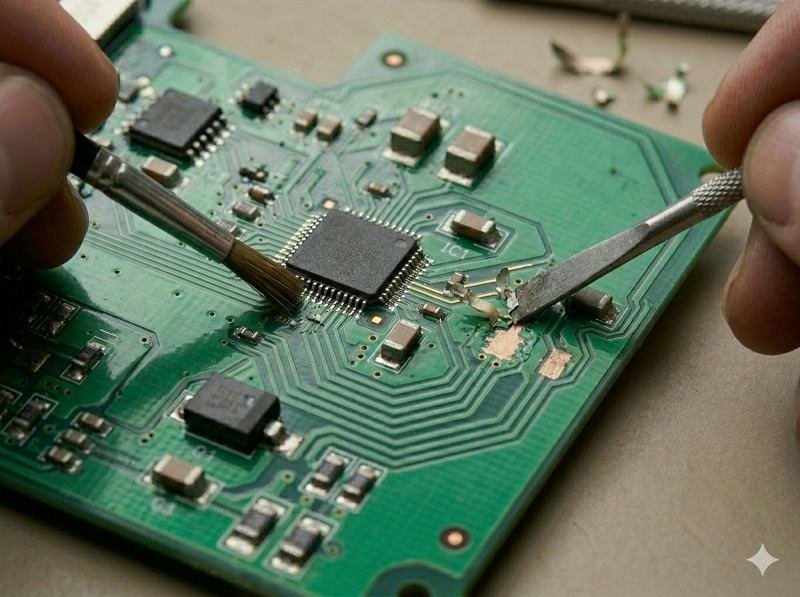
Il processo di rimozione del rivestimento si riferisce alla spellatura controllata di Rivestimento conforme da un PCB per consentire l'ispezione, la riparazione, la modifica o la rilavorazione. Si tratta di un'operazione critica in Assemblaggio di PCB e Assemblaggio SMT, soprattutto quando è necessario correggere i difetti o sostituire i componenti.
Perché è necessaria la rimozione del rivestimento
In Assemblaggio di PCB chiavi in mano, la rimozione del rivestimento è tipicamente richiesta per:
- Riparazione o sostituzione di componenti difettosi
- Correzione dei difetti del rivestimento (bolle, crepe, delaminazione)
- Rimozione della contaminazione intrappolata sotto il rivestimento
- Implementazione di modifiche progettuali o ingegneristiche
- Esecuzione di ispezioni o test dettagliati
Senza un'adeguata rimozione, l'accesso al circuito stampato sarebbe difficile e rischioso.
Tipi di rivestimenti conformali e difficoltà di rimozione
Rivestimenti diversi richiedono metodi di rimozione diversi:
- Rivestimenti acrilici → più facile da rimuovere
- Rivestimenti in silicone → flessibile, difficoltà moderata
- Rivestimenti uretanici → più resistente agli agenti chimici
- Rivestimenti epossidici → molto duro, difficile da rimuovere
- Rivestimenti in parilene → richiedono tecniche specializzate
La comprensione del tipo di rivestimento è essenziale per Assemblaggio di PCB prima di iniziare la rimozione.
Metodi comuni di rimozione del rivestimento
Rimozione del solvente
- Utilizza solventi chimici per sciogliere il rivestimento
- Il più efficace per i rivestimenti acrilici
- Semplice e ampiamente utilizzato in Assemblaggio SMT rielaborazione
Rimozione meccanica
- Comporta il raschiamento, la spazzolatura o la microabrasione.
- Adatto per la rimozione localizzata
- Richiede precisione per evitare danni ai PCB
Sverniciatura chimica
- Utilizza sostanze chimiche più forti per rivestimenti resistenti (uretano, epossidico)
- Efficace, ma deve essere attentamente controllato
- Richiede misure di sicurezza adeguate
Rimozione termica
- Applica il calore per ammorbidire il rivestimento
- Facilita la rimozione meccanica
- Deve evitare il surriscaldamento dei componenti sensibili
Rimozione con plasma o laser (avanzata)
- Utilizzato per schede di alta precisione o complesse
- Ideale per la rimozione selettiva in ambienti di alta gamma Assemblaggio di PCB chiavi in mano
Fasi del processo di rimozione del rivestimento
- Identificare il tipo di rivestimento
- Selezionare il metodo di rimozione appropriato
- Proteggere i componenti circostanti (mascherare se necessario)
- Rimuovere il rivestimento dall'area interessata
- Pulire accuratamente i residui
- Ispezionare il PCB per verificare che non vi siano danni o residui di rivestimento
Ogni fase deve essere attentamente controllata per mantenere l'integrità della scheda.
Sfide nella rimozione del rivestimento
- Rischio di danneggiare i componenti o le tracce dei PCB
- Residui che influiscono sulla riverniciatura
- Richiede tempo per i rivestimenti duri
- Problemi di sicurezza nell'uso di sostanze chimiche
Queste sfide evidenziano l'importanza di un corretto controllo dei processi in Assemblaggio di PCB.
Le migliori pratiche
- Utilizzare rivestimenti che consentano una più facile rilavorazione, quando possibile.
- Limitare la rimozione alle sole aree necessarie
- Utilizzare strumenti adeguati e tecnici qualificati
- Seguire le linee guida per la sicurezza e l'ambiente
- Assicurare una pulizia completa prima della riverniciatura
Conclusione
Il processo di rimozione del rivestimento è una parte essenziale della rilavorazione in Assemblaggio di PCB, Assemblaggio SMT, e Assemblaggio di PCB chiavi in mano. Selezionando il metodo corretto e seguendo procedure controllate, i produttori possono rimuovere in modo sicuro Rivestimento conforme, eseguire riparazioni e ripristinare la funzionalità dei circuiti stampati senza compromettere l'affidabilità.
Richiedete un preventivo per il rivestimento conforme
Lavorate su componenti elettronici per il settore automobilistico, industriale o per esterni? Possiamo aiutarvi con il rivestimento conformale.
Inviateci i vostri requisiti e riceverete una risposta rapida dal nostro team di ingegneri.
✔ Risposta in 24 ore ✔ Supporto ingegneristico ✔ Produzione di piccole dimensioni e di massa
Shenzhen Tengxinjie Electronics Co., Ltd.
 Italiano
  English
  Deutsch
  Français
  Português do Brasil
  Español
  日本語
日本語  Nederlands
  Русский
  한국어
한국어  العربية
  Svenska
  Polski
  Türkçe
  繁體中文
繁體中文