
What is component testing
In modern electronics manufacturing, component reliability directly determines the success of the final product. Whether you are producing consumer electronics, industrial controllers, automotive systems, or communication devices, even a single defective component can cause system failure. This is why many customers ask a critical question before starting cooperation: do you provide component testing?
Component testing refers to the inspection, verification, and validation of electronic parts before they enter PCB Assembly and SMT Assembly processes. It ensures that every resistor, capacitor, IC, and connector meets required electrical, mechanical, and functional specifications.
In professional PCB Assembly services, component testing is not an optional step but a standard quality control procedure. It acts as the first checkpoint to eliminate risks before production begins.
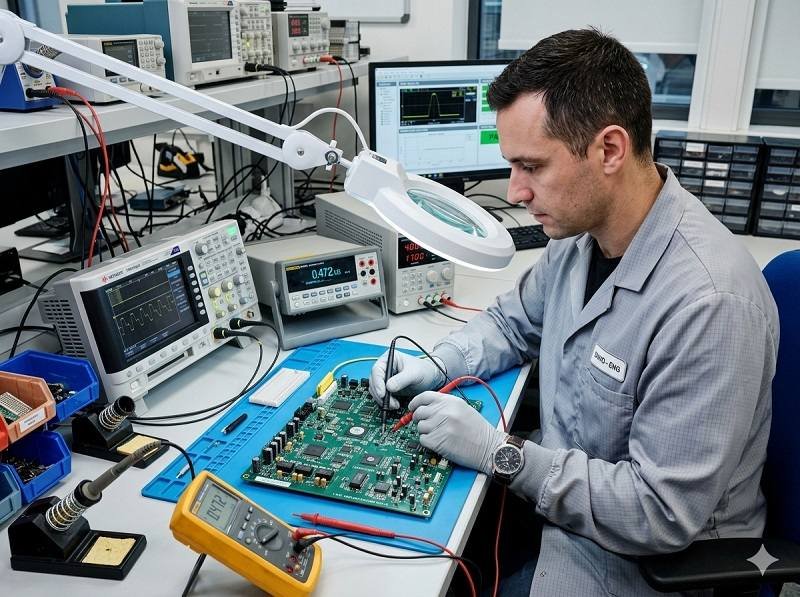
Why component testing is critical in PCB Assembly
The quality of PCB Assembly depends heavily on the consistency of components. Even with advanced equipment and experienced engineers, defective components can still lead to failures such as open circuits, short circuits, or unstable performance.
In SMT Assembly, machines place thousands of components per hour with extremely high speed and precision. However, machines cannot identify internal defects within components. If faulty parts enter the production line, they can result in large batches of defective boards.
Component testing helps manufacturers:
- Reduce production risks
- Avoid rework and repair costs
- Improve overall yield rate
- Ensure long-term product reliability
In addition, testing supports compliance with international standards such as RoHS, REACH, and IPC, which is especially important for customers targeting European and global markets.
Common component testing methods
Different projects require different levels of testing depending on complexity, application, and reliability requirements. In PCB Assembly and SMT Assembly, several testing methods are commonly used.
Visual inspection is the first step. It checks for physical defects such as damaged leads, incorrect labeling, oxidation, or packaging issues. Although simple, it is highly effective in filtering obvious problems.
Electrical testing is used to verify component parameters. This includes resistance measurement, capacitance testing, voltage tolerance checks, and signal verification. It ensures components perform according to datasheets.
X-ray inspection is applied to advanced packages like BGA, QFN, and ICs. It allows engineers to detect internal defects such as voids, cracks, or bonding issues that cannot be seen externally.
Functional testing is used for high-value or critical components. It simulates real working conditions to ensure stability and reliability in actual applications.
How component testing improves SMT Assembly efficiency
Component testing not only improves quality but also enhances SMT Assembly efficiency. When components are verified before placement, production lines can run smoothly without interruptions caused by defective materials.
Tested components improve pick-and-place accuracy, reduce machine downtime, and prevent placement errors. They also ensure better solder paste interaction and stronger solder joints during reflow soldering.
As a result, manufacturers can achieve:
- Higher production efficiency
- Lower defect rates
- Reduced material waste
- Faster delivery times
For customers, this means more stable product performance and lower overall manufacturing cost.
Preventing counterfeit and low-quality components
With the globalization of electronic supply chains, counterfeit components have become a serious concern. These parts often look identical to genuine components but fail under real operating conditions.
Professional PCB Assembly providers implement strict component testing and supplier verification systems to address this issue. Incoming inspection procedures include:
- Marking and label verification
- Electrical parameter testing
- Packaging and traceability checks
By combining testing with sourcing from authorized distributors, manufacturers significantly reduce the risk of counterfeit components entering SMT Assembly processes.
Component testing and supply chain control
Component testing is closely linked with supply chain management. A reliable manufacturer does not only assemble boards but also controls component sourcing and quality.
Before entering PCB Assembly, components are:
- Verified against BOM specifications
- Checked for correct part numbers and revisions
- Stored under controlled environmental conditions
Moisture-sensitive devices (MSDs), for example, must be handled carefully to prevent damage during reflow soldering. Proper testing and storage ensure these components remain stable throughout SMT Assembly.
Quality control and full traceability
Traceability is a key requirement in modern electronics manufacturing, especially for automotive, medical, and industrial applications.
Through component testing, manufacturers build a complete traceability system. Each component batch is recorded with supplier data, inspection results, and usage history.
If any issue arises after delivery, this system allows quick root cause analysis and corrective action. It also increases transparency and builds trust between manufacturers and customers.
How to choose a PCB Assembly partner with testing capability
Not all manufacturers provide the same level of component testing. When selecting a PCB Assembly partner, customers should evaluate their capabilities carefully.
A reliable supplier should offer:
- Incoming component inspection (IQC)
- Advanced testing equipment (X-ray, AOI, electrical testers)
- Strict quality management systems
- Experience in handling complex SMT Assembly projects
They should also be able to provide feedback on component risks, suggest alternatives, and support cost optimization.
Conclusion
Component testing is a fundamental part of high-quality PCB Assembly and SMT Assembly. It ensures that every component used in production meets strict performance and reliability standards.
By implementing comprehensive testing processes, manufacturers can prevent defects, reduce production costs, and deliver consistent, high-quality products. For businesses seeking reliable electronics manufacturing partners, choosing a company with strong component testing capability is essential for long-term success.
Looking for a reliable PCB assembly solution? Click below to request your quote now.
We provide professional PCB assembly services including SMT, DIP, and full turnkey solutions.
✔ NDA Available ✔ Fast Quotation Within 24 Hours ✔ ISO Certified Factory ✔ One-stop PCB & PCBA Service
 English
  Deutsch
  Français
  Português do Brasil
  Español
  日本語
日本語  Nederlands
  Italiano
  Русский
  한국어
한국어  العربية
  Svenska
  Polski
  Türkçe
  繁體中文
繁體中文