
Verfahren zur Entfernung von Beschichtungen
Der Entschichtungsprozess bezieht sich auf das kontrollierte Ablösen von Konforme Beschichtung von einer Leiterplatte, um Inspektion, Reparatur, Änderung oder Nacharbeit zu ermöglichen. Dies ist ein kritischer Vorgang bei PCB-Montage und SMT-Bestückung, insbesondere dann, wenn Mängel behoben werden müssen oder Bauteile ausgetauscht werden müssen.
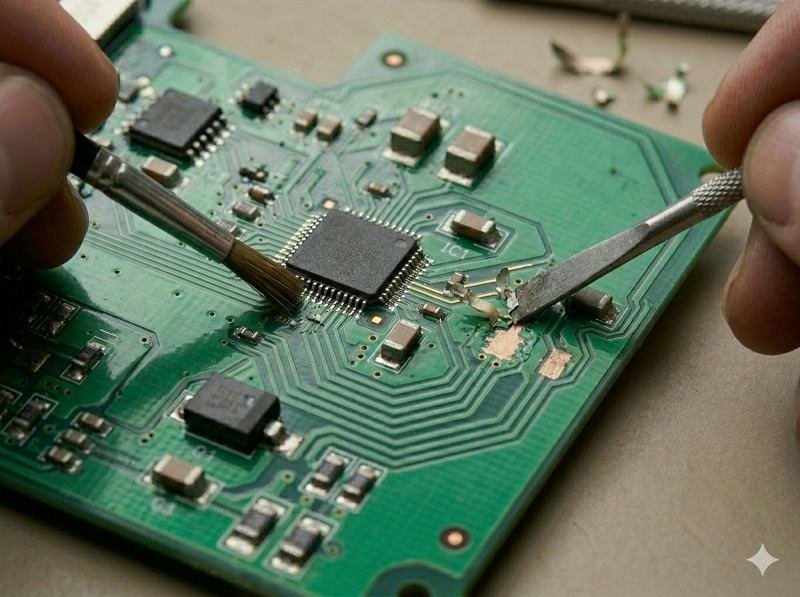
Warum die Entfernung von Beschichtungen notwendig ist
Unter Schlüsselfertige PCB-Montage, Die Entfernung von Beschichtungen ist in der Regel erforderlich für:
- Reparieren oder Ersetzen von defekten Komponenten
- Beseitigung von Beschichtungsfehlern (Blasen, Risse, Delamination)
- Entfernung von Verunreinigungen, die unter der Beschichtung eingeschlossen sind
- Umsetzung von Design- oder Konstruktionsänderungen
- Durchführung einer detaillierten Inspektion oder Prüfung
Ohne eine ordnungsgemäße Demontage wäre der Zugriff auf die Leiterplattenschaltungen schwierig und riskant.
Arten von Schutzschichten und Schwierigkeiten bei der Entfernung
Unterschiedliche Beschichtungen erfordern unterschiedliche Entfernungsmethoden:
- Acrylbeschichtungen → am leichtesten zu entfernen
- Silikonbeschichtungen → flexibel, mittlerer Schwierigkeitsgrad
- Urethan-Beschichtungen → chemikalienbeständiger
- Epoxid-Beschichtungen → sehr hart, schwer zu entfernen
- Parylene-Beschichtungen → spezielle Techniken erfordern
Die Kenntnis der Beschichtungsart ist entscheidend für PCB-Montage bevor Sie mit dem Ausbau beginnen.
Gängige Methoden zur Entfernung von Beschichtungen
Entfernung von Lösungsmitteln
- Verwendung chemischer Lösungsmittel zum Auflösen der Beschichtung
- Am wirksamsten für Acrylbeschichtungen
- Einfach und weit verbreitet in SMT-Bestückung Überarbeitung
Mechanische Entfernung
- Beinhaltet Schaben, Bürsten oder Mikroabrasion
- Geeignet für die örtliche Entfernung
- Erfordert Präzision zur Vermeidung von Leiterplattenschäden
Chemisches Abbeizen
- Verwendet stärkere Chemikalien für harte Beschichtungen (Urethan, Epoxid)
- Wirksam, muss aber sorgfältig kontrolliert werden
- Erfordert angemessene Sicherheitsmaßnahmen
Thermische Entfernung
- Wärmezufuhr zum Aufweichen der Beschichtung
- Erleichtert die mechanische Entfernung
- Überhitzung empfindlicher Komponenten muss vermieden werden
Plasma- oder Laserentfernung (fortgeschritten)
- Verwendung für hochpräzise oder komplexe Platten
- Ideal für die selektive Entfernung in hochwertigen Schlüsselfertige PCB-Montage
Schritte der Beschichtungsentfernung
- Beschichtungstyp identifizieren
- Geeignete Entfernungsmethode wählen
- Schützen Sie die umliegenden Bauteile (ggf. abkleben)
- Beschichtung von der Zielfläche entfernen
- Rückstände gründlich reinigen
- Prüfen Sie die Leiterplatte auf Schäden oder verbleibende Beschichtung
Jeder Schritt muss sorgfältig kontrolliert werden, um die Integrität der Platte zu erhalten.
Herausforderungen bei der Entfernung von Beschichtungen
- Gefahr der Beschädigung von Bauteilen oder Leiterbahnen
- Zurückbleibende Rückstände beeinträchtigen die Neubeschichtung
- Zeitaufwendig für harte Beschichtungen
- Sicherheitsbedenken bei der Verwendung von Chemikalien
Diese Herausforderungen machen deutlich, wie wichtig eine ordnungsgemäße Prozesskontrolle bei PCB-Montage.
Bewährte Praktiken
- Verwenden Sie nach Möglichkeit Beschichtungen, die eine einfachere Nacharbeit ermöglichen
- Beschränken Sie die Entfernung auf die notwendigen Bereiche
- Verwendung geeigneter Werkzeuge und geschulter Techniker
- Befolgung der Sicherheits- und Umweltrichtlinien
- Vor der Neubeschichtung vollständige Reinigung sicherstellen
Schlussfolgerung
Die Entfernung der Beschichtung ist ein wesentlicher Bestandteil der Nacharbeit in PCB-Montage, SMT-Bestückung, und Schlüsselfertige PCB-Montage. Durch die Wahl der richtigen Methode und die Befolgung kontrollierter Verfahren können Hersteller sicher entfernen Konforme Beschichtung, Reparaturen durchführen und die Funktionalität der Leiterplatten wiederherstellen, ohne die Zuverlässigkeit zu beeinträchtigen.
Angebot für Conformal Coating einholen
Arbeiten Sie an Automobil-, Industrie- oder Outdoor-Elektronik? Wir können mit konformer Beschichtung helfen.
Senden Sie uns Ihre Anforderungen und erhalten Sie eine schnelle Antwort von unserem technischen Team.
✔ 24-Stunden-Reaktion ✔ Technische Unterstützung ✔ Klein- und Massenproduktion
Shenzhen Tengxinjie Electronics Co, Ltd.
 Deutsch
  English
  Français
  Português do Brasil
  Español
  日本語
日本語  Nederlands
  Italiano
  Русский
  한국어
한국어  العربية
  Svenska
  Polski
  Türkçe
  繁體中文
繁體中文