
التحكم في عملية الطلاء
التحكم في عملية الطلاء في الطلاء المطابق يشير إلى الإدارة المنهجية لجميع المتغيرات التي تؤثر على جودة الطلاء واتساقه وأدائه. وفي تجميع ثنائي الفينيل متعدد الكلور, تجميع النموذج الأولي لثنائي الفينيل متعدد الكلور, و تجميع SMT, فهو يضمن حصول كل ثنائي الفينيل متعدد الكلور على طلاء موحد وخالٍ من العيوب يلبي معايير الموثوقية ومعايير الصناعة.
بدون التحكم المناسب، يمكن أن تؤدي الاختلافات في المواد أو البيئة أو طرق التطبيق إلى حدوث عيوب مثل الفقاعات أو السماكة غير المتساوية أو ضعف الالتصاق أو التغطية غير الكاملة.
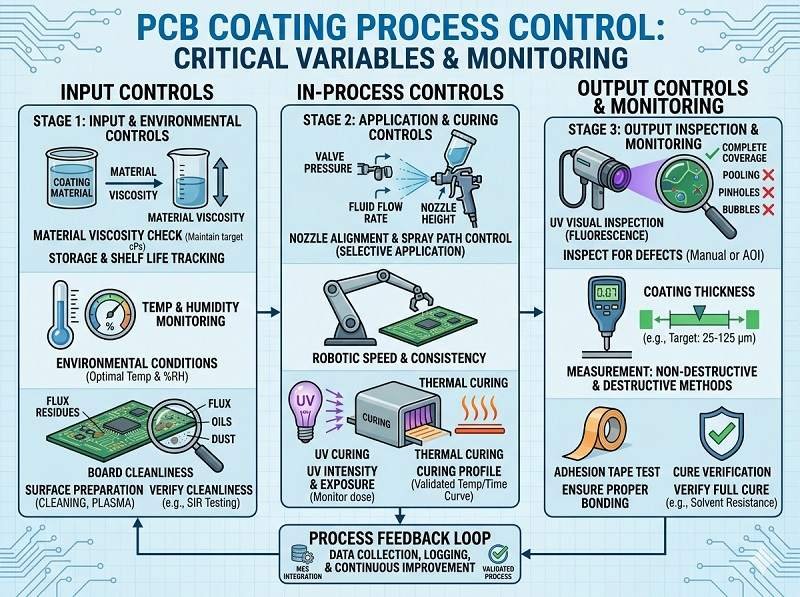
العناصر الرئيسية للتحكم في عملية الطلاء
التحكم في المواد
خصائص الطلاء المطابق المواد - مثل اللزوجة ومدة الصلاحية ونسبة الخلط - يجب مراقبتها بدقة. يمكن أن تؤدي اللزوجة غير الصحيحة إلى سمك طلاء غير متساوٍ، بينما قد تتسبب المواد منتهية الصلاحية في فشل الالتصاق في تجميع ثنائي الفينيل متعدد الكلور.
التحكم في تحضير السطح
من الضروري تنظيف مركبات ثنائي الفينيل متعدد الكلور وتجفيفها بشكل صحيح. يمكن أن تتداخل البقايا مثل التدفق أو الرطوبة مع التصاق الطلاء وتسبب عيوبًا. في تجميع SMT, ، تعتبر عمليات التنظيف التي يتم التحكم فيها أمرًا بالغ الأهمية قبل الطلاء.
التحكم في معلمات التطبيق
يجب التحكم بدقة في طرق الطلاء (الرش، الغمس، الطلاء الانتقائي). تشمل المعلمات الرئيسية ما يلي:
- ضغط الرذاذ ومعدل التدفق
- مسافة الفوهة وسرعتها
- سُمك الطلاء
الأتمتة في تجميع SMT يساعد في الحفاظ على الاتساق عبر أحجام الإنتاج الكبيرة.
التحكم البيئي
تؤثر درجة الحرارة والرطوبة ونظافة الهواء بشكل مباشر على أداء الطلاء. قد تتسبب الرطوبة العالية في حدوث عيوب مثل احمرار الجلد، بينما يمكن أن يلوث الغبار سطح الطلاء أثناء تجميع ثنائي الفينيل متعدد الكلور.
التحكم في عملية المعالجة
يجب أن تتطابق ظروف المعالجة - الوقت أو درجة الحرارة أو التعرض للأشعة فوق البنفسجية - مع مواصفات الطلاء. يمكن أن تؤدي المعالجة غير السليمة إلى طلاءات لينة أو تشقق أو حماية غير كاملة.
التحكم في الإخفاء والتغطية
يجب إخفاء المناطق الحرجة مثل الموصلات ونقاط الاختبار بشكل صحيح. يعد ضمان التغطية الصحيحة مع حماية مناطق الحجب جزءًا رئيسيًا من التحكم في العملية في Pتجميع ثنائي الفينيل متعدد الكلور الدوار.
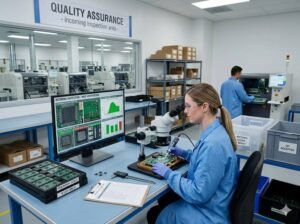
الفحص ومراقبة الجودة
يتحقق فحص ما بعد الطلاء من أن العملية تعمل بشكل صحيح. تشمل الطرق الشائعة ما يلي:
- الفحص بالأشعة فوق البنفسجية للتغطية
- قياس السُمك
- الفحص البصري للعيوب
في تجميع ثنائي الفينيل متعدد الكلور, ، يتم استخدام ملاحظات التفتيش لتحسين العملية باستمرار.
سبب أهمية التحكم في عملية الطلاء
- يضمن سماكة وتغطية متناسقة للطلاء
- يقلل من العيوب وإعادة العمل
- يحسن موثوقية المنتج وعمره الافتراضي
- يدعم الامتثال لمعايير الصناعة (على سبيل المثال، IPC)
- تعزيز الكفاءة في الأحجام الكبيرة تجميع SMT
التحكم في العمليات في مراحل الإنتاج المختلفة
تجميع النموذج الأولي لثنائي الفينيل متعدد الكلور
يركز على تحسين المعلمات والاختبار والتحقق من صحة عمليات الطلاء.
تجميع ثنائي الفينيل متعدد الكلور الشامل / تجميع SMT
التأكيد على الأتمتة والتكرار والمراقبة الصارمة للجودة للحفاظ على الاتساق على نطاق واسع.
أفضل الممارسات للتحكم الفعال في العمليات
- تحديد إجراءات التشغيل القياسية (SOPs)
- استخدام أنظمة الطلاء والمعالجة الآلية
- مراقبة المعلمات الرئيسية في الوقت الفعلي
- الحفاظ على بيئات إنتاج محكومة
- تحليل العيوب وتحسين العمليات باستمرار
في الختام, التحكم في عملية الطلاء هو أساس الجودة العالية الطلاء المطابق في تجميع ثنائي الفينيل متعدد الكلور, تجميع SMT, و تجميع النموذج الأولي لثنائي الفينيل متعدد الكلور. من خلال إدارة المواد والمعدات والبيئة والفحص، يمكن للمصنعين تحقيق أداء طلاء موثوق وقابل للتكرار وتقليل مخاطر الإنتاج.
احصل على عرض أسعار الطلاء المطابق
هل تحتاج إلى دعم احترافي للطلاء المطابق؟ أرسل متطلباتك واحصل على رد خلال 12 ساعة.
أرسل لنا متطلباتك واحصل على استجابة سريعة من فريقنا الهندسي.
✔ استجابة على مدار 24 ساعة ✔ دعم هندسي ✔ دعم هندسي ✔ إنتاج صغير وضخم
شركة Shenzhen Tengxinjie Electronics Co., Ltd.
 العربية
  English
  Deutsch
  Français
  Português do Brasil
  Español
  日本語
日本語  Nederlands
  Italiano
  Русский
  한국어
한국어  Svenska
  Polski
  Türkçe
  繁體中文
繁體中文