
الطلاء المطابق المواد
اختيار المناسب الطلاء المطابق المواد أمر بالغ الأهمية لضمان موثوقية المنتجات الإلكترونية وأدائها. وخلال تجميع ثنائي الفينيل متعدد الكلور و تجميع SMT, تتطلب البيئات المختلفة ومتطلبات الاستخدام خصائص طلاء مختلفة. يمكن أن يؤدي اختيار المادة الخاطئة إلى ضعف الحماية أو انخفاض العمر الافتراضي أو التكلفة غير الضرورية.
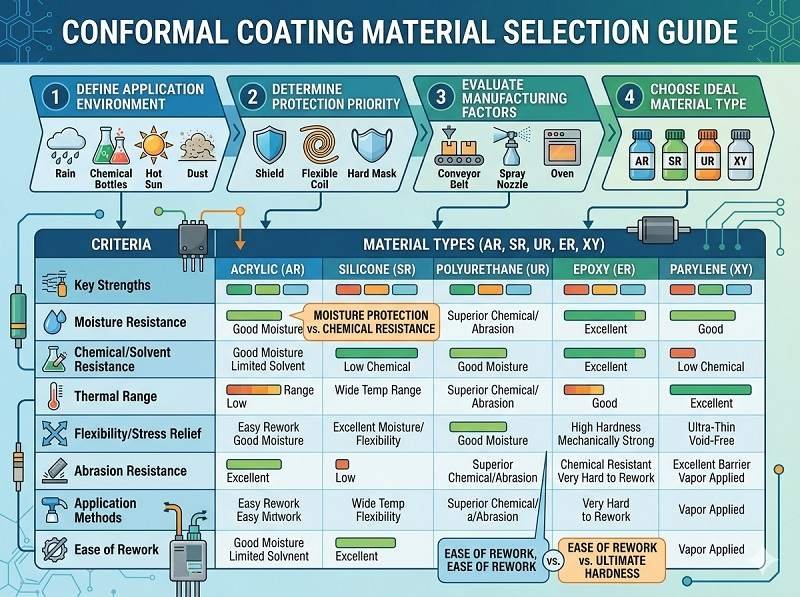
النظر في بيئة التشغيل
الخطوة الأولى في اختيار الطلاء المطابق هو فهم أين سيتم استخدام المنتج.
- الرطوبة العالية أو التعرض للماء → اختر الطلاءات ذات المقاومة القوية للرطوبة (مثل السيليكون والأكريليك)
- التعرض للمواد الكيميائية → توفر طلاءات البولي يوريثان أو الإيبوكسي مقاومة كيميائية أفضل
- درجات الحرارة القصوى → أداء طلاءات السيليكون بشكل جيد تحت الضغط الحراري
- البيئات الخارجية أو القاسية → النظر في الخيارات عالية الأداء مثل الباريلين
في تجميع ثنائي الفينيل متعدد الكلور, ، فإن مطابقة الطلاء مع الظروف البيئية أمر ضروري للموثوقية على المدى الطويل.
تقييم متطلبات الحماية
تتطلب التطبيقات المختلفة مستويات مختلفة من الحماية.
- للحماية الأساسية من الغبار والرطوبة والأكريليك الطلاء المطابق غالبًا ما يكون كافيًا
- للحماية للخدمة الشاقة، مثل الحماية الصناعية أو السيارات تجميع SMT, ، قد يكون البولي يوريثان أو الإيبوكسي أكثر ملاءمة
- بالنسبة للتطبيقات الحرجة (الطبية والفضائية)، يوفر الباريلين أداءً فائقًا
يساعد فهم مستوى الحماية اللازمة على تجنب الإفراط في المواصفات أو التقليل من الحماية المطلوبة في تصميمك.
النظر في احتياجات إعادة العمل والإصلاح
بعض الطلاءات أسهل في الإزالة من غيرها.
- سهولة إعادة العمل → طلاءات الأكريليك
- صعوبة متوسطة → طلاءات السيليكون
- يصعب إزالتها → طلاءات البولي يوريثان والإيبوكسي
إذا كان تجميع ثنائي الفينيل متعدد الكلور تتطلب العملية إجراء تعديلات أو إصلاحات متكررة، فإن اختيار عملية ملائمة لإعادة العمل الطلاء المطابق مهم.
تقييم طريقة التطبيق
طريقة الطلاء المستخدمة في تجميع SMT يمكن أن تؤثر على اختيار المواد.
- طلاء بالرش → يعمل بشكل جيد مع الأكريليك والسيليكون
- طلاء بالغمس → مناسب للتغطية الموحدة بمواد مختلفة
- طلاء بالفرشاة → الأفضل للإصلاح أو التطبيقات صغيرة النطاق
- ترسب الباريلين → يتطلب معدات تفريغ الهواء المتخصصة
يضمن التوافق مع عملية الإنتاج لديك الكفاءة والنتائج المتسقة.
الاعتبارات الحرارية والميكانيكية
غالبًا ما تواجه التجميعات الإلكترونية تغيرات في درجات الحرارة والإجهاد الميكانيكي.
- تتعامل الطلاءات المرنة (مثل السيليكون) مع الاهتزازات والتمدد الحراري بشكل أفضل
- توفر الطلاءات الصلبة (مثل الإيبوكسي) حماية ميكانيكية أقوى ولكنها قد تتشقق تحت الضغط
تحقيق التوازن بين المرونة والقوة أمر أساسي في تجميع ثنائي الفينيل متعدد الكلور التصميم.
عوامل التكلفة والإنتاج
تلعب الميزانية وحجم التصنيع دوراً في ذلك أيضاً.
- طلاءات الأكريليك فعالة من حيث التكلفة بالنسبة للطلاءات واسعة النطاق تجميع SMT
- باريلين يقدم أداءً فائقًا ولكن بتكلفة أعلى
- يقع الإيبوكسي والبولي يوريثان في النطاق المتوسط إلى العالي حسب المتطلبات
اختيار المواد المناسبة يعني الموازنة بين الأداء وكفاءة التكلفة.
احصل على عرض أسعار الطلاء المطابق
هل لديك أسئلة حول الطلاء المطابق لثنائي الفينيل متعدد الكلور الخاص بك؟ مهندسونا مستعدون لمساعدتك.
أرسل لنا متطلباتك واحصل على استجابة سريعة من فريقنا الهندسي.
✔ استجابة على مدار 24 ساعة ✔ دعم هندسي ✔ دعم هندسي ✔ إنتاج صغير وضخم
شركة Shenzhen Tengxinjie Electronics Co., Ltd.
 العربية
  English
  Deutsch
  Français
  Português do Brasil
  Español
  日本語
日本語  Nederlands
  Italiano
  Русский
  한국어
한국어  Svenska
  Polski
  Türkçe
  繁體中文
繁體中文