
PCB Prototyping
PCB prototyping is a critical stage in the electronics development process where a preliminary version of a printed circuit board is designed, manufactured, and tested before mass production. It allows engineers and designers to validate circuit functionality, identify potential issues, and optimize performance in a cost-effective and time-efficient way. Whether developing consumer electronics, industrial equipment, or IoT devices, PCB prototyping serves as the foundation for reliable and scalable production.
PCB prototyping bridges the gap between concept and full-scale Produzione di PCB. Instead of directly committing to large production volumes, companies can iterate designs, reduce risks, and ensure product quality through multiple prototype cycles. This process not only improves design accuracy but also shortens time-to-market.
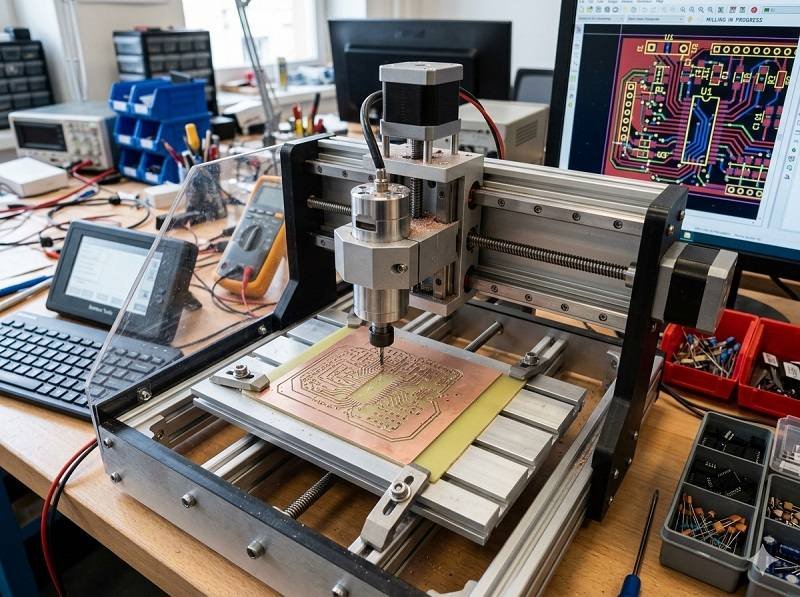
The Importance of PCB Prototyping
In modern electronics development, complexity is increasing due to miniaturization and higher integration. PCB prototyping helps engineers test real-world performance under actual conditions. It ensures that the schematic design, layout, and component selection work together as intended.
One of the key advantages of PCB prototyping is early error detection. Design flaws such as incorrect footprints, signal integrity issues, or thermal problems can be identified and corrected before entering PCB Assembly. This significantly reduces costly rework during mass production.
Additionally, prototyping allows for functional testing, reliability validation, and compliance checks. Engineers can evaluate electromagnetic compatibility, power distribution, and mechanical fit, ensuring the final product meets both technical and regulatory requirements.
PCB Prototyping Process
The PCB prototyping process typically involves several steps, starting from design to final testing.
First, engineers create the circuit schematic and PCB layout using design software. This stage includes component selection, routing, and layer stack-up planning. Design for Manufacturability considerations are also applied to ensure the board can be efficiently produced.
Next comes PCB Manufacturing, where the prototype boards are fabricated. This includes processes such as etching, drilling, plating, and surface finishing. Depending on the design, prototypes can range from simple single-layer boards to complex multi-layer or HDI structures.
After fabrication, the boards proceed to PCB Assembly. During this phase, electronic components are mounted onto the board using Assemblaggio SMT or through-hole techniques. SMT Assembly is widely used in prototyping due to its efficiency and compatibility with compact designs.
Finally, the assembled prototype undergoes testing and validation. Functional tests, signal measurements, and environmental tests are conducted to ensure the design meets performance expectations.
Types of PCB Prototyping Services
There are different approaches to PCB prototyping depending on project requirements.
Quick-turn prototyping focuses on speed, delivering prototype boards within a few days. This is ideal for rapid iteration and time-sensitive projects.
Low-volume prototyping allows for small batch production, enabling more extensive testing and pre-production validation.
Assemblaggio di PCB chiavi in mano is a comprehensive service where a single supplier handles PCB Manufacturing, component sourcing, and PCB Assembly. This approach simplifies project management, reduces coordination efforts, and ensures better consistency across the entire process.
Role of PCB Assembly in Prototyping
Assemblaggio di PCB plays a vital role in transforming a bare board into a functional electronic product. Without proper assembly, the prototype cannot be tested or validated.
SMT Assembly is particularly important in modern prototyping. It supports high-density designs, improves electrical performance, and enables automated placement of components. This ensures accuracy and repeatability, even in early-stage prototypes.
In many cases, combining PCB prototyping with Turnkey PCB Assembly services provides significant advantages. It streamlines the workflow, reduces lead times, and minimizes the risk of errors caused by multiple suppliers.
Challenges in PCB Prototyping
Despite its benefits, PCB prototyping also comes with challenges. One common issue is balancing speed and quality. Fast prototyping may limit thorough testing, while extensive validation can delay development timelines.
Component availability is another challenge, especially for specialized or newly released parts. Engineers may need to select alternative components or redesign certain sections of the circuit.
Cost control is also important. While prototyping is cheaper than mass production errors, multiple iterations can still add up. Efficient design practices and collaboration with experienced PCB Manufacturing partners can help optimize costs.
Best Practices for Successful PCB Prototyping
To achieve the best results, several best practices should be followed.
Design with manufacturability in mind from the beginning. This includes proper spacing, standard footprints, and compatible materials.
Work with reliable partners for PCB Manufacturing and PCB Assembly. Experienced suppliers can provide valuable feedback and help avoid common pitfalls.
Use SMT Assembly for high-density designs and ensure proper stencil design and solder paste selection.
Consider Turnkey PCB Assembly services to streamline the process and reduce complexity.
Perform thorough testing at each stage, including electrical, mechanical, and environmental validation.
Conclusione
PCB prototyping is an essential step in the development of modern electronic products. It enables engineers to validate designs, improve performance, and reduce risks before moving to full-scale PCB Manufacturing. By integrating PCB Assembly, SMT Assembly, and Turnkey PCB Assembly services into the prototyping process, companies can achieve faster development cycles, higher quality products, and greater market competitiveness.
A well-executed PCB prototyping strategy not only ensures technical success but also provides a strong foundation for efficient and scalable production.
Avete bisogno di un partner affidabile per l'assemblaggio di PCB? Richiedete un preventivo e parliamone.
Forniamo servizi professionali di assemblaggio di PCB, tra cui SMT, DIP e soluzioni complete chiavi in mano.
✔ NDA disponibile ✔ Preventivo veloce entro 24 ore ✔ Fabbrica certificata ISO ✔ Servizio unico per PCB e PCBA
 Italiano
  English
  Deutsch
  Français
  Português do Brasil
  Español
  日本語
日本語  Nederlands
  Русский
  한국어
한국어  العربية
  Svenska
  Polski
  Türkçe
  繁體中文
繁體中文