
Differenza tra rivestimenti acrilici e siliconici HumiSeal
Acrilico e rivestimenti in silicone HumiSeal sono due dei più comunemente utilizzati Rivestimento conforme tipi in Assemblaggio di PCB, Assemblaggio di prototipi di PCB, e Assemblaggio SMT. Sebbene entrambi forniscano una protezione contro l'umidità, la polvere e gli agenti contaminanti, differiscono in modo significativo per quanto riguarda prestazioni, flessibilità, costi e scenari di applicazione.
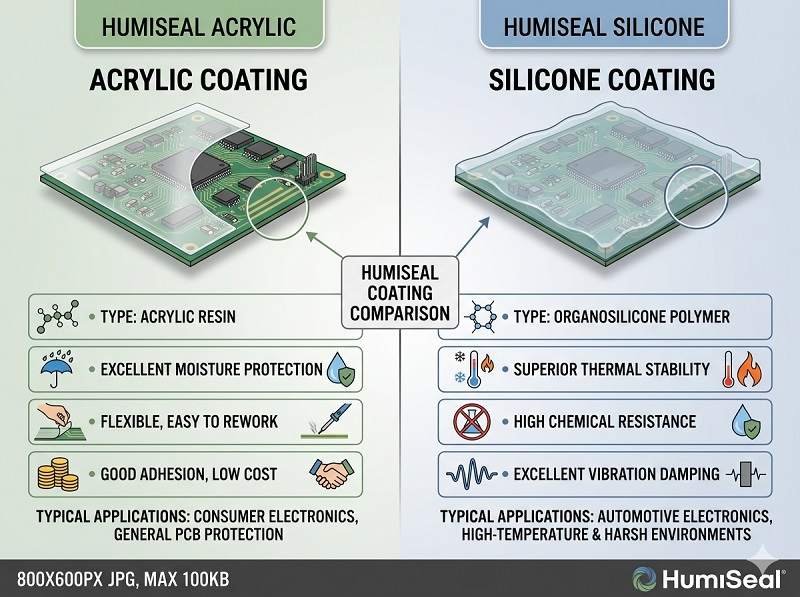
Differenza chiave: proprietà del materiale
La distinzione principale sta nella loro natura chimica:
- Rivestimenti acrilici (AR) → polimeri duri, trasparenti e ad asciugatura rapida
- Rivestimenti in silicone (SR) → materiali morbidi, simili alla gomma, altamente flessibili
I rivestimenti acrilici polimerizzano in un strato protettivo rigido, mentre i rivestimenti in silicone rimangono elastico e flessibile.
Velocità di essiccazione ed efficienza del processo
I rivestimenti acrilici sono noti per le loro asciugatura rapida e facile lavorazione, che li rende ideali per l'alta velocità Assemblaggio SMT linee di produzione. Si asciugano in pochi minuti e sono semplici da applicare.
I rivestimenti in silicone richiedono in genere tempo di polimerizzazione più lungo, soprattutto se si tratta di polimerizzazione con umidità, che può rallentare la produzione.
Flessibilità e resistenza alle vibrazioni
Questa è una delle differenze più importanti:
- Acrilico → relativamente rigido, può incrinarsi in presenza di vibrazioni o cicli termici
- Silicone → altamente flessibile, assorbe le sollecitazioni e resiste alle crepe
I rivestimenti in silicone sono più adatti ad ambienti con sollecitazioni meccaniche, vibrazioni o espansione termica.
Resistenza alla temperatura
I rivestimenti acrilici si comportano bene in intervalli di temperatura moderati (in genere fino a ~120°C).
I rivestimenti in silicone offrono eccellente resistenza alle alte e basse temperature, spesso operando da Da -55°C a 200°C o superiore, che li rende ideali per gli ambienti estremi.
Resistenza chimica e ambientale
- Acrilico → buona protezione dall'umidità, ma resistenza limitata ai prodotti chimici aggressivi
- Silicone → forte resistenza agli agenti chimici, all'umidità e agli ambienti difficili
I rivestimenti in silicone sono preferiti per automotive, aerospaziale ed elettronica per esterni dove la durata a lungo termine è fondamentale.
Rilavorazione e riparazione
In Assemblaggio di PCB, La capacità di rilavorazione è molto importante:
- Acrilico → Facile da rimuovere e riparare utilizzando i comuni solventi
- Silicone → più difficile da rimuovere, richiede processi speciali
Questo rende i rivestimenti acrilici molto adatti per Assemblaggio di prototipi di PCB, dove sono necessarie frequenti modifiche.
Considerazioni su costi e produzione
- Acrilico → costo inferiore + elaborazione più rapida
- Silicone → costo più elevato + prestazioni migliori
Per i volumi elevati Assemblaggio SMT, L'acrilico viene spesso scelto per l'efficienza dei costi, mentre il silicone viene utilizzato quando le prestazioni richieste giustificano il costo più elevato.
Applicazioni tipiche
Rivestimenti acrilici HumiSeal (ad es. 1B31):
- Elettronica di consumo
- Driver LED e alimentatori
- Uso generale Assemblaggio di PCB
- Assemblaggio di prototipi di PCB (facile rielaborazione)
Rivestimenti in silicone HumiSeal:
- Elettronica per autoveicoli
- Sistemi aerospaziali
- Ambienti esterni e ad alta umidità
- Applicazioni ad alta temperatura
Confronto sintetico
| Caratteristica | Rivestimento acrilico | Rivestimento in silicone |
|---|---|---|
| Velocità di asciugatura | Molto veloce | Più lento |
| Flessibilità | Da basso a moderato | Molto alto |
| Resistenza alla temperatura | Moderato | Eccellente |
| Resistenza chimica | Moderato | Alto |
| Rielaborabilità | Facile | Difficile |
| Costo | Più basso | Più alto |
| Utilizzo ottimale | Elettronica standard | Ambienti difficili |
Approfondimento finale
Non esiste una scelta univoca tra rivestimenti acrilici e siliconici HumiSeal.
- Scegliere rivestimenti acrilici per Economico, rapido e facile da rilavorare soluzioni in Assemblaggio di PCB e Assemblaggio SMT
- Scegliere rivestimenti in silicone per ambienti estremi, elevata affidabilità e durata nel tempo
In pratica, molti produttori convalidano entrambe le opzioni durante il Assemblaggio di prototipi di PCB prima di scegliere il rivestimento più adatto per la produzione in serie.
Richiedete un preventivo per il rivestimento conforme
Non siete sicuri di quale sia il rivestimento conformale giusto per il vostro prodotto? Contattate i nostri esperti oggi stesso.
Inviateci i vostri requisiti e riceverete una risposta rapida dal nostro team di ingegneri.
✔ Risposta in 24 ore ✔ Supporto ingegneristico ✔ Produzione di piccole dimensioni e di massa
Shenzhen Tengxinjie Electronics Co., Ltd.
 Italiano
  English
  Deutsch
  Français
  Português do Brasil
  Español
  日本語
日本語  Nederlands
  Русский
  한국어
한국어  العربية
  Svenska
  Polski
  Türkçe
  繁體中文
繁體中文