
PCBA pronto para uso versus montagem de PCBs consignada: O guia definitivo para OEMs
No cenário em rápida evolução do fabricação de contratos eletrônicos, A estratégia que você escolher para sua Montagem de PCB pode ser a diferença entre um lançamento de produto perfeito e um pesadelo logístico. Para os OEMs (fabricantes de equipamentos originais) da Europa e da América do Norte, o debate geralmente se concentra em dois modelos principais: PCBA pronto para uso e Montagem de PCB em consignação.
Como Montagem SMT Quando a tecnologia de ponta ultrapassa os limites da densidade de componentes e da complexidade da placa, é fundamental compreender as diferenças granulares de custo, controle de qualidade e risco da cadeia de suprimentos. Este guia oferece um aprofundamento técnico e econômico para ajudá-lo a determinar qual modelo se alinha às suas metas comerciais.
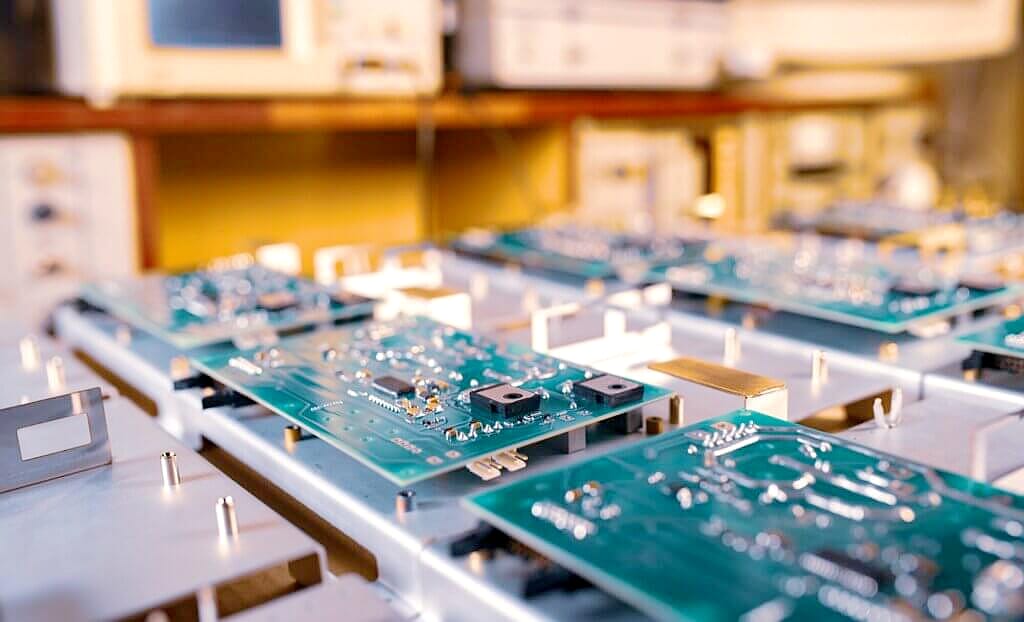
1. Definição dos modelos na manufatura moderna
O que é PCBA Turnkey?
Em um PCBA totalmente pronto para uso Em um acordo de parceria, o fabricante assume a responsabilidade pelo projeto. Esse serviço “do berço ao túmulo” inclui:
Fabricação de placas de circuito impresso: Fabricação das placas de circuito nuas.
Fornecimento de componentes: Aquisição de todas as peças listadas no BOM (Lista de Materiais).
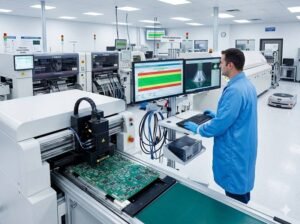
Montagem SMT: O posicionamento físico e solda por refluxo de componentes.
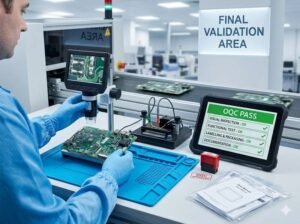
Testes e logística: Desempenho AOI, Raio X, e testes funcionais antes de enviar os produtos acabados.
O que é montagem de PCB consignada?
Também conhecido como PCBA equipado, Em um modelo que requer que o cliente forneça todos (ou a maioria) dos componentes e as placas nuas. O fabricante atua estritamente como um provedor de serviços para mão de obra e uso de equipamentos. Ele fornece os Linha de montagem SMT, o processo de soldagem conhecimento especializado e a infraestrutura de inspeção, mas não possuem os materiais.
2. A realidade econômica: Custo total de propriedade (TCO)
Enquanto um Montagem de PCB em consignação A cotação pode parecer inicialmente mais barata porque não tem “marcação de material”, o Custo total de propriedade geralmente conta uma história diferente para as empresas ocidentais.
Custos ocultos da consignação
Logística e expedição: Você deve pagar para enviar componentes de vários fornecedores para a casa de montagem. Para a fabricação internacional, isso inclui taxas alfandegárias e IVA.
Gerenciamento de estoque: Sua equipe interna precisa passar horas verificando quantidades, etiquetando bobinas e gerenciando “faltas” ou “excessos”.”
Atrito e desperdício: Em Montagem SMT, Em um modelo consignado, uma pequena porcentagem de componentes sempre é perdida durante o processo de carregamento do alimentador (atrito). Em um modelo consignado, é necessário fornecer peças extras (geralmente 3-5% para passivos pequenos) para levar isso em conta, ou a linha será interrompida.
Valor do PCBA pronto para uso
A PCBA pronto para uso O provedor de serviços de OEM aproveita os preços de “cliente preferencial” de alto volume com grandes distribuidores como Arrow, Avnet e Future Electronics. Muitas vezes, o preço que eles obtêm pelos componentes - mesmo com uma pequena taxa de gerenciamento - é inferior ao que um pequeno OEM pode obter de forma independente.
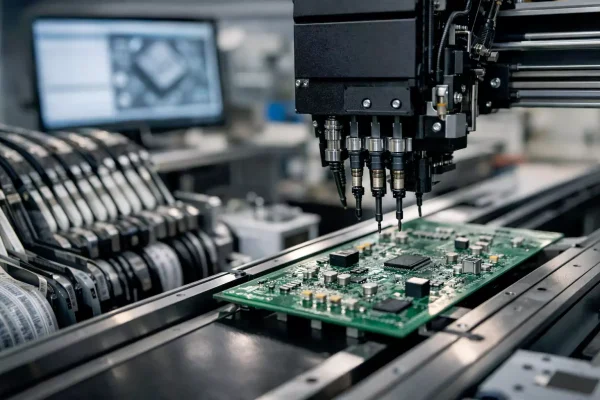
3. Controle de qualidade e responsabilidade técnica
A vantagem mais significativa do PCBA pronto para uso é o modelo Ponto único de responsabilidade.
O “jogo da culpa” na consignação
Em um Montagem de PCB em consignação projeto, se uma diretoria falhar Teste funcional (FCT), Em geral, surge um conflito de interesses:
O fabricante pode alegar que os componentes fornecidos pelo cliente estavam com defeito ou sofriam de problemas de soldabilidade devido ao armazenamento inadequado.
O cliente pode reivindicar o direito do fabricante perfil de solda por refluxo estava incorreto, causando esvaziamento ou sepultamento.
Esse “jogo de culpa” pode atrasar os projetos em semanas e levar a auditorias caras de terceiros.
Qualidade integrada em turnkey
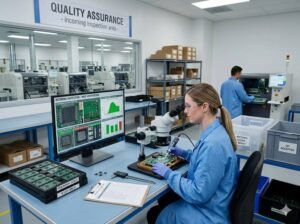
Com PCBA pronto para uso, Se o fabricante for o proprietário de toda a cadeia de qualidade, ele poderá ser o responsável por ela. Se um Inspeção óptica automatizada (AOI) detectar um defeito, ou se um lote de componentes for considerado falsificado, o fabricante deverá resolver o problema às suas próprias custas. Esse alinhamento de interesses garante um foco maior em IPC-A-610 Classe 2 ou Classe 3 conformidade.
4. Considerações técnicas avançadas: DFM e DFA
Bem-sucedido Produção de PCBA começa muito antes de o primeiro componente ser colocado. Ele começa com Projeto para fabricação (DFM) e Projeto para montagem (DFA).
DFM proativo em turnkey
Um parceiro profissional pronto para uso analisará seus arquivos Gerber e a lista técnica para identificar:
Incompatibilidades de área útil do componente: Garantir que o padrão do terreno corresponda ao componente físico para evitar ponte de solda.
Problemas de alívio térmico: Identificação de coxins que podem causar sepultamento durante o processo de soldagem.
Obsolescência (EOL): Avisa se uma peça da sua lista de materiais está chegando ao fim da vida útil e sugere uma substituição.
Em um Consignado No caso de um modelo de produto, o fabricante geralmente presume que o projeto é “final”. Eles podem não realizar uma revisão profunda do DFM porque não são responsáveis pelos materiais, o que leva a taxas de refugo mais altas durante o processo de fabricação. Montagem SMT fase.
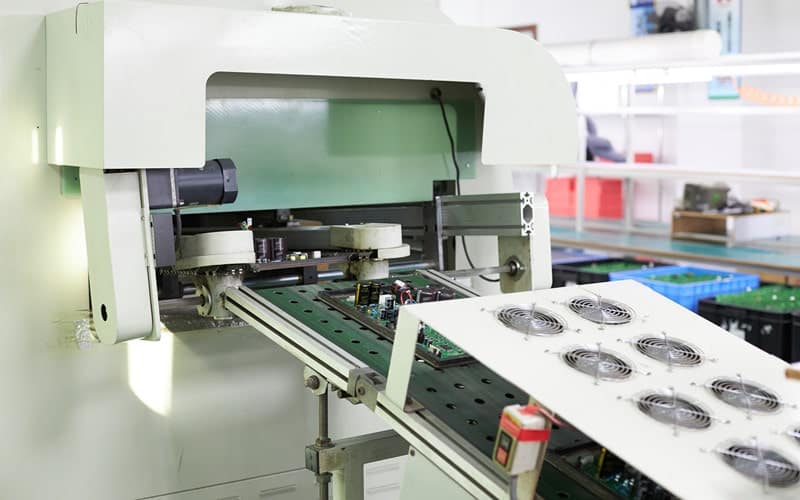
5. Mitigação de riscos: Problemas de falsificação e armazenamento
Para setores como eletrônica médica, aeroespacial, e automotivo, A integridade dos componentes é um requisito legal.
Níveis de sensibilidade à umidade (MSL)
Componentes como ICs grandes e BGAs são sensíveis à umidade. Em um Montagem de PCB em consignação Na configuração, os componentes geralmente ficam em vários depósitos ou centros de trânsito sem o controle climático adequado. Isso aumenta o risco de “pipocagem” - quando a umidade retida se expande durante a solda por refluxo e racha o componente.
PCBA pronto para uso os fabricantes utilizam Armários secos e equipamentos de selagem a vácuo para manter a integridade MSL de todas as peças desde o momento em que chegam do distribuidor.
6. Matriz de comparação: Qual modelo se encaixa em sua estratégia?
| Critérios de avaliação | PCBA pronto para uso | PCBA em consignação |
| Fase ideal do projeto | Prototipagem e aumento de escala | Produção madura e de alto volume |
| Esforço de gerenciamento | Mínimo (uma OP) | Alta (vários fornecedores/remessas) |
| Tempo de colocação no mercado | Mais rápido (processamento simultâneo) | Mais lento (logística sequencial) |
| Preço do componente | Taxas de atacado/volume | Taxas negociadas com o cliente |
| Garantia e responsabilidade | Abrangente | Somente mão de obra |
| Proteção IP | Alto (gerenciado por meio de um NDA) | Moderado (compartilhado entre fornecedores) |
7. Conclusão: Fazendo a escolha estratégica
Para a maioria das empresas européias e americanas, PCBA pronto para uso é a melhor opção para produção de alta mistura e volume baixo a médio. Ele permite que sua equipe de engenharia se concentre em inovação de produtos em vez de procurar números de rastreamento para bobinas de capacitores.
No entanto, Montagem de PCB em consignação continua sendo uma estratégia válida para operações em grande escala, em que um departamento de compras especializado pode extrair cada centavo da cadeia de suprimentos e em que o OEM tem um engenheiro permanente na fábrica para supervisionar a produção.
Em última análise, seu Fabricação de PCBA O parceiro deve ser uma extensão da sua equipe. Quer você forneça as peças ou eles forneçam, a experiência deles na área de Processo de montagem SMT e seu compromisso com garantia de qualidade são o que determinará o sucesso de seu produto no mercado.
 Português do Brasil
  English
  Deutsch
  Français
  Español
  日本語
日本語  Nederlands
  Italiano
  Русский
  한국어
한국어  العربية
  Svenska
  Polski
  Türkçe
  繁體中文
繁體中文