
Rivestimento per la resistenza alle vibrazioni
In ambienti in cui i gruppi elettronici sono esposti a movimenti, urti o sollecitazioni meccaniche costanti, la scelta del giusto Rivestimento conforme è fondamentale. In Assemblaggio di PCB, Assemblaggio di prototipi di PCB, e Assemblaggio SMT, Se il rivestimento non è in grado di assorbire efficacemente le sollecitazioni meccaniche, le vibrazioni possono causare l'affaticamento del giunto di saldatura, microfratture e guasti al componente.
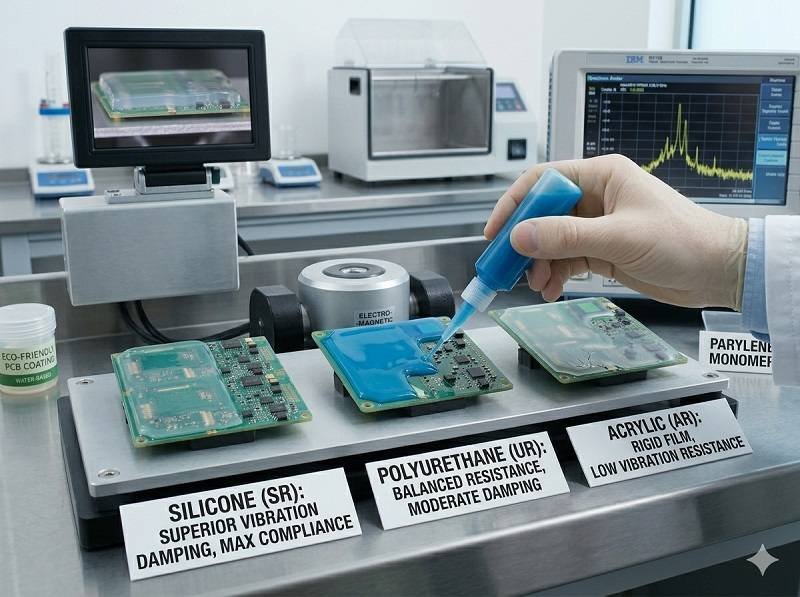
Il Il miglior rivestimento per la resistenza alle vibrazioni è il rivestimento conformale in silicone.
Rivestimenti in silicone: la scelta migliore per la resistenza alle vibrazioni
A base di silicone Rivestimento conforme è altamente flessibile ed elastico anche dopo l'indurimento. Questa flessibilità gli permette di assorbire e smorzare le vibrazioni, riducendo le sollecitazioni meccaniche trasmesse ai componenti e ai giunti di saldatura. A differenza dei rivestimenti rigidi, il silicone può espandersi e contrarsi con le variazioni di temperatura e i movimenti meccanici senza incrinarsi.
Grazie a queste proprietà, i rivestimenti in silicone sono ampiamente utilizzati in applicazioni come l'elettronica automobilistica, i sistemi aerospaziali, i macchinari industriali e le attrezzature per esterni, dove vibrazioni e cicli termici sono spesso presenti insieme. In Assemblaggio SMT, In presenza di componenti strettamente imballati, il silicone aiuta a proteggere le connessioni delicate dall'affaticamento nel tempo.
Perché la flessibilità è importante
La resistenza alle vibrazioni è direttamente legata alla capacità di un rivestimento di deformarsi senza rompersi. I rivestimenti rigidi come l'epossidico forniscono una forte protezione meccanica, ma possono rompersi in caso di vibrazioni ripetute, esponendo potenzialmente il PCB a danni ambientali. Il silicone, invece, agisce come un ammortizzatore, mantenendo una protezione continua.
Opzioni alternative
- Rivestimenti in poliuretano offrono una flessibilità moderata e possono sopportare alcune vibrazioni, il che li rende una scelta secondaria in condizioni meno impegnative.
- Rivestimenti acrilici offrono una limitata resistenza alle vibrazioni e sono più adatti ad ambienti stabili.
- Rivestimenti epossidici non sono generalmente raccomandati per applicazioni ad alta vibrazione a causa della loro rigidità.
Considerazioni sull'applicazione
In Assemblaggio di PCB, ottenendo il corretto spessore del rivestimento (tipicamente 50-200 µm per il silicone) garantisce uno smorzamento ottimale delle vibrazioni senza interferire con i connettori o le parti mobili. Un'adesione adeguata e una copertura uniforme sono essenziali anche per evitare punti deboli.
Durante Assemblaggio di prototipi di PCB, I test di vibrazione sono spesso condotti per convalidare le prestazioni del rivestimento in condizioni operative reali. Questo aiuta gli ingegneri a perfezionare la scelta del materiale prima della produzione su larga scala.
Combinare il rivestimento con le strategie di design
Mentre il silicone Rivestimento conforme migliora significativamente la resistenza alle vibrazioni, ma è più efficace se combinata con una buona progettazione meccanica, come un adeguato supporto dei componenti, un montaggio sicuro e l'uso di materiali antivibranti.
In conclusione, il rivestimento conformale in silicone è la scelta migliore per la resistenza alle vibrazioni grazie alla sua superiore flessibilità e all'assorbimento delle sollecitazioni. Se applicato correttamente in Assemblaggio di PCB, Assemblaggio SMT, e Assemblaggio di prototipi di PCB, Il sistema migliora notevolmente la durata e l'affidabilità dei prodotti elettronici in ambienti soggetti a forti vibrazioni.
Richiedete un preventivo per il rivestimento conforme
Non siete sicuri di quale sia il rivestimento conformale giusto per il vostro prodotto? Contattate i nostri esperti oggi stesso.
Inviateci i vostri requisiti e riceverete una risposta rapida dal nostro team di ingegneri.
✔ Risposta in 24 ore ✔ Supporto ingegneristico ✔ Produzione di piccole dimensioni e di massa
Shenzhen Tengxinjie Electronics Co., Ltd.




 Italiano
  English
  Deutsch
  Français
  Português do Brasil
  Español
  日本語
日本語  Nederlands
  Русский
  한국어
한국어  العربية
  Svenska
  Polski
  Türkçe
  繁體中文
繁體中文