
Temperature is needed for curing
The curing temperature of 保形塗層 varies depending on the coating chemistry and curing method. In PCB 組裝, 原型 PCB 組裝, 以及 SMT 組裝, selecting the correct temperature is essential to ensure proper film formation, adhesion, and long-term reliability without damaging sensitive electronic components.
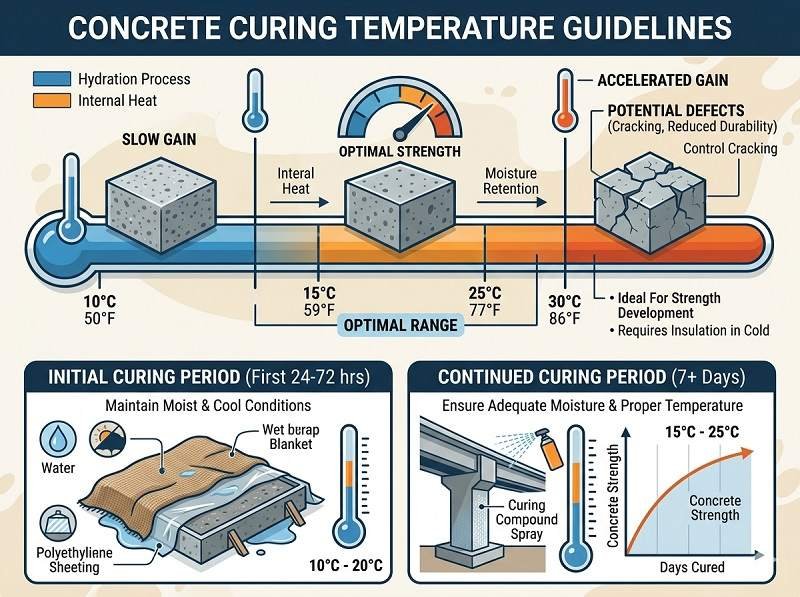
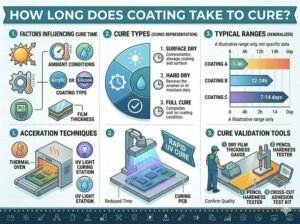
Typical curing temperature ranges
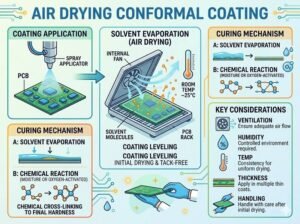
Room temperature curing (air drying)
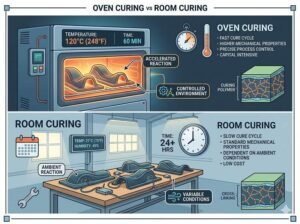
Many acrylic coatings cure at 20–25°C (68–77°F). While they may become tack-free quickly, full curing can take up to 24 hours. This method is commonly used in 原型 PCB 組裝 due to its simplicity and low equipment requirements.
Thermal curing (oven curing)
Heat curing is widely used in SMT 組裝 to accelerate the process. Typical temperature ranges include:
- Acrylic coatings: 60–80°C
- Polyurethane coatings: 80–120°C
- Epoxy coatings: 100–150°C
- Silicone coatings: 80–120°C
These temperatures significantly reduce curing time and improve coating performance in mass PCB 組裝.
UV curing
UV-curable 保形塗層 does not rely on temperature but instead uses ultraviolet light to initiate curing. However, ambient temperatures of 20–30°C are still recommended for stable processing. In dense SMT 組裝, dual-cure systems may use mild heat (e.g., 60–80°C) to cure shadowed areas.
Moisture curing
Some silicone and polyurethane coatings cure by reacting with moisture in the air. These typically operate at room temperature, but optimal humidity (40–70% RH) is required. Temperature still affects reaction speed in PCB 組裝 環境。.
Factors influencing curing temperature
Component sensitivity
Electronic components may have maximum temperature limits. Excessive heat during curing can damage parts, especially in high-density SMT 組裝.
Coating thickness
Thicker coatings may require higher temperatures or longer curing times to fully cure.
Production speed
Higher temperatures can accelerate curing, improving throughput in large-scale PCB 組裝, but must be carefully controlled.
Material specifications
Each coating has a recommended curing profile provided by the manufacturer. Deviating from these guidelines can lead to incomplete curing or defects.
Best practices for curing temperature control
- Always follow supplier-recommended temperature profiles
- Use calibrated ovens with uniform heat distribution
- Avoid rapid temperature increases that may cause bubbles or stress
- Validate curing results in 原型 PCB 組裝 before mass production
- Monitor both temperature and time for consistent quality
In conclusion, curing temperatures for 保形塗層 typically range from room temperature up to 150°C, depending on the coating type and process. Proper temperature control in PCB 組裝, SMT 組裝, 以及 原型 PCB 組裝 ensures optimal coating performance, durability, and product reliability.
取得保形塗層報價
正在尋找值得信賴且具備保形塗層能力的 PCBA 夥伴?我們來談談。.
將您的需求傳送給我們,並獲得我們工程團隊的快速回應。.
24 小時回應 ✔ 工程支援 ✔ 小型與大量生產
深圳市騰欣杰電子有限公司
 繁體中文
繁體中文  English
  Deutsch
  Français
  Português do Brasil
  Español
  日本語
日本語  Nederlands
  Italiano
  Русский
  한국어
한국어  العربية
  Svenska
  Polski
  Türkçe