Unpacking the Complexity Behind the PCBA Quote
The cost of a PCBA (Printed Circuit Board Assembly) often represents the largest segment of a project’s budget. However, a PCBA quote is not a single number; it’s a complex structure built from numerous interconnected variables. For procurement and engineering teams, understanding these cost drivers is not only essential for evaluating the reasonableness of a supplier’s quote but also key to mastering long-term cost control and design optimization.
This article will comprehensively analyze the eight core factors influencing the final PCBA cost, grouped into three main categories: PCB Fabrication, Component Procurement, and Assembly Process, to help you achieve efficient cost management.

PCB Bare Board Fabrication Cost Drivers (The Bare Board)
The bare PCB is the cost foundation of the PCBA, and its complexity directly determines the manufacturing difficulty and price.
- Layer Count: This is the most direct cost factor. Every added layer exponentially increases the complexity and time required for the manufacturing process (lamination, drilling). For instance, a 10-layer board costs significantly more than a 4-layer board.
- Material and Features:
- Standard FR4 material is the cheapest. High-speed, high-frequency requirements necessitate Rogers or other high-Tg/low-Df composite materials, which drastically increase raw material costs.
- High-Difficulty Features: Utilizing HDI (High-Density Interconnect) technology (e.g., microvias, blind/buried vias) or impedance control requirements introduces more complex laser drilling, plating, and testing processes, causing costs to surge.
- Size and Shape: The final cost depends on how many boards can be cut from a standard production panel (i.e., panel utilization rate). Odd-shaped boards (non-rectangular) and overly small boards reduce utilization, driving up the unit cost.
Component Procurement Cost Drivers (The Components)
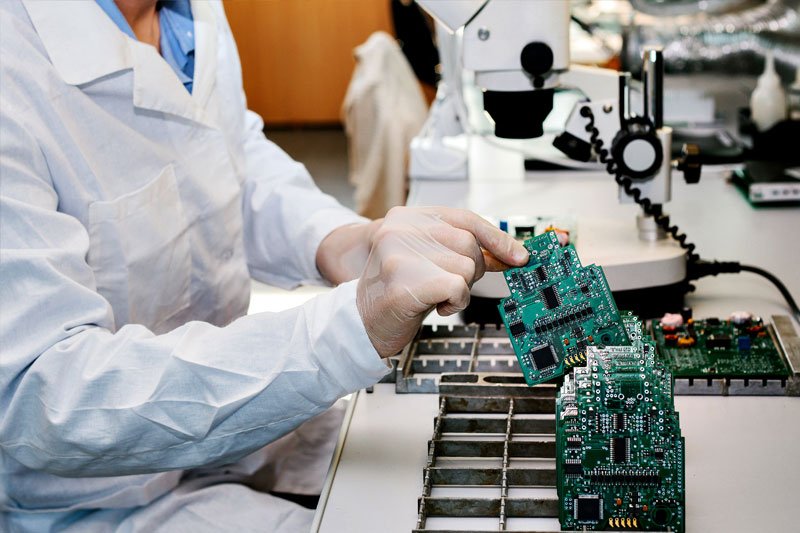
Component costs typically account for 60% to 80% of the total PCBA cost, making their management crucial.
- Component Type and Lead Time:
- Type: Choosing scarce, single-source, or proprietary components (e.g., high-performance FPGAs, specific MCUs) results in high price volatility and severe impact from market shortages.
- Lead Time: If Long-Lead-Time (LTS) components are required, the supplier may need to pay a premium or require the client to pre-purchase buffer stock, tying up capital.
- Procurement Volume and Bulk Discount (MOQ): Procurement volume is the most direct determinant of price. Significant bulk discounts are realized when purchasing reaches the Minimum Order Quantity (MOQ) or larger economic batch sizes.
- Sourcing Channel: Sourcing through authorized Tier 1 distributors may be slightly higher in price but guarantees quality; sourcing through the Open Market might be cheaper but introduces the risk of counterfeits, adding extra inspection costs.
PCBA Assembly and Testing Cost Drivers (Assembly and Testing)
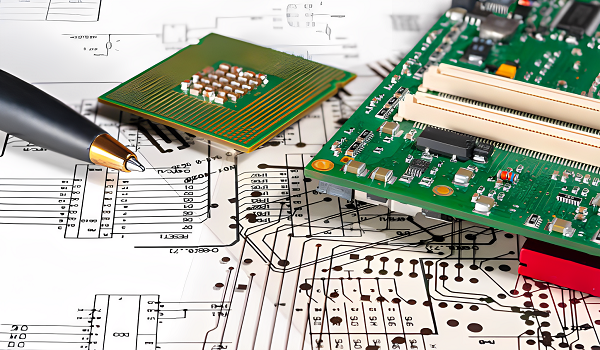
Assembly costs depend on complexity and the required level of quality control.
- Assembly Complexity:
- Component Density and Package Size: Using miniature packages like 0402, 0201, or 01005 (Small Pitch) requires higher SMT placement precision and longer program setup time.
- Special Processes: Adopting bottom-terminated packages like BGA/QFN, double-sided assembly, or requiring special treatments like selective soldering, dispensing, or conformal coating increases labor time and cost.
- Testing Requirements and Yield:
- Testing Method: ICT (In-Circuit Test) requires expensive custom “bed-of-nails” fixtures but is fast; FCT (Functional Test) has a lower initial cost but takes longer to execute. Higher test coverage generally means higher cost.
- Anticipated Yield: If the design (DFM) or components have known flaws, the supplier’s estimated First Pass Yield is lower, and the cost of rework and scrap will be factored into the quote upfront.
Conclusion and Call to Action
PCBA cost optimization is not simply about “pushing down the price,” but a systemic process of collaborating with the supplier during the design phase to balance PCB complexity, component availability, and assembly difficulty. Choosing a supplier with end-to-end engineering analysis capabilities (like DFM/DFA) helps you control costs at the source, rather than passively reacting to a final quotation.
Would you like to understand the cost optimization potential of your specific design? Upload your BOM and Gerber files now to receive a detailed cost structure analysis report!