
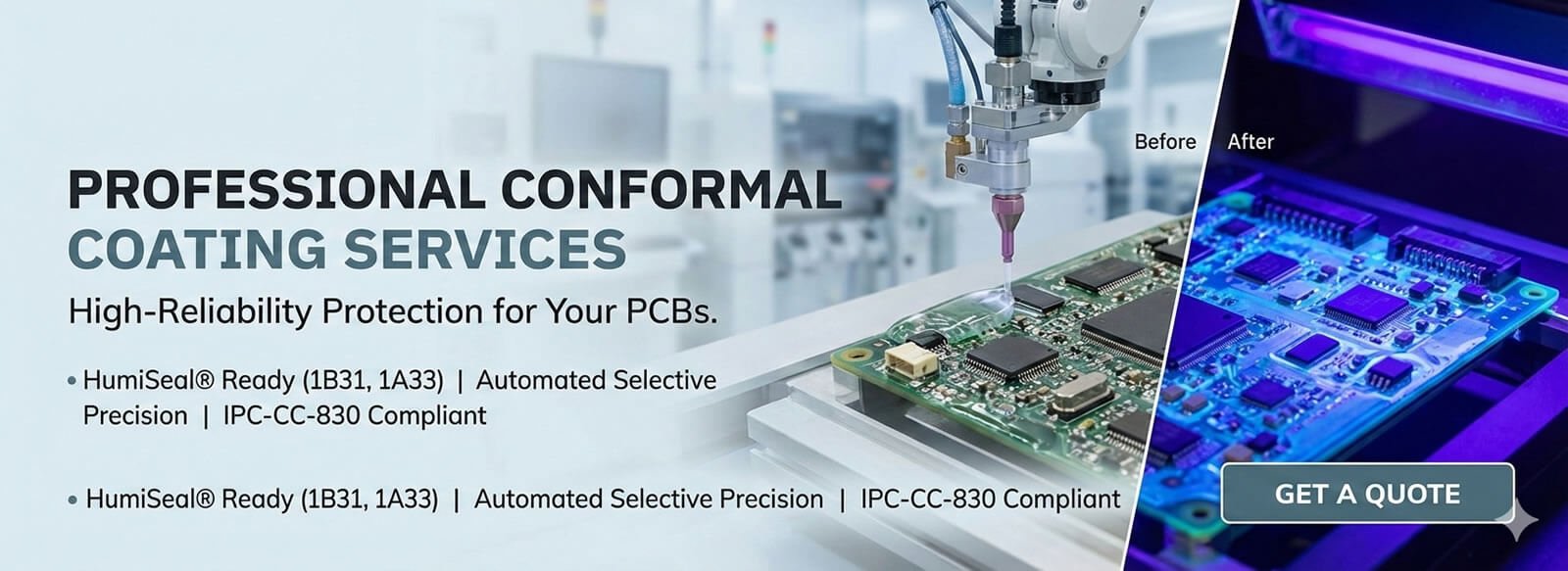
Professional Conformal Coating Services for High-Reliability PCBA
Protect your electronics from moisture, dust, chemicals, and extreme temperatures. Industry-standard protection (IPC-CC-830) using premium materials like HumiSeal®.
Full Range of Materials
Acrylic, Silicone, Urethane, and UV Curable.
Automated Precision
Selective robotic coating for zero-defect accuracy.
Verified Quality
100% UV light inspection & thickness measurement.
Served Industries
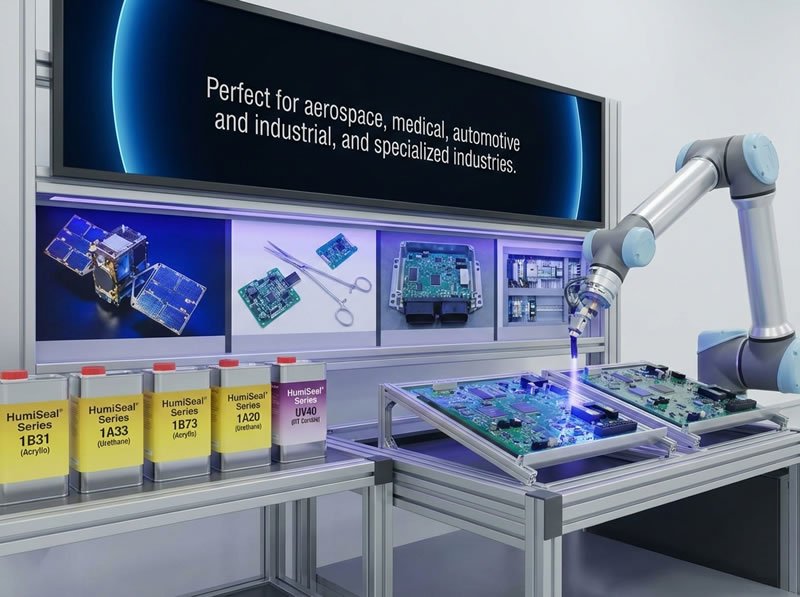
We Use Industry-Leading Protection Materials
We support a wide variety of coating materials to meet your specific application requirements, including:
HumiSeal® Series: 1B31, 1A33, 1B73, 1A20, UV40 (Perfect for aerospace, medical, automotive and industrial, and specialized industries).
MG Chemicals & Electrolube: High-performance solutions for consumer and medical electronics.
Custom Specs: We can source any specific coating material required by your engineering team.
Technical Capabilities
| Feature | Capabilities |
| Coating Types | AR (Acrylic), SR (Silicone), UR (Polyurethane), UV Curable |
| Application Method | Automated Selective, Manual Spray, Dipping |
| Inspection | 100% UV Light Inspection, Thickness Measurement |
| Compliance | IPC-CC-830, MIL-I-46058C, UL746E |
| Industries | Automotive, Electronics, Medical, Aerospace, Outdoor IoT, Industrial Control |
GET IN TOUCH
Leave your information via Form, our Technical Support Team will contact you shortly!
FAQ
What is Conformal Coating?
A conformal coating is a thin, protective polymer film (typically 25–250 μm) applied to electronics to guard against moisture, contaminants, and corrosion while maintaining electrical performance.
Acrylic vs silicone vs urethane vs parylene — what’s the difference?
Acrylic: easy rework; Silicone: high-temp/flex; Urethane: strong chemical resistance; Parylene: ultra-thin, pinhole-free vapor deposit. Choose based on environment, service life, and rework needs.
What’s the difference between overspray and creep?
Overspray is unintended deposition outside the target area; creep is post-deposition wetting or flow into keep-out zones.
Does conformal coating help with tin whiskers?
Certain coatings can help mitigate whisker-related shorts by creating a barrier; effectivenessdepends on material and application. Validate for your design and risk profile.
Is conformal coating conductive when wet?
A conformal coating is insulating and the liquid itself will remain conductive on the surface but prolonged exposure to standing liquids degrades properties.
How thick should conformal coating be?
Usually 25–75 μm for many acrylic/urethane/silicone systems and 5–25 μm for parylene. Always confirm thickness against your design, environment, and applicable standards.
How do you reduce overspray and masking?
Use coatings formulated for selective application; tune valve type/paths/flow; add rigid fixturing and inline inspection; design keep-out zones early.
Which standards apply to conformal coatings?
IPC-CC-830 (current), legacy MIL-I-46058C, NASA outgassing for specific use cases, and UL where required. Check your industry/customer requirements.
Is Conformal Coating the Same as Waterproofing?
A conformal coating provides resistance to humidity and moisture, but it is not the impermeable barrier one expects with the term waterproof.
What is your turn time on a Turn-key order?
For Turn-key orders, the lead time mainly depends on the speed at which we can source all the necessary components. We will keep you updated through daily email communication. While waiting for all parts to arrive, we will proceed with fabricating the PCBs and preparing the stencil, so assembly can begin as soon as the components are available.
 Arabic
  English
  German
  Japanese
  French